French
 English
 German
 Russian
 Japanese
 Korean
 Spanish
 Italian
 Portuguese

Most industrial stainless steel turned shafts spec 304 for general duty and 316L where chlorides or seawater are in the service loop. Tolerance per ISO 2768 class m is the baseline for standard fits. Lock the grade first; every downstream decision follows from that call.
Buyers ordering turned shafts usually walk into the same three unknowns: which grade, which tolerance band, and what the part will actually cost per piece. A wrong grade means a shaft that pits in a wet cabinet within a season. A loose tolerance means a bearing that loosens and wears early. YPMFG works with procurement and engineering teams to close those gaps before a bar of stock is cut.
Key Takeaways
- Grade selection: 304 covers most indoor and food-contact shaft duty; 316L is the spec of record for chloride, marine, or chemical-service environments.
- Classe de tolérance: ISO 2768-m handles the majority of press-fit and sliding-fit shafts; stepping into ASME Y14.5 H7/g6 adds machining time and tooling cost.
- Free-machining option: Sulfur-modified variants (303 / 304F) break chips shorter and cut cycle time on straight turning; the trade-off is slightly lower résistance à la corrosion.
- Lead-time baseline: 15 days is typical for a small-batch stainless shaft job from first sample to ship.
Which Stainless Grade Fits Your Shaft Application?
For indoor machinery, food-grade washdown, and light chemical exposure, 304 stainless is the default. It carries roughly 18% chromium and 8% nickel, which handles neutral and mildly wet environments without issue. The moment chloride ions, seawater, or aggressive process fluids enter the specification, 316L stainless becomes the grade to spec.
316L adds molybdenum and caps carbon below 0.03%. That shift raises the pitting-resistance threshold noticeably. In a chlorinated, wet cycle, a 304 shaft can pit and lose diameter within a season; a 316L shaft typically holds its surface for years under the same exposure. The L (low-carbon) suffix also protects against sensitization during solution-heat-treat cycles near 800 to 900 °C.
When cycle time is the constraint, ask about free-machining variants. Sulfur inclusion in the alloy (303 or 304F) breaks chips shorter and lets a carbide tool run faster without built-up edge. The trade-off is a small drop in corrosion resistance versus standard 304. YPMFG flags the right variant during a Revue DFM so the quote reflects the actual material, not a guess.
Physical limit: no stainless grade resists crevice corrosion in a sealed, chloride-saturated gap. Design the shaft so no trapped electrolyte exists. No material choice eliminates that failure mode.
What Tolerance and Finish Does Your Shaft Actually Need?
Most industrial shaft fits land in the ISO 2768 m (medium) band. That covers press-fit bearing seats, coupling bores, and general alignment work. If your assembly drawing calls out an H7/g6 or H7/k6 fit per ASME Y14.5, the tolerance class steps up and the machining allowance shrinks with it.
Tie Tolerance to the Mating Feature, Not the Drawing
Surface finish follows the same logic. A shaft sliding against a polymer bushing benefits from a 6.3 μm Ra. A shaft carrying a mechanical seal or O-ring needs 3.2 μm Ra or better to avoid extrusion. Each step down in finition de surface demands a finer pass and a slower feed, which adds cycle time and tool wear.
If your drawing specifies a particular grade and fit, send it to YPMFG for a classe de tolérance review. The team flags over-specified features that add cost without functional benefit and underspecified features that will fail in assembly.
What Drives the Cost of Stainless Steel Turned Shafts?
Three variables move the price more than any other: raw material grade, batch size, and the number of distinct operations. A 316L bar costs meaningfully more per kilogram than a 304 bar. A run of 500 pieces spreads setup and programming time across more units than a run of 50, so the per-piece figure drops. Each added operation—facing, parting, threading, a cross-hole, a 45° chamfer—adds tool time and an inspection checkpoint.

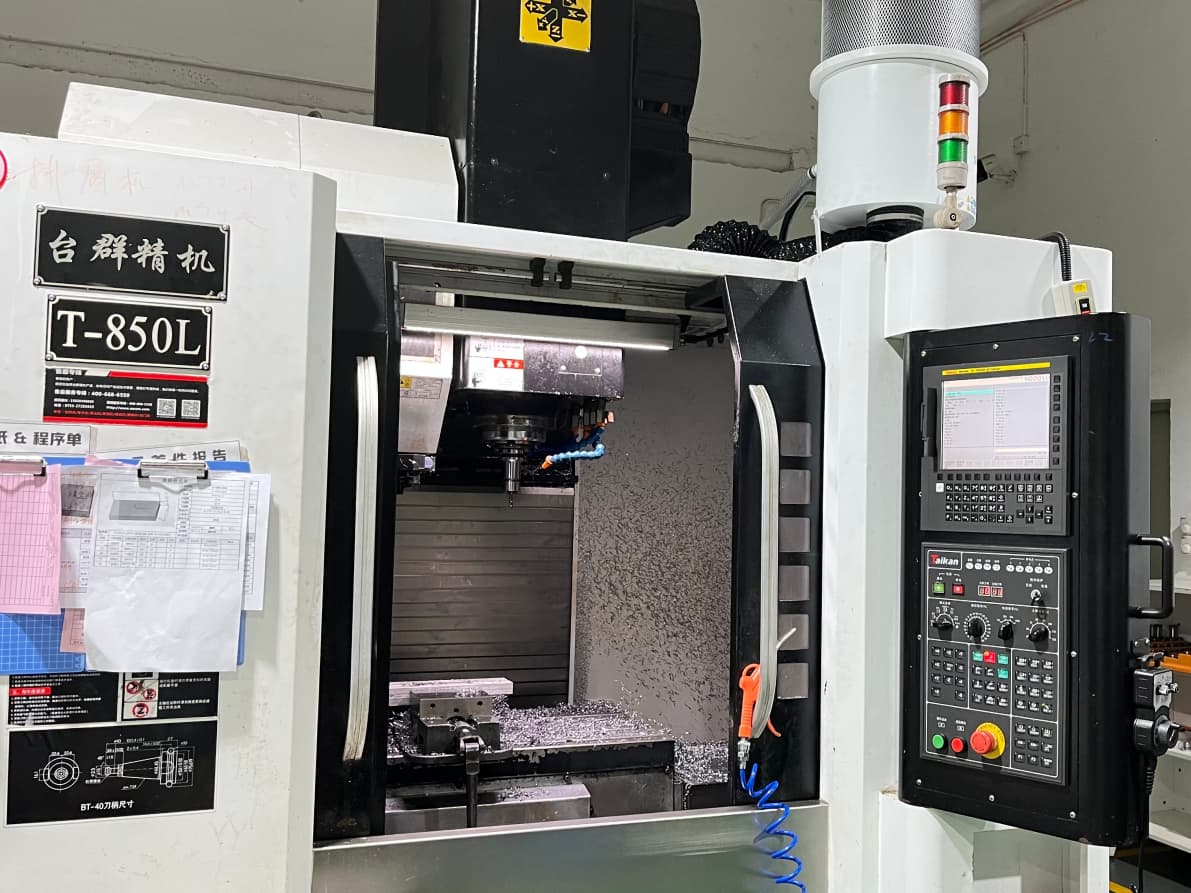
Lead time compounds the cost question. A Tournage CNC job on a 3-axis lathe for straight cylindrical shafts is straightforward. The moment the part adds a helical thread, a cross-hole, or a multi-chamfer sequence, cycle time stretches. For parts that need a multi-operation sequence, YPMFG maps the process route and quotes each step separately so you see where the hours go before committing.
One cost lever buyers overlook: the inspection spec. A batch that ships with a first-article report plus a per-piece dimensional summary costs more up front,but it protects against a field failure that would dwarf the inspection fee. Decide which certification level your application demands, then price accordingly instead of guessing.
Cost is not a single number. It is material cost + machining hours × rate + inspection overhead + margin. Ask any supplier to break the quote into those four buckets and the comparison becomes honest.
How the Process Gets Validated Before Shipping
Every turned stainless shaft batch moves through a defined check sequence before it leaves the floor. The route is fixed and documented:
- Certification des matériaux: mill test report matching the specified grade and heat number. For 316L, confirm molybdenum content and carbon cap on the MTR.
- First-article inspection: dimensional capture on all critical features within the first 24 hours of the run, against the drawing callout.
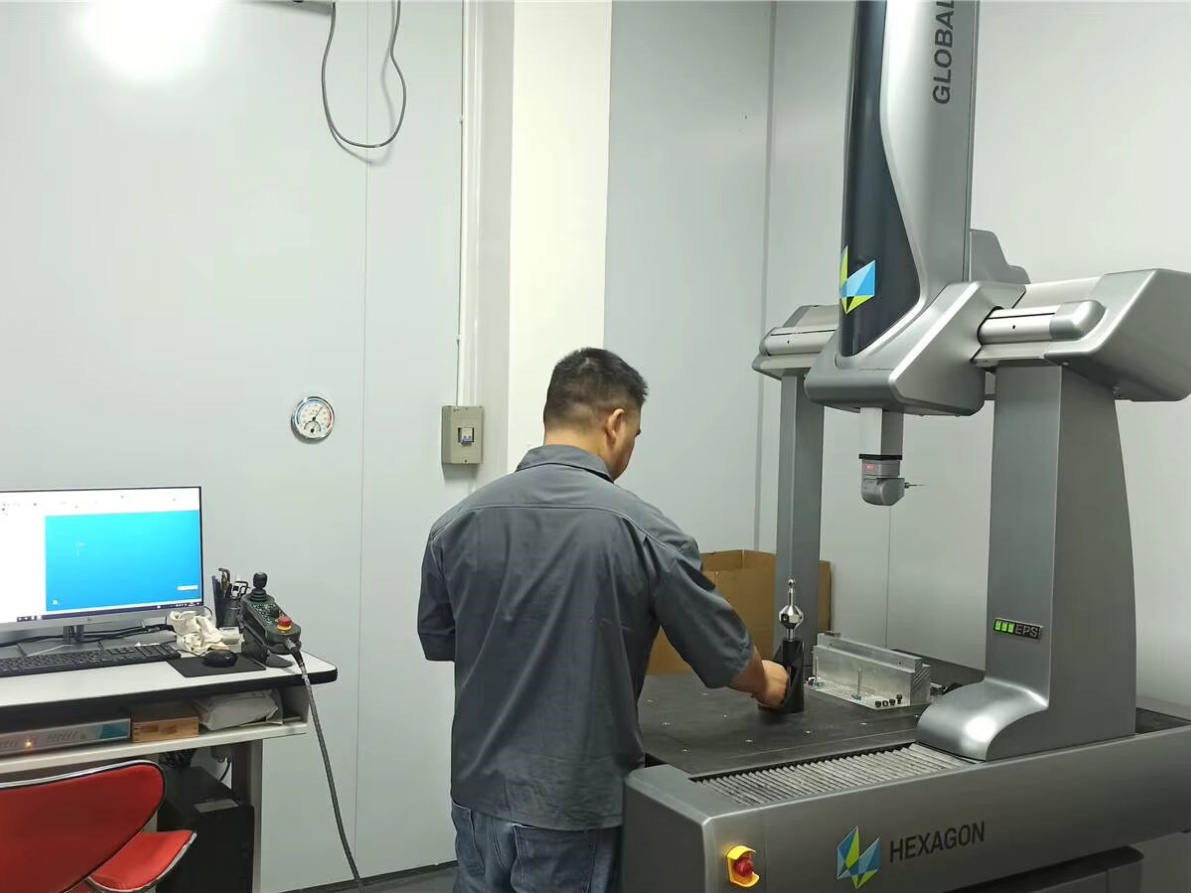
- In-process sampling: a subset of parts per shift checked with calibrated calipers or a CMM to catch tool-wear drift before the batch completes.
- Batch release: final dimensions, surface verification, and (where specified) a hardness or visual record travel with the shipment.
The quality system sits under ISO 9001:2015. For automotive or medical shaft work, the same checkpoints run under IATF 16949 or ISO 13485 respectively. Client-specific test data is released under NDA when a signed agreement is in place.
Process Reference: YPMFG process library, reviewed against published tooling and material data. Client-specific measurements withheld per NDA.
Common Questions About Stainless Steel Turned Shafts
Can a 304 shaft replace a 316L shaft in a marine fitting? No. The pitting threshold of 304 is below what a chloride-rich marine environment demands. The shaft will pit and lose diameter within a season of wet-cycle exposure.
What is the minimum practical length for a turned stainless shaft? It depends on the chucking method. A part shorter than roughly two times its diameter is difficult to hold on a 3-axis lathe without a live center, which leaves a small witness mark on one end. For very short, high-precision shafts, a 5-axis setup or a dedicated short-part chuck changes the constraint.
Does batch size change the per-piece price? Typically, yes. Setup and programming are fixed costs. A run of 1,000 spreads those hours over more units than a run of 25, so the unit price drops. YPMFG quotes both quantities so you can see the break-even point before committing.
How do I quickly check whether my drawing tolerance is realistic for a lathe-turned part? Look at the diameter tolerance band. If it sits below the ISO 2768-m step for that size range, you are asking for a grinding operation in addition to turning. Flag that to your supplier early; it changes the process route and the price.
Choosing the Right Grade and Tolerance for Your Application
The decision chain is short: confirm the service environment, lock the grade, set the tolerance band to match the actual assembly fit, and let the finish follow the mating surface. Do that in order and the rest of the procurement conversation becomes a logistics and scheduling question rather than a quality gamble on the receiving dock.
Send your part drawing, material callout, and quantity to YPMFG for an engineering review. The team will flag grade-substitution risks, over-specified tolerances, and process steps you may not have budgeted, then return a quoted process route with the inspection plan attached. No commitment is required to get that review started; the first response typically lands within 24 hours.