French
 English
 German
 Russian
 Japanese
 Korean
 Spanish
 Italian
 Portuguese

CNC plastic manufacturing removes material from solid stock using CNC cutters. General tolerance per ISO 2768-m typically holds at ±0.1 mm below 100 mm part length. Material choice among ABS, PC, and Nylon shapes your cost, stiffness, and heat threshold more than any machine setting.
Buyers who search for CNC plastic manufacturing often assume plastic is simply a cheaper substitute for metal. In practice, material, feed rate, and clamping strategy interact in ways that shift both tolerance and unit cost. YPMFG works with engineers who need to know which variable moves the quote before committing to a production run.
Key Takeaways
- Nuance de matériau: ABS suits general-duty brackets; PC resists impact under thermal cycling; Nylon adds dry lubricity for moving joints.
- Classe de tolérance: ISO 2768-m sets ±0.1 mm below 100 mm; tighter classes add setup time, not machine capability.
- Délai de livraison: A 3-day sample and a 20-25 day batch cover most moderate-complexity CNC plastic parts.
- Cost driver: Walls under 3 mm in Nylon may increase chatter and extend cycle time versus a 5 mm wall.
Two of the three most common material choices cover the majority of part applications. The table below maps them to the decisions you will face at the drawing stage.
If your part runs below 70 °C continuous and needs no optical clarity, ABS is the lowest-risk default. Above that threshold, PC or Nylon moves up and the feed-rate penalty shows in cycle time.
What Materials and Tolerances Define a CNC Plastic Part?
Material Grade vs. Tolerance Class
Material selection sets the thermal ceiling,stiffness, and achievable Tolérance d'usinage CNC before you pick a feed rate. For most buyers, ISO 2768-m at ±0.1 mm below 100 mm is the working default unless a mating interface calls tighter.

ABS machines cleanly at higher feed rates and holds that ±0.1 mm without issue. PC produces stringy chips that can re-weld onto the cutting edge, so operators step feed down. Nylon absorbs moisture from ambient air; a part machined on a dry day and assembled in a humid shop can run 2–3 percent out of nominal.
What none of these materials do: hold a 90-degree internal corner without a secondary operation. The corner radius is set by tool diameter. You pay for that extra step if your drawing calls for a sharp inner corner.
How Does Process Choice Affect Cost and Lead Time?
Where the Cost Actually Sits
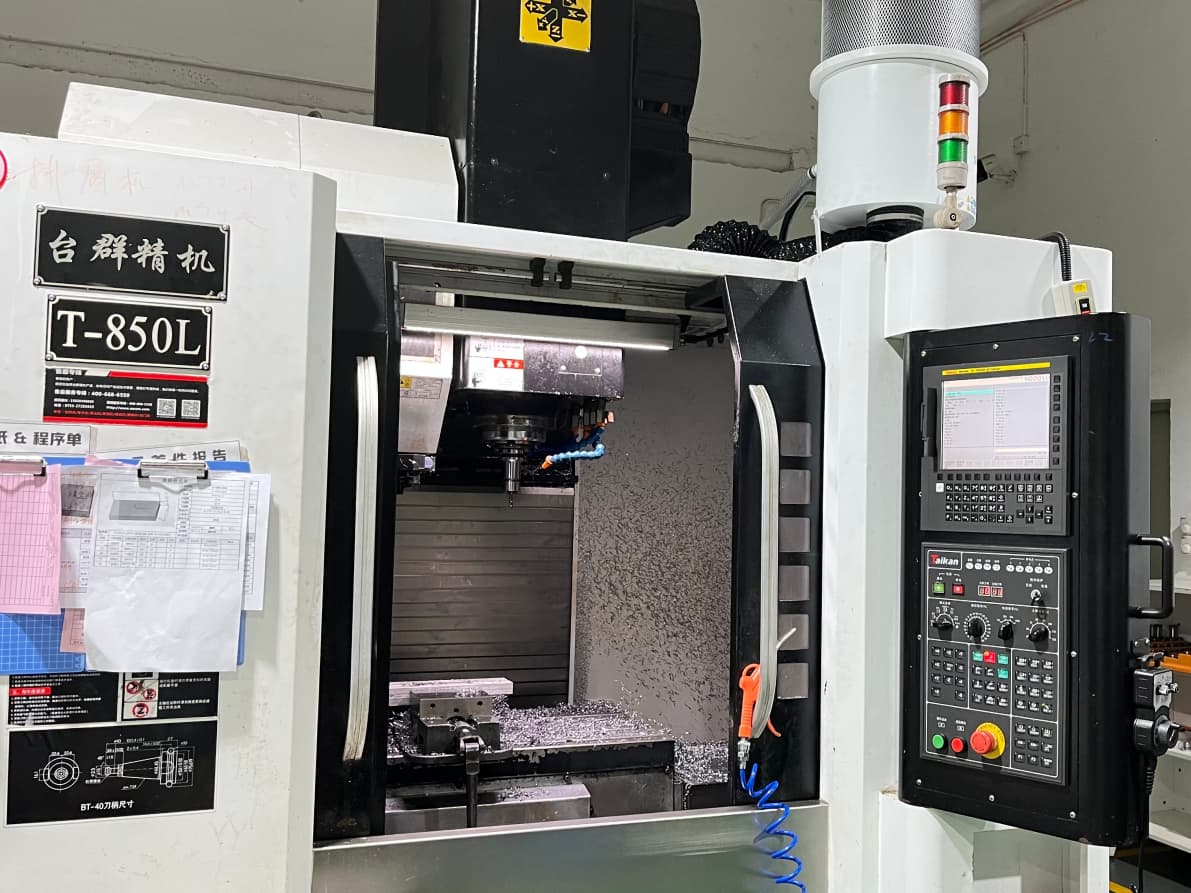
A 3-axis Usinage CNC setup handles most flat and prismatic plastic parts. Moving to 5-axis indexing earns you undercuts and compound-angle features. Each added axis increases setup time and reduces rigidity in soft materials.
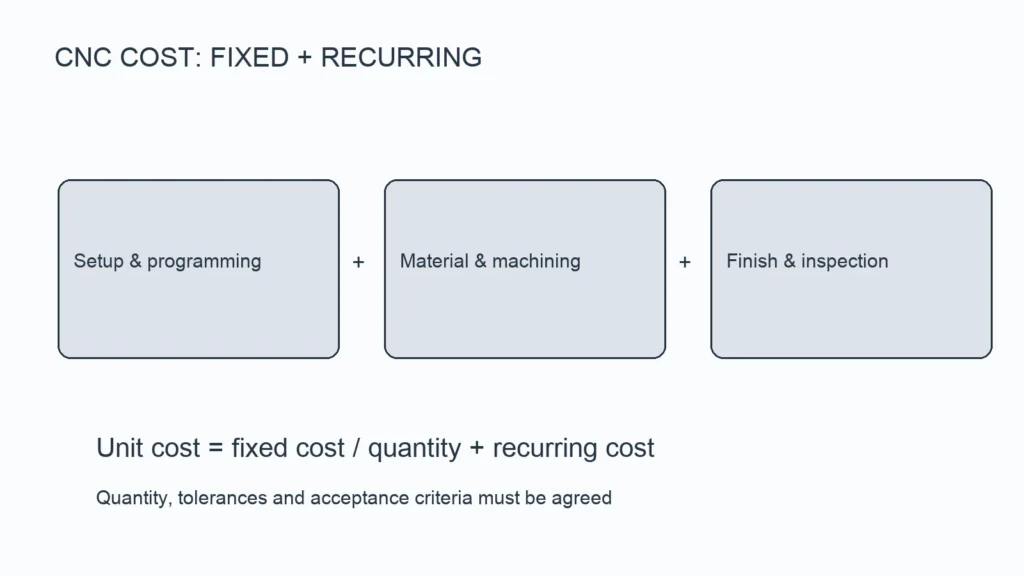
For a batch of 50 to 500 units, the cost structure typically breaks down like this:
- Configuration et programmation: one-time cost, amortized across the batch. Dominates unit price on runs under 50 pieces.
- Temps de cycle: scales linearly with feature count and material feed rate.
- Post-usinage: deburring, surface finishing, heat conditioning for Nylon. Often undercounted in first quotes.
A 3-day sample gives you a physical part to verify fit before the production batch runs. Most shops quote a 20-25 day window for a moderate-complexity lot. An expedited 3-7 day lane exists but carries a premium.
What 5-axis does not fix: thermal drift. Plastic expands with every degree of shop-temperature swing. A part held at 22 °C and assembled at 35 °C will shift regardless of axis count.
Which Errors Inflate the Cost of CNC Plastic Machining?
Three Specification Red Flags

Three specification mistakes account for most rework and rejected batches in plastic parts procurement. Each is avoidable at the drawing stage.
- Tolerance without a datum. A ±0.05 mm flatness call with no reference plane leaves the inspector guessing. State the datum explicitly on the drawing.
- Omitting material grade. “Nylon” is not a specification. Nylon 6, Nylon 6/6, and glass-filled variants have different shrinkage. Name the exact grade and supplier batch.
- Sharp internal corner on a rotary-machined part. The tool leaves a radius equal to half its diameter. Call out the radius or accept the tool radius in your drawing.
Send your drawing to YPMFG for a DFM review before committing to a production run. The review flags the three items above plus clamping access and chip-egress paths, usually within one business day.
What a DFM review cannot fix: a 2 mm wall on a 300 mm span with a ±0.02 mm parallelism call. That part will flex. No machine setup eliminates the physics.
How CNC Plastic Machining Handles a Typical Bracket: A Process Route
Step-by-Step for a Standard Part
Consider a 120 × 80 × 15 mm ABS bracket with two through-holes, a 2 mm chamfer, and ±0.1 mm general tolerance. The route below reflects a standard 3-axis job.
- Clamp and zero: Vise grip on the largest flat face. Zero all three axes. Verify stock thickness with a caliper.
- Rough mill: End mill at reduced feed for ABS. Step-down no more than 5 mm per pass to manage chip load.
- Finish mill: Same tool, full depth, feed up. Surface finish lands where a buyer typically accepts for functional or painted surfaces.
- Drill and chamfer: Through-holes in the same setup if geometry allows. A separate chamfer pass for the 2 mm break.
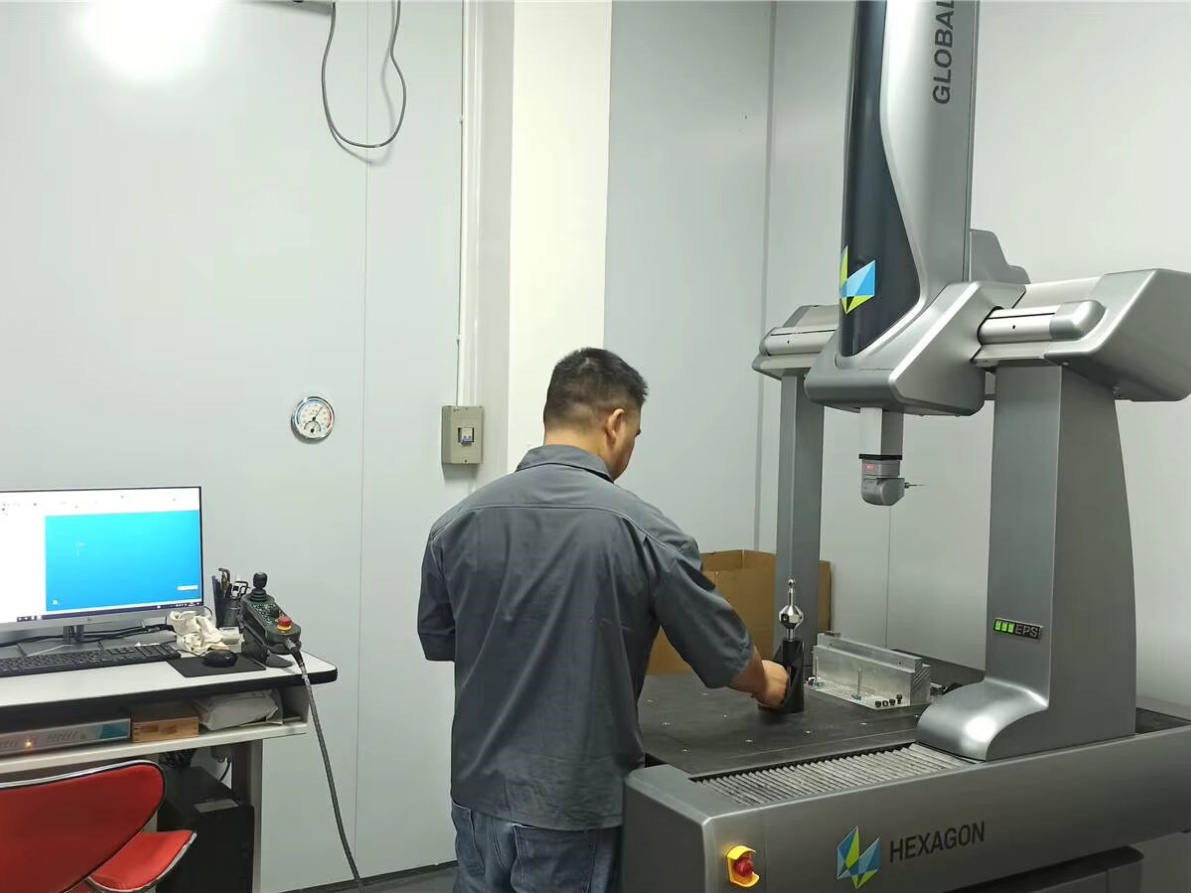
- Deburr and inspect: Tumbling or manual deburr. First-piece check against the drawing. Batch sampling per lot size.
The key control point: ABS chip stringiness means the operator clears the pocket every pass. If chips bridge, the next cut engages the chip, not the wall, and tolerance drifts.
Process Route Reference: Internal process library, reviewed against published tooling data. Client-specific parameters withheld per NDA.
Practical Questions Before You Place a CNC Plastic Order
Quick Self-Check Before Ordering
Can a 5-axis machine cut tighter tolerances in plastic than a 3-axis? No. Tolerance is set by your drawing call and the shop’s documented capability, not the axis count. Five-axis helps with geometry access, not with reducing a ±0.1 mm to ±0.05 mm.
Why does Nylon need a moisture-conditioning step before final inspection? Nylon absorbs water from ambient air and can expand up to a few percent. Parts are typically conditioned at 50 °C and 50 % RH for 24 hours before final measurement. Skipping this step means your batch arrives out of spec in a humid climate.
What is the smallest wall thickness a 3-axis CNC can reliably hold in PC? It cannot hold a wall below roughly 2 mm in PC without significant deflection at the free end. Below that, expect warpage after release from the vise. For thin-wall PC, consider a different joining strategy or a stiffer material.
How do I quickly check whether my drawing is ready for a CNC plastic quote? Confirm three things: material grade (not just “plastic”), tolerance class on every critical dimension, and clamping access. Send the drawing for a DFM review; you will get a flagged PDF back with actionable notes.
Choosing the Right CNC Plastic Manufacturer for Your Part
The variable that separates a smooth plastic-parts program from a rework loop is not the machine on the floor. It is whether the shop questions your drawing before it cuts the first pass. YPMFG runs a structured Revue DFM on every inquiry: material grade check, tolerance audit, chip-egress feasibility, and a written note-back within one business day.
Send your specifications or a rough sketch to YPMFG for an engineering review. You will receive a material recommendation, a tolerance feasibility note, and a transparent quote breakdown before committing to production. The review follows the same process whether you need 50 pieces or 50,000.