Italian
  English
  German
  Russian
  Japanese
  Korean
  Spanish
  French
  Portuguese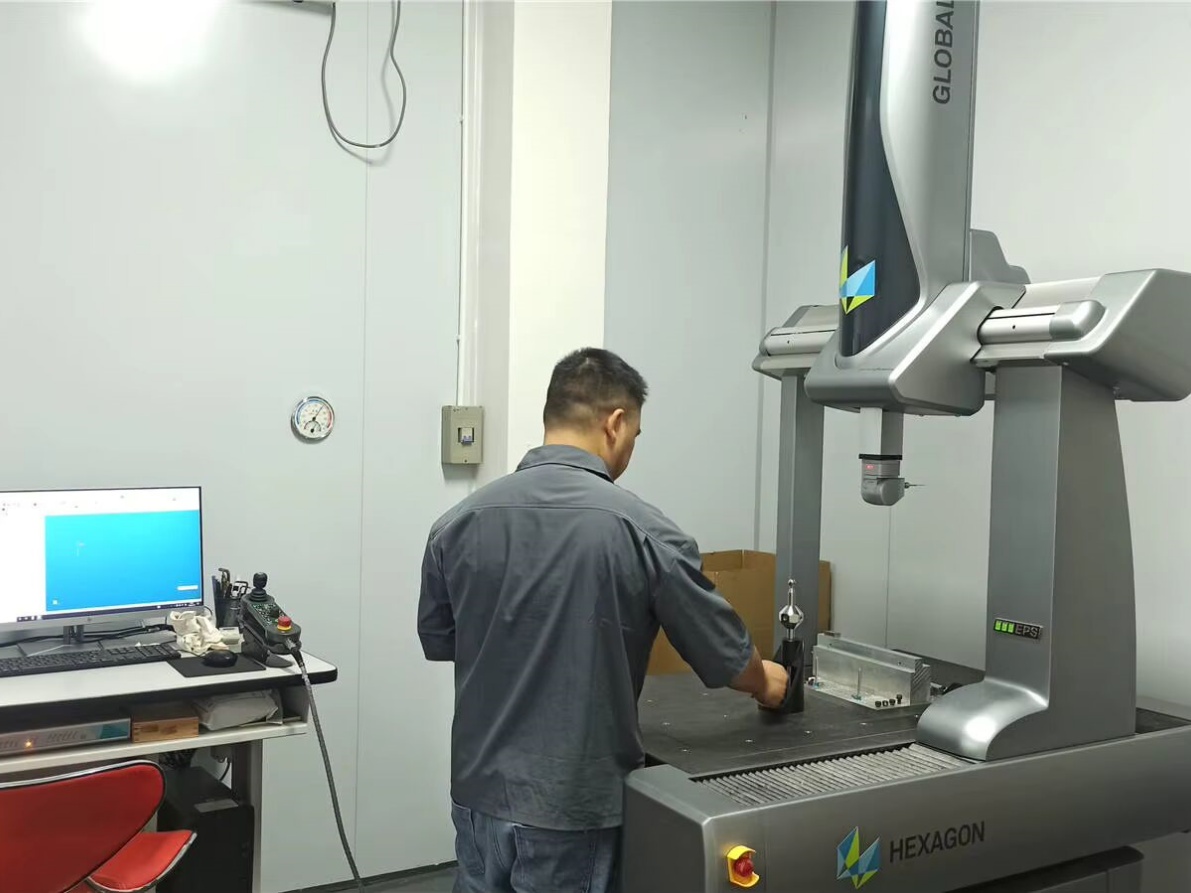
To source CNC machined metal parts, define the material grade, functional dimensions, finish, quantity and inspection requirements before comparing quotes. A lower unit price is only useful when suppliers are quoting the same specification. This guide explains how to prepare an RFQ and check whether a proposed manufacturing process fits your part.
Choose the process around the geometry
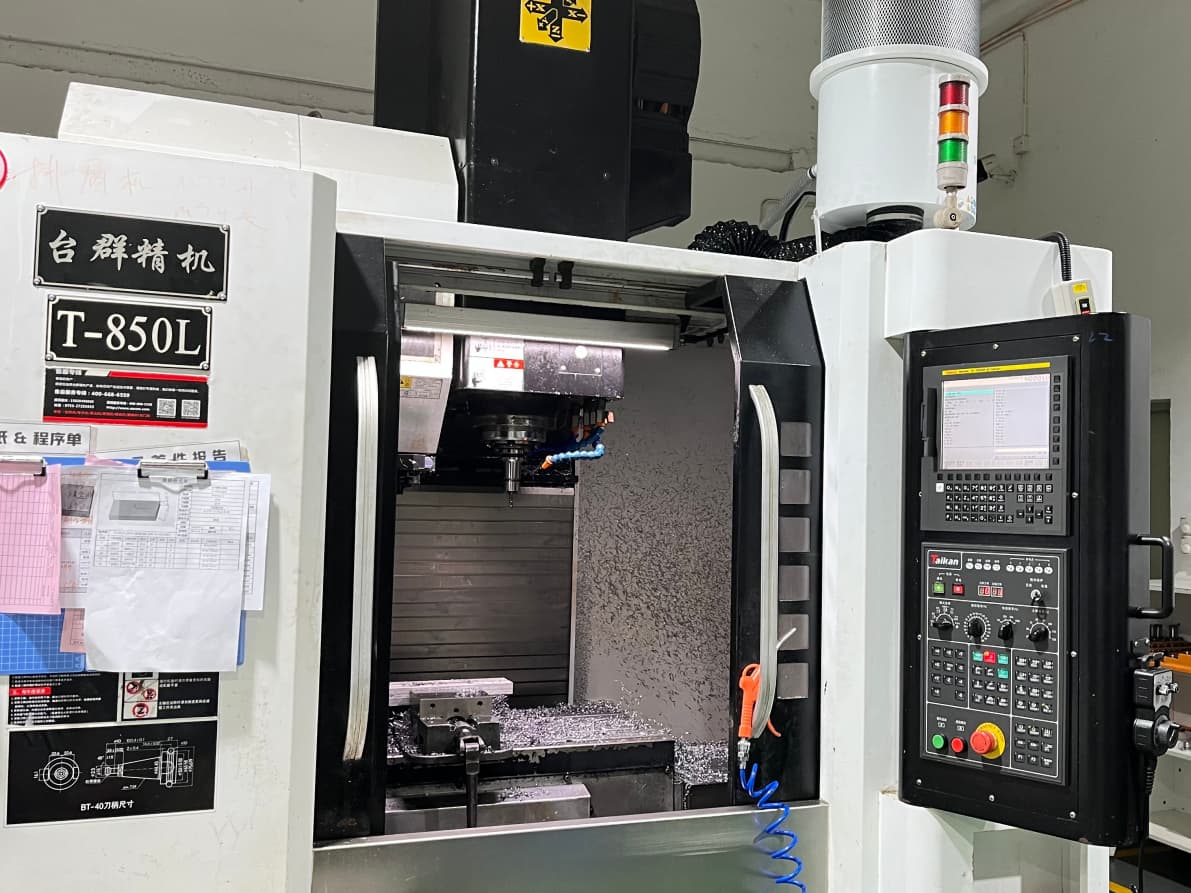
Fresatura CNC uses rotating cutting tools and is commonly used for brackets, housings, pockets and flat mounting faces. Tornitura CNC rotates the workpiece and is suited to shafts, sleeves, threaded connectors and other predominantly rotational features. A part with both types of feature may need multiple setups or mill-turn equipment.
Ask the supplier to review tool access, workholding and the relationship between critical features. Five-axis machining can improve access to some geometries, but it is not automatically the lowest-cost choice. Internal sharp corners, inaccessible undercuts and very slender features can require design changes or secondary processes.
Specify an alloy, not just a metal family
| Materiale | Useful starting point | What to verify |
|---|---|---|
| Alluminio | Lightweight housings, brackets and fixtures | Exact alloy and temper; loading, corrosion exposure and anodized appearance |
| Acciaio inossidabile | Parts requiring corrosion resistance | Grade, environment, passivation and any cleanliness requirements |
| Carbon or alloy steel | Load-bearing and wear-related applications | Grade, heat treatment, hardness and protection against corrosion |
| Brass or copper | Connectors, fittings and electrical or thermal components | Composition, machinability, conductivity and applicable lead restrictions |
For example, 6061-T6 and 7075-T6 aluminum should not be substituted solely because both are aluminum. Confirm the mechanical requirements and available stock. See our aluminum milling guide for the trade-offs to discuss with your supplier.
Put functional tolerances on the drawing
There is no single tolerance that is standard for every CNC part. General tolerances depend on the drawing standard, nominal dimension, material and manufacturing agreement. Identify the features that control assembly or function, and specify datums, fits, position, runout or flatness where required. Avoid applying the tightest tolerance to every dimension.
At YP-MFG, tolerances down to ±0.003 mm may be available on suitable features, subject to engineering review of material, geometry, size and inspection method. This is a capability to assess for a particular drawing, not a blanket tolerance for an entire part.
Agree the finish and final inspection condition
State whether critical dimensions apply before or after finitura superficiale. Anodizing and plating can affect fits; heat treatment can cause distortion. Specify coating type, thickness where needed, masking areas and an agreed cosmetic sample when appearance matters.
For surface texture, provide the required parameter and measurement conditions on the drawing. If you use an ISO standard, identify the applicable standard and edition; the ISO 21920 series addresses profile surface texture. Do not replace a functional roughness requirement with a vague instruction such as “smooth finish.”
Make inspection documents part of the RFQ
Discuss material certificates, first article inspection and dimensional reports before placing the order. Define the dimensions to be measured, sampling or inspection quantity, reporting format and any traceability requirements. YP-MFG lists CMM inspection and these documentation options on its quality control page; confirm the package and its price for your project.
PPAP is commonly associated with automotive customer approval. Aerospace and medical customers may require different contractual quality documentation. Agree the applicable requirements with your quality team rather than assuming one package covers every industry.
RFQ checklist for comparable supplier quotes
- 3D CAD model where available and a dimensioned 2D drawing with a revision identifier.
- Material grade, temper or hardness, plus any approved alternatives.
- Critical dimensions, datums, threads and functional surface requirements.
- Finish specification, cosmetic expectations and protected or masked surfaces.
- Prototype and production quantities, delivery destination and requested delivery date.
- Inspection, material certification, traceability and packaging requirements.
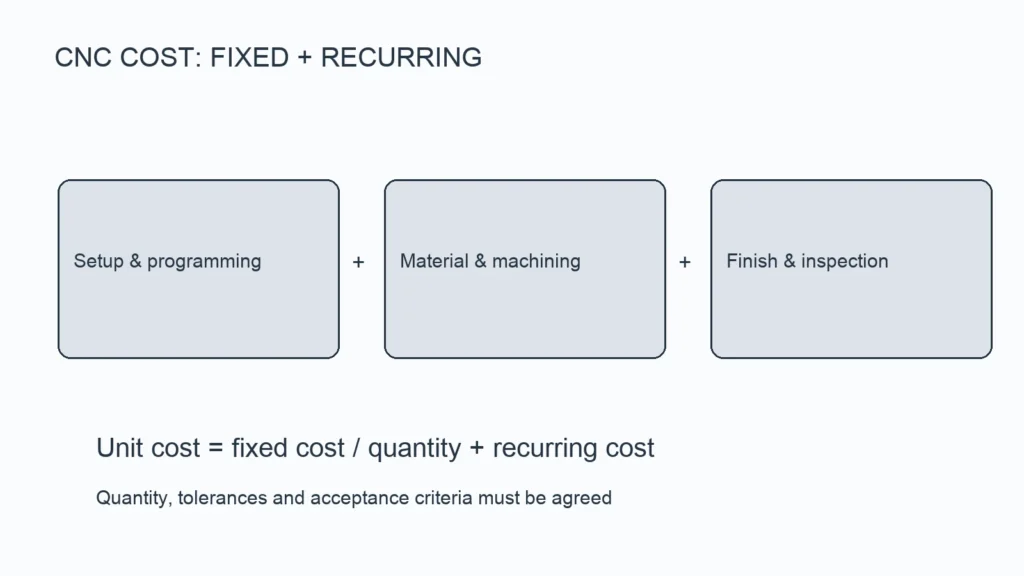
Ask suppliers to separate tooling or setup charges from recurring unit cost. Check whether finishing, inspection, freight and import charges are included. Confirm production lead time separately from transit time.
Questions before ordering
Can I order one CNC machined part?
Yes. YP-MFG accepts orders from one piece. Setup, programming and inspection still affect the price, so compare prototype and repeat-order quantities if you expect production later.
How quickly can I get a quote?
YP-MFG normally responds with a quote within 24 hours after receiving complete drawings, material and quantity information. If specifications need clarification, the engineering team will discuss them before confirming manufacturing scope and price.
Is a CAD model enough?
A model describes geometry, but often does not communicate tolerances, material, surface texture or inspection needs. Include a 2D drawing for critical requirements. If you only have a sketch or sample, describe what information is available so the team can identify the next step.
Request a drawing review
Explore our servizi di lavorazione CNC su misura, then send your drawings for a quote. Include the RFQ checklist above so the engineering team can review manufacturability and give you a useful comparison of material, tolerance and finishing options.