Italian
  English
  German
  Russian
  Japanese
  Korean
  Spanish
  French
  Portuguese
A CNC axis is a degree of freedom that a machine tool uses to position either the workpiece or the cutting tool. The three primary axes—X, Y, and Z—control linear movement along length, width, and depth. A fourth axis adds rotation around one of those planes, typically labeled A, B, or C. A fifth axis adds a second rotational degree of freedom. The more axes available, the more complex geometry you can machine in a single setup. Before specifying a CNC axis requirement for a part, buyers should confirm which geometries actually need rotational freedom and which can be handled with indexed moves on fewer axes.
Most buyers receive a part print, see a callout like “5-axis required,” and immediately jump to the most expensive machine. That instinct creates unnecessary cost. The real question is whether your part geometry, tolerance stack-up, and setup constraints actually demand that many simultaneous axes.
What X, Y, Z, A, B, C Really Mean
The three linear axes are fixed by convention. X runs along the longest horizontal direction, Y across the workpiece, and Z along the spindle or vertical axis. Rotational axes follow the ISO 841 standard: A rotates about X, B rotates about Y, and C rotates about Z. In practice, most 4-axis machines use the C axis (rotation about the vertical), while 5-axis heads add A or B on top of C.
This naming matters when you read a capability matrix from a shop. A machine labeled “4-axis (C)” will behave differently from one labeled “4-axis (B)” for a given part orientation. Confirm which rotational axis is available before comparing two quotes for the same machined component specifications.
3-Axis vs 4-Axis vs 5-Axis: What Changes
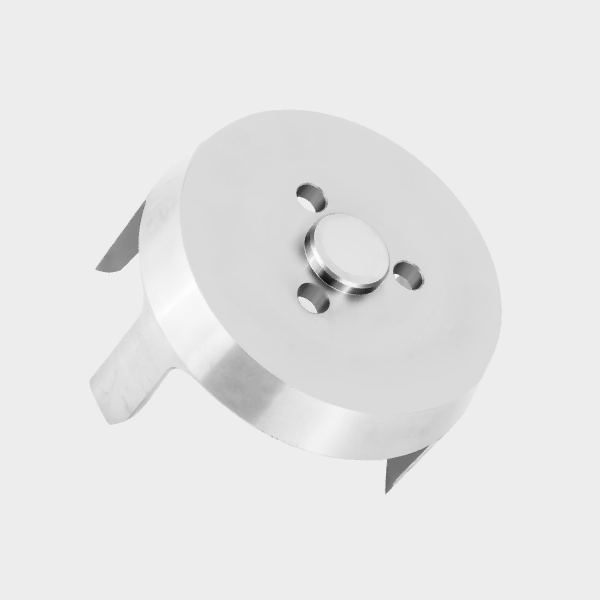
The table above shows why axis count drives both cost and lead time. A part that needs four separate fixturing operations on a 3-axis machine often runs in one clamping on a 5-axis simultaneous lavorazione meccanica center. Fewer setups mean fewer cumulative runout errors and a tighter tolerance envelope.
How Axis Count Affects Your Part
Axis configuration shapes three practical outcomes: cycle time, achievable surface finish, and fixture complexity. On a 3-axis machining center, a part with deep undercuts requires multiple rotations of the fixture, each introducing a new datum-to-datum error. A 4-axis or 5-axis setup keeps the part in one clamp and reaches those features from a different tool angle.
The trade-off is machine availability and toolpath complexity. A five-axis toolpath demands more CAM post-processor work and stricter runout limits on the rotary axes. YPMFG reviews part geometry against these constraints during the engineering assessment stage, flagging features where a 4-axis indexed solution delivers the same result at a lower machine hour rate.
Questions that surface the risk early:
Which faces are simultaneously referenced on the print?
Are there through-holes at non-90-degree angles?
Does the part have a live underhang deeper than the tool reach on a 3-axis bed?
What is the acceptable tolerance on the rotated feature, and does it depend on a single setup?
Domande frequenti degli acquirenti
Do I actually need 5-axis for my part, or will 4-axis indexed work?
In many cases, 4-axis indexing with two or three orientations covers cylindrical and angular features. True 5-axis simultaneous motion is needed for continuous freeform surfaces, aerospace impellers, or parts with tight tolerance on two non-parallel rotated features. Send your print to YPMFG for a geometry-to-axis-count review before committing to a machine class.
How much more expensive is 5-axis vs 3-axis for the same part?
The premium depends on cycle time, tooling, and machine hourly rate. A part that saves three fixturing operations may reduce total run time by 40–60 percent, which can offset the higher machine rate. The exact delta varies by part complexity, so a formal quote is the only reliable comparison.
What should I check on a drawing before requesting a quote?
Confirm all datums, positional tolerances, and any notes that reference “in one setup.” Also note the maximum underhang depth and any non-perpendicular hole angles. These are the features that push the requirement from 3-axis to 4- or 5-axis. YPMFG can flag these during a no-cost drawing review.
Does the rotational axis label (A, B, C) matter to me as a buyer?
It matters when you are comparing two shops or writing an RFQ. Specify which axis your part needs, not just “4-axis.” A C-rotational machine and a B-rotational machine handle the same geometry very differently. The label should appear in your configurazione degli assi notes.
Choosing the Right Axis for Your Application
The goal is not to use the most axes available. The goal is to use the fewest axes that still hit your tolerance, surface-finish, and setup-count targets. Over-specifying adds machine-hour cost and toolpath complexity without a quality gain. Under-specifying forces multiple setups, each introducing a new stacking-error risk.
YPMFG supports buyers who want a second set of eyes on that decision. Send your part print, material spec, and tolerance callouts, and the engineering team will return a recommended axis count, suggested fixture strategy, and a transparent quote broken down by setup. No obligation, and the review covers both the geometry and the part orientation choices that affect cycle time.
If you already have a toolpath complexity concern—say, a CAM file that will not simulate cleanly on a 4-axis controller—include it in the same package. The team will identify whether the issue is axis-count, tool-length, or fixturing, and propose the simplest fix.