Italian
 English
 German
 Russian
 Japanese
 Korean
 Spanish
 French
 Portuguese

A CNC tool programmer writes and verifies the CAM programs, toolpaths, and cutting parameters that tell a CNC machine exactly how to move, cut, and finish a part. They select the right tools, set feed and speed values, and simulate each operation before the machine ever runs. Their work directly determines whether a part holds tolerance, whether the program cycles efficiently, and whether the shop avoids crashed tools or scrapped material. Getting this role right is one of the highest-leverage decisions a Lavorazione CNC operation can make.
Most shops treat tool programming as a back-office task. In practice, it sits at the center of cycle time, part quality, and machine utilization. The sections below break down what the role truly requires, what separates a strong programmer from an average one, and how to evaluate candidates or outsource the work effectively.
What a CNC Tool Programmer Does on a Typical Day
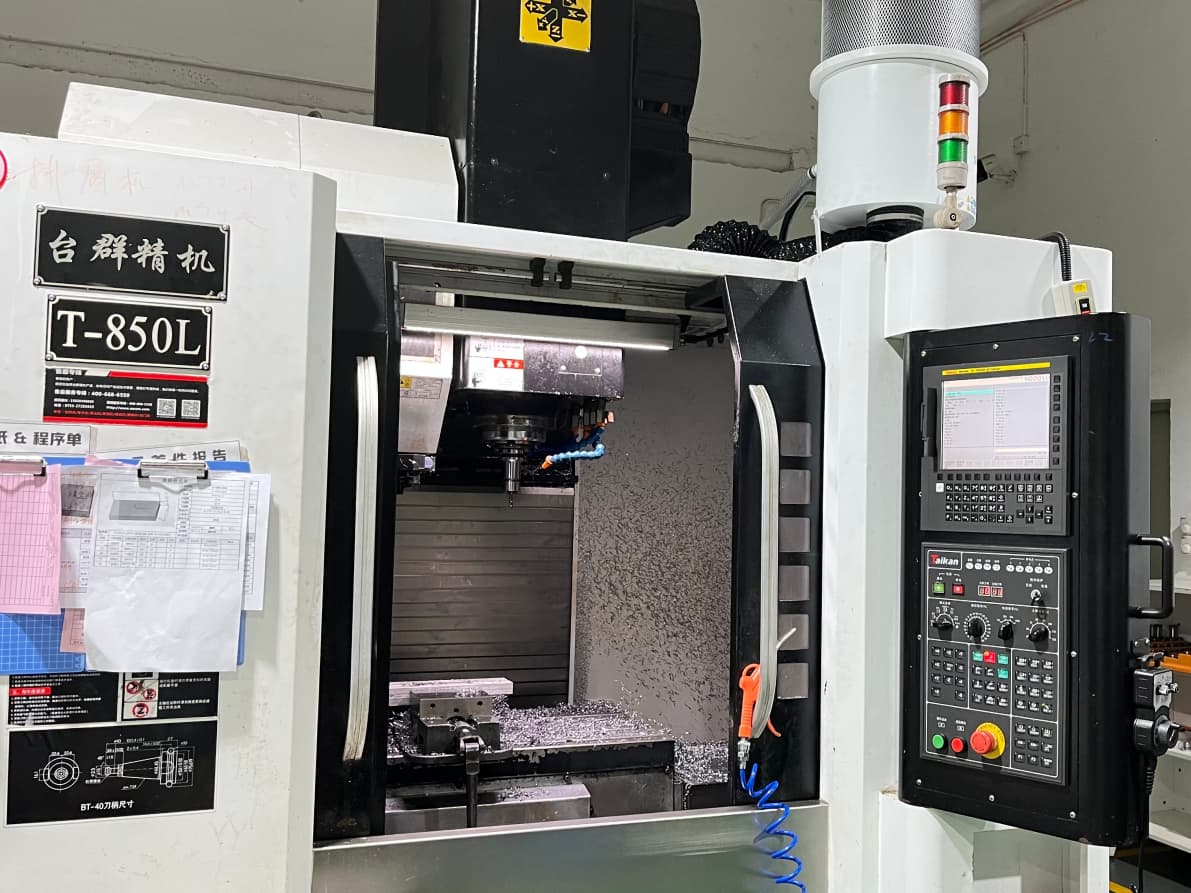
A CNC tool programmer spends most of their time in CAM software such as Mastercam, Fusion 360, or HyperMILL. They import a CAD model, choose roughing and finishing strategies, pick tool numbers and holders, and generate toolpaths that will run safely on the target machine.
Before releasing a program to the floor, the programmer runs a post-processor check and a full simulation. They verify that no collision occurs between the tool and the vise or workpiece. They also confirm that the sequence of operations follows a logical setup order.
Daily tasks typically include:
Translating CAD geometry into a sequence of CNC toolpaths
Selecting parametri di taglio such as feed rate, spindle speed, and depth of cut

Scegliere il giusto attrezzature and holder for each operation
Post-processing code for the specific machine control (Fanuc, Siemens,Haas, Heidenhain, etc.)
Simulating and verifying the program before first-article setup
Debugging crashes, air-cuts, and over-travel during trial runs
Updating programs when part geometry or material changes
## Skills That Separate a Strong Programmer from an Average One
Anyone can generate a toolpath in CAM software. What separates a competent programmer is the ability to judge whether the generated path is actually efficient and safe for the specific material and machine. That judgment comes from hands-on experience with metal removal.
Strong programmers understand how material type affects every cutting parameter. A titanium aerospace part demands radically different feeds and speeds from a 6061 aluminum bracket. They also know which tool geometries clear chips effectively in deep pockets versus shallow contours.
When evaluating a candidate, ask them to explain why they chose a particular toolpath strategy rather than simply confirming they can click the buttons. Reasoning reveals depth that a resume cannot.
How to Evaluate or Outsource CNC Tool Programming
If you are hiring, the most reliable test is a timed exercise. Give the candidate a moderately complex part and ask them to program it in two hours. You are watching for setup logic, tool-selection reasoning, and whether they simulate before calling it done.
If in-house capacity is insufficient, you can send programs or part files to an external shop for review or full CNC tool programming support. YPMFG offers program review and engineering evaluation for parts that need second-source verification or a fresh look at cycle-time efficiency. You send the print, CAD, and material spec; the team returns annotated notes with suggested changes.
Whichever route you take, always confirm that the programmer has access to the actual machine’s kinematic limits. Programs generated on a 3-axis post but sent to a 5-axis head without re-verification will cause avoidable setup problems on the floor.
Common Questions About CNC Tool Programmers
How long does it take to become proficient?
Most shops consider a programmer proficient after 2 to 3 years of on-machine experience combined with CAM training. The first year is mostly pattern recognition. Real judgment develops with each new material and part family.
Do CNC tool programmers need a degree?
No formal degree is mandatory. Many come from machining apprenticeships or community-college Lavorazione CNC programs. What matters is demonstrated ability to program in at least one major CAM package and read a print to tolerance.
What is a typical salary range in the US?
Entry-level programmers often earn between $50,000 and $65,000. Mid-level ranges hover around $70,000 to $90,000. Senior or multi-axis specialists can exceed $110,000. These figures may vary significantly by state, sector, and shop size.
Can software replace a tool programmer entirely?
Adaptive CAM and AI-assisted toolpath generation reduce routine work, but they do not replace setup judgment, material-specific parameter tuning, or the responsibility of verifying a program against real machine constraints. A human must still own the final check before the part runs.
## Getting the Right Programming Support for Your Parts
Whether you are hiring your first in-house programmer or validating an outsourced program, the goal is the same: every part cycles cleanly, holds print tolerance, and does not waste machine time on rework. The right programming support removes guesswork from that chain.
You can send your part prints, CAD files, and material specs to YPMFG for an engineering review. The team will flag setup risks, suggest attrezzature alternatives, and confirm that the program will run as intended on your specific machine. No commitment is required—just a clearer picture before the next job goes to the floor.