Korean
 English
 German
 Russian
 Japanese
 Spanish
 French
 Italian
 Portuguese

A CNC custom part only performs correctly when the geometry, material grade, tolerance stack, and surface finish are fully defined before any tooling or programming work begins. Most project delays and budget overruns trace back to incomplete specifications handed to the shop floor. Before sending a part to a CNC 가공 서비스, confirm that your CAD model lists every critical tolerance,post-machining treatment, and functional interface dimension. When these details are missing, the initial quote will not reflect the true final cost you will actually pay.
If you are planning to order a precision-machined component, the biggest risk is rarely the machine time itself. It is the gap between what you believe you specified and what the shop actually cuts. The points below break down what to verify before you commit to production.
Where Most CNC Custom Parts Go Wrong
The most common failure mode is not a machining error. It is a missing specification that forces the operator to make assumptions on your behalf. In many cases, a single omitted datum shifts the entire part outside the assembly envelope.
If your drawing calls for a tight tolerance on a mating surface but omits the datum scheme, the operator will choose one. That choice may move the feature 0.002 inches off where your assembly actually needs it. You will not catch the problem until the parts are on the bench.
An undefined heat-treatment requirement on an 알루미늄 합금 또는 스테인리스강 component can leave it at a hardness level that fails under real working loads. The part looks correct dimensionally but does not perform functionally.
Before ordering, confirm that every critical dimension carries a specified tolerance and a named datum. Material grades should be fully designated, not just “steel” or “aluminum.” Surface finish values must be called out on each face that contacts another component.

Specification Checklist Before You Place the Order
Use the checklist below to review your CAD package before sending it to a CNC 부품 제조업체. It covers the items that most frequently trigger rework, rejected parts, or surprise cost adders.
When any row above is blank, the shop will fill the gap with a default that may not match your design intent. That default rarely gets flagged before the first cut.
## Material and Tolerance: The Two Decisions That Drive Cost
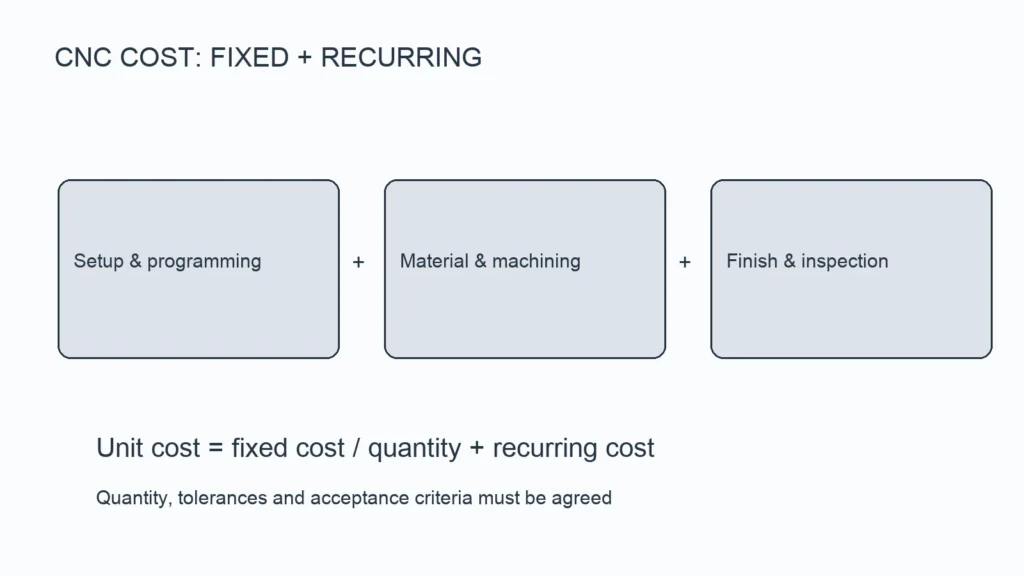
Material grade and tolerance tightness are the two variables that move your per-part price the most. Moving from a 6061 plate to a 7075 plate changes the raw material cost and the expected tooling life. It also changes the cooling and feed strategy the operator must use.
Tightening a general ±0.005-inch tolerance to ±0.001-inch on a single face can double the machining time for that operation. It also raises the rework risk if the measurement system is not calibrated for that range. The cost impact compounds across every unit in the batch.
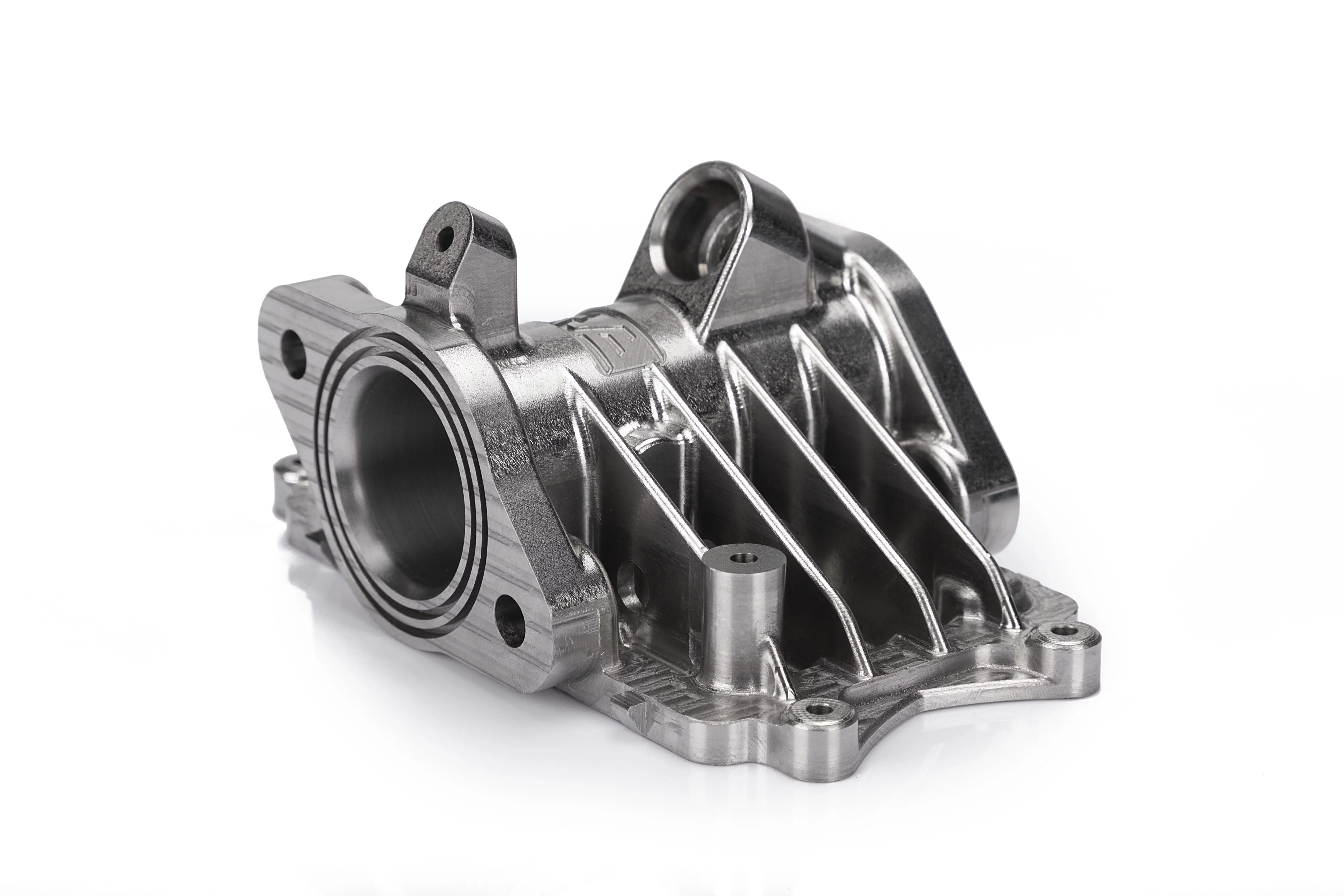
YPMFG engineering can review your drawing and flag where a tolerance can be relaxed without affecting function. In many cases, that single change saves fifteen to thirty percent of machining time. The goal is to specify the tightest tolerance your assembly actually needs, not the tightest one you can state on paper.
Questions Buyers Often Ask About CNC Custom Parts
What file formats does a CNC shop need?
대부분 CNC 가공 shops work from STEP, IGES, or DXF. If your part has complex internal features, include a section drawing or a 3D print so the shop can verify undercuts and hole depths before programming.
How many prototype units should I order before full production?
A single first-article build is the minimum. If the part will be assembled into a larger system, order two or three so you can run a fit check without waiting for a second batch to arrive.
Who covers the raw material cost if the shop uses the wrong grade?
That depends on your purchase agreement. In most CNC 부품 제조 contracts, the supplier is responsible for material substitution errors. Confirm this clause in writing before you sign.
Can I split a design across two machines to save money?
Sometimes, but you add a fixture hand-off and a new registration step. The time saved in machine hours is often offset by extra handling and the risk of misalignment at the seam.
What documentation should I receive with my parts?
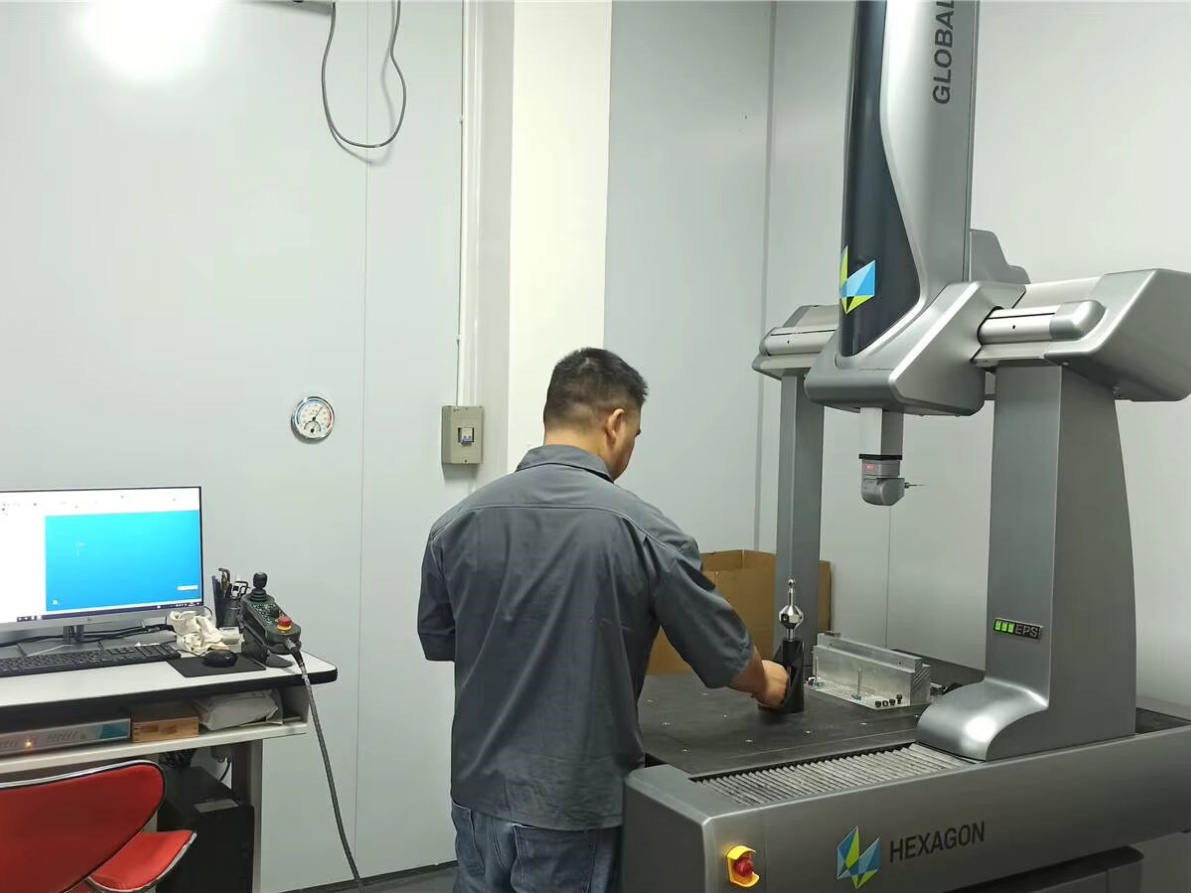
Ask for a certificate of conformance, material mill certs, and a dimensional report on the critical features. For titanium or stainless components, a heat-treatment log is also standard practice.
더 나은 장기적 결정을 내리기
The parts that cause the least downstream headache are the ones where the specification was unambiguous from day one. Send your drawing package to YPMFG for a free engineering review before you commit. You will receive a tolerance feasibility note, a material recommendation, and a realistic quote so you can compare it against your current solution with full confidence.