Korean
 English
 German
 Russian
 Japanese
 Spanish
 French
 Italian
 Portuguese

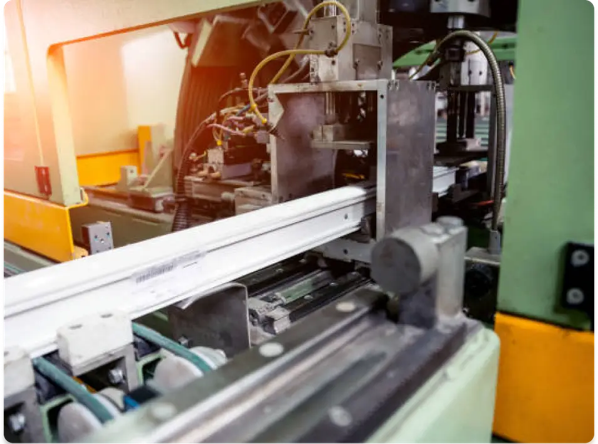
Why does a quote for ten aluminum rails sometimes cost more per piece than a quote for a thousand? I hear that one a lot, and the answer is always the same. The die. 알루미늄 압출 needs a steel die, and ten rails can’t pay for it. That’s really the whole debate in one sentence. You can squeeze a shape out through a die, or you can carve it out of a solid block, and the two have very different price curves. Here’s how I sort parts into one camp or the other.
How Each One Makes a Part
Quick version of each. For extrusion, a hot billet (roughly 400 to 500°C) gets pushed through a shaped hole in a steel die, a bit like toothpaste, except the toothpaste is metal and the tube is a hydraulic press. What comes out is a long profile with the same cross-section end to end, and it’s stretched and cut to length afterwards. Machining is the opposite. You begin with a solid block and cut away whatever isn’t the part. One squeezes the shape in. The other carves everything else off. Odd as it sounds, that one difference drives most of the price.
What Extrusion Is Good At
Long parts with the same shape the whole way. Frames, rails, heat sinks, door and window profiles, T-slot framing. It can even make hollow sections with closed cavities inside, and you just can’t get a cutter in there on a normal part. It’s easy on the metal too. You aren’t turning most of a block into chips.
One handy shortcut: standard T-slot sizes (20 x 20, 30 x 30, 40 x 40, 45 x 45 mm and so on) are easy to buy. If your frame fits one, you might not need a custom die at all. The catch with custom is the die. You pay for it before the first part exists, it costs more as the shape gets fussier, and if you change the profile later, that means a brand new die.
What Machining Is Good At
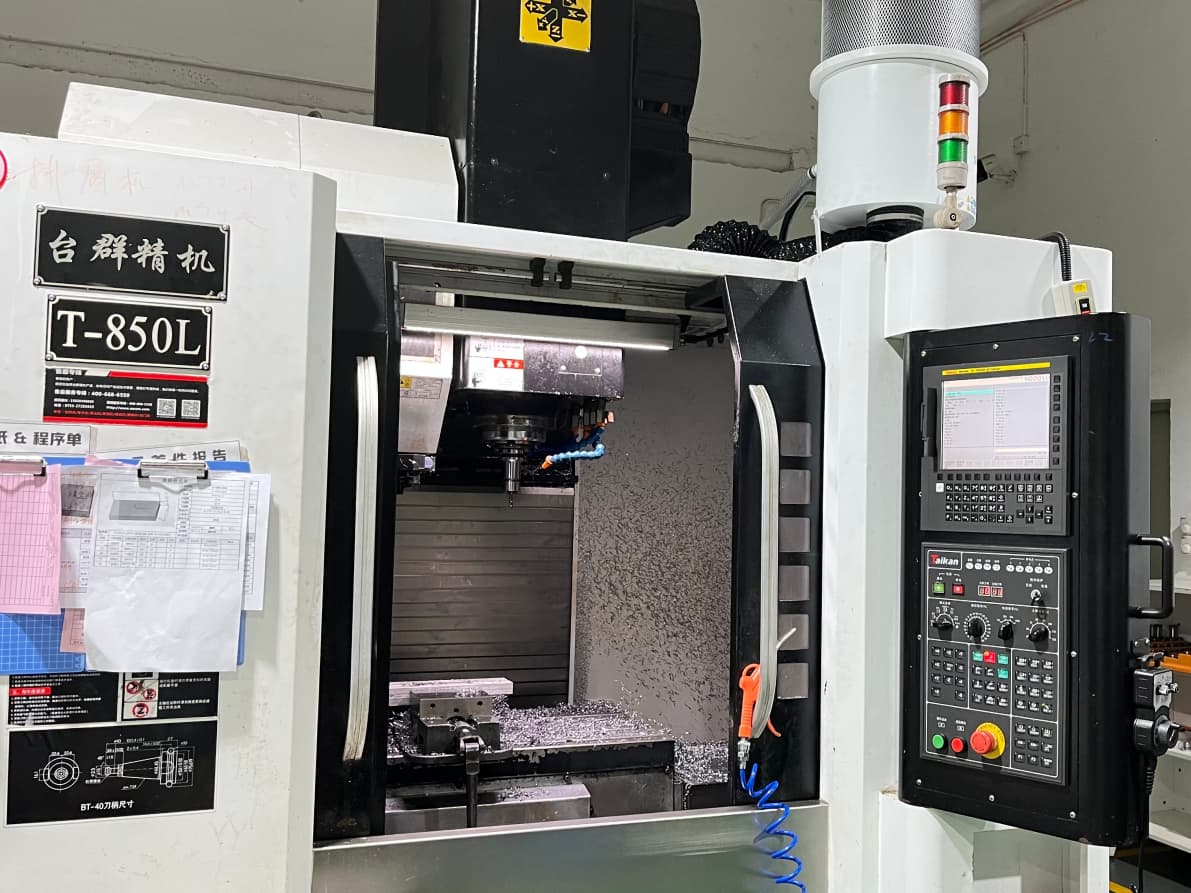
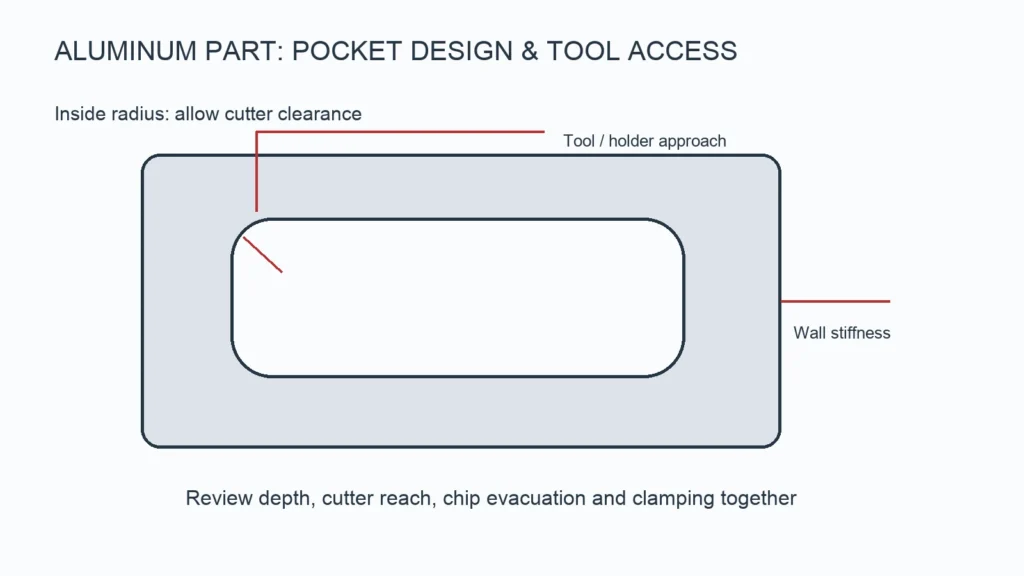
CNC 가공 is the better fit for short runs, odd shapes and anything you might change next week. A bracket with pockets on three sides? Machine it. A housing with threaded holes at awkward angles? Machine it. There’s no die, so parts can ship in days, and a design change is just a new file. Tolerances are tighter too, around ±0.02 mm or better on the features that count. What you pay for is machine time and all the aluminum that turns into chips.
Numbers Worth Knowing
Don’t expect perfection from an extrusion. Good shops hold the critical dimensions to about ±0.1 mm and the rest to about ±0.15 mm. Walls usually fall between 1.0 and 2.5 mm, thinner for light trim and 2 mm or more if the part carries load.
A few design habits help: even wall thickness, rounded corners, a shape that’s roughly symmetrical. Uneven walls cool at different speeds, and the profile can twist or bow on its way out. For alloy, 6063 gives a smooth surface and anodizes nicely, so it’s the usual choice when looks count. 6061 is stronger, so it’s the one I’d pick for structural work.
Strength and Waste
A lot of people assume a machined part must be stronger because it came from solid stock. Honestly, that rarely matters. A 6061 extrusion in T6 temper is strong enough for most frames, brackets and guards. Shape matters more. An extrusion puts metal right where the load is, with ribs and hollow sections, so it stays light. Machine the same shape from a block and most of that block ends up on the floor. Sure, the chips get recycled. You still bought the block, though, and paid for the hours spent cutting it away.
The Mix That Often Wins
What I recommend most often isn’t either one on its own. It’s both. Extrude the long shape, then machine the rest. Cut it to length, drill the holes, mill a pocket for a connector, tap a few threads, square up the ends. The extrusion gives you a cheap body that’s already close to final shape, and the machine adds the details a die can’t produce. Lots of aluminum frames and enclosures are made this way, and I’d say most of them should be.
Looks and Finish
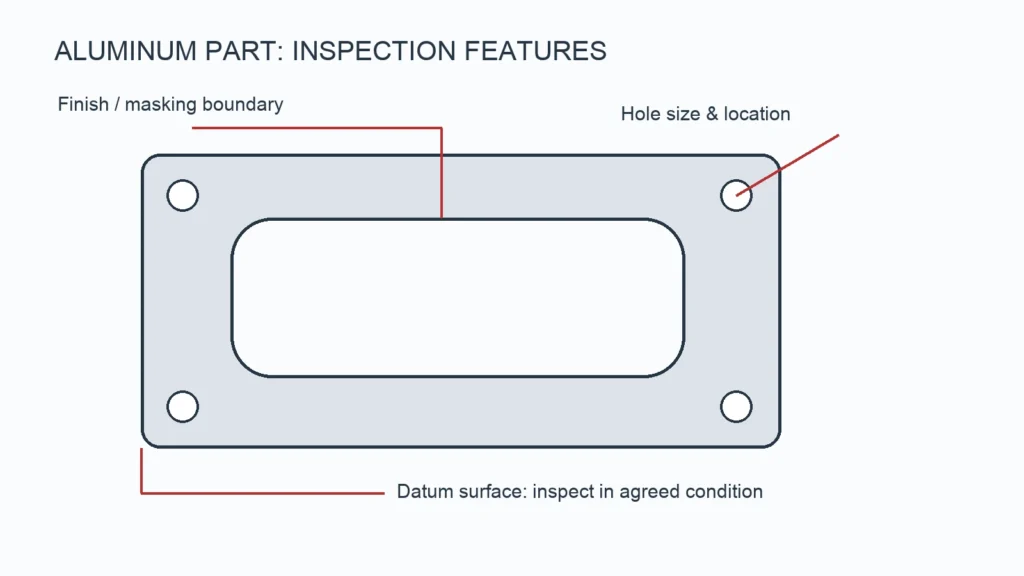
Extruded parts carry faint lines along their length, often called die lines. On a hidden frame, who cares. On a visible panel, ask for brushing, bead blasting or anodizing, because all three hide them. Machined faces have tool marks instead, normally around Ra 3.2 µm straight off the machine. There’s nothing wrong with either. Simply make a decision early as a coating is a thin layer and if not planned will jam a tight fit.
Where the Break-Even Sits
Where’s the crossover? It changes with every profile, but the pattern holds. From one part up to a few dozen, machining usually wins, since there’s no die to pay for. Push the quantity higher and the die cost gets spread thin, so extrusion pulls ahead, sometimes by a lot.
Lead times follow the same idea. Standard profiles can show up in about 7 days. Complex ones may need 10 to 15. And if the design isn’t settled, machine a prototype first. Extruding a profile you end up redesigning is a pricey way to learn.
Tips Before You Ask for Quotes
When you ask for quotes, send the cross-section drawing, the length and the quantity. Mark which dimensions matter and which ones don’t. Tell them the finish you want, since color and coating can change the alloy choice. Ask if an existing profile would do. And if all you need is a couple of cuts in a standard bar, say that out loud. A decent shop will usually steer you to the cheaper route.
결론
So, which one? Long, uniform and needed in volume points to extrusion. Short, complex or still in flux points to machining. A bit of both? Use both. Ask the shop early and let them price each route. It takes a few minutes and can change your whole budget.