 English
  German
  Russian
  Japanese
  Korean
  Spanish
  French
  Italian
  Portuguese
 Quick answer:
Laser metal cutting uses a focused fiber-laser beam to melt and eject material along a programmed 2D path. It handles steel, aluminum, titanium, and copper in sheet or plate form. Typical tolerances stay under 0.1 mm, and no physical tooling is needed. Before you specify a part, four decisions drive cost and quality: material thickness,acceptable kerf loss, edge-finish requirement, and production volume. Getting these right prevents overpaying for specs you do not need or under-specifying parts that fail during assembly.
If you are sourcing laser-cut metal components for a CNC machining project, the gap between a part that installs cleanly and one that creates rework often traces back to how the cut was specified. Cost per part, edge quality, thermal distortion, and material choice all interact. The sections below break down what to verify before you send a drawing to a fab shop.
How Laser Metal Cutting Works
A fiber laser delivers 2–12 kW of optical power through a multi-mode fiber. The beam is focused to a spot of roughly 0.1–0.3 mm, where it melts the surface layer. A high-pressure assist gas—nitrogen, oxygen, or air—blows the molten metal out of the kerf in real time.
For thin gauge under 3 mm, cycle times are short and the heat-affected zone stays narrow. Thicker stock demands more power and slower head speed, which raises cost per part and can introduce minor edge recast. Understanding this trade-off helps you set realistic expectations for lead time and finish quality.
Key Factors That Affect Laser Metal Cut Quality

The variables below directly influence edge finish, dimensional accuracy, and cycle time. Match each one to your application before choosing a supplier or machine.
Reviewing these six rows against your drawing is the fastest way to flag spec conflicts before production starts. YPMFG can walk through a file and flag where a requested tolerance or material combination will push cycle time or unit cost beyond budget.
Laser Metal Cut vs. Other Sheet-Cutting Methods
Laser remains the default for mixed-geometry, medium-thickness work because it needs no physical die and handles tight internal features. For straight-line, high-volume cutting of mild steel, shearing or sawing is often cheaper per meter. The right method depends on whether you value speed, finish, or throughput first.
Choosing a Laser Metal Cut Service
Request a cut-test sample on your exact material and thickness before committing to a production run. Check three things on the sample: edge roughness under 20× magnification, dimensional fit against your tolerance stack-up, and any visible recast or oxidation staining on the top face.
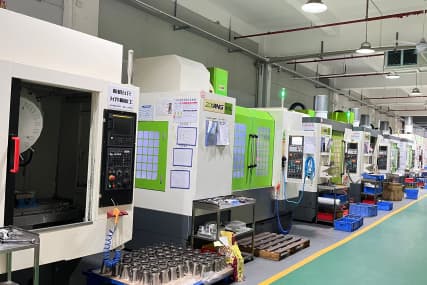
Also confirm what post-processing the shop offers in-house—deburring, bending, welding, or surface treatment. A part that ships to a second vendor for bending adds lead time and handling risk. YPMFG supports projects that pair laser cutting with subsequent CNC machining, so you can consolidate the cut, the tooling, and the finish work under one roof and reduce handoff delays.
Common Questions About Laser Metal Cutting
What is the thickest steel a fiber laser handles cleanly?
Most industrial fiber lasers cut up to 25 mm in mild steel and 12–15 mm in 304 stainless. Beyond that range, plasma or waterjet usually becomes more economical per part.
Does cutting stainless leave a rough or stained edge?
With nitrogen assist the edge stays clean and free of dark oxide staining. Oxygen assist on stainless produces an oxide layer that may require secondary grinding or polishing before painting.
How much kerf loss should I budget in my design?
Plan for roughly 0.1–0.3 mm of material removed per cut pass, depending on thickness and laser power. Add that value to your nominal internal dimensions to hit the target feature size.
Can laser cutting produce 3D or curved surfaces?
Standard 2-axis or 3-axis laser tables handle flat sheet only. For contoured or dome-shaped parts you need a 5-axis head or post-laser forming, which changes the cost model significantly.
What file formats do laser cutting services accept?
DXF, DWG, and AI are the most common. Send a vector file with closed, non-overlapping paths and no hidden layers. Raster files such as PNG or JPG are not suitable for CNC laser cutting.
Need Help Specifying Your Laser Metal Cut Parts?
Send your drawings, material spec, and quantity to YPMFG for a quick engineering review. You will get feedback on achievable tolerances, recommended assist gas, and whether a combined laser-and-CNC workflow saves cost versus a single-process build. A short email with your parameters is enough to start the conversation.