English
 German
 Russian
 Japanese
 Korean
 Spanish
 French
 Italian
 Portuguese

T651 is T6 plus a stress-relief cycle. It cuts locked-in residual stress roughly in half, so thin walls and complex pockets hold flat after machining. Thick, symmetric parts run fine in T6. Thin or mixed-thickness geometry calls for T651.
When you hand a drawing to a machine shop, the temper callout on the 6061 spec quietly decides whether your part passes or scrap on dimensional check. T6 is the default. T651 adds one thermal step that relaxes extrusion stress. That extra cycle costs a small material premium, but it prevents the rework and rejection that hit tight-tolerance work. YPMFG reviews temper selection during the DFM pass so the alloy condition is settled before the first cut.
- Residual stress: T651 soaks out extrusion stress, shrinking post-machining drift to a measurably smaller band on thin geometry.
- Cost split: The temper premium is modest; the real cost appears when T6 warps and you re-cut or reject.
- Feature threshold: Walls under 3 mm, deep pockets, or asymmetric profiles benefit most from T651 stability.
How Do T6 and T651 Compare on the Numbers That Matter?
Strength is essentially identical across both tempers. The practical split is dimensional behavior after material removal. If your part is a solid bracket or a thick housing, T6 is the right and cheaper call. The moment geometry gets thin or asymmetric, T651 earns its premium.

Why Does T651 Exist If T6 Already Meets Strength Specs?
T651 was not engineered for more strength. It exists for dimensional predictability. The 250 °C soak lets extrusion stress relax before you ever load the part onto the CNC machining table.
Where the Stress Comes From
Extrusion locks in a stress gradient through the billet cross-section. T6 aging hardens the matrix without removing that gradient. When you mill away material on one side, the balance shifts and the part springs. T651’s stress-relief step equalizes the internal forces before machining begins.
What to Verify on the Material Report
A valid T651 MTR shows the soak temperature and hold time. If the cert only says “T651” with no cycle data, ask the supplier for the process record. Without it, you cannot confirm the relief actually ran.
One honest limit: stress relief lowers peak strength slightly. If your design loads a joint to the absolute yield ceiling, run the load case against T651’s lower bound before committing.
How Does the Temper Change Cutting Parameters and Tool Life?
The hardness gap is small but measurable on long runs. T6 sits a few Rockwell B points above T651. In practice, you run the same spindle speed and feed for both on 6061. What shifts is tool life.
A 1,000-piece batch in T6 will consume carbide edges a little faster. That translates to one extra tool change per shift. On a 50-piece prototype, the difference is negligible. On a 5,000-piece production run, ask your shop to log tool life by temper so the cost delta lands on the quote, not on surprise downtime.
Limit to acknowledge: on parts under 2 mm thick, the heat-affected zone from the cut masks the temper hardness difference. The cutting feel becomes nearly the same.

When Does T6 Actually Warp a Part After Machining?
Warp is not random. It follows the extrusion stress pattern and shows up worst where material was removed unevenly. A plate milled on one face will spring back. A symmetric part cut from the billet center stays flat.
The deeper the cut relative to the remaining wall, the more the part moves. T651’s prior soak cuts that movement significantly. Here is where the risk concentrates:
- Single-face milled plates under 5 mm thick
- Deep pockets deeper than 4× the bottom width
- Mixed-thickness profiles with adjacent thin and thick zones
One thing no temper fix solves: if your fixture design clamps 80 percent of the faces, the part will warp regardless of T6 or T651. Fixture strategy matters as much as alloy condition.
How a T651 Process Route Handles a Thin-Walled Bracket
A 3 mm-thick 6061 bracket with three internal ribs and a 12 mm deep pocket is the textbook case where T6 drifts. The route below keeps it in tolerance.
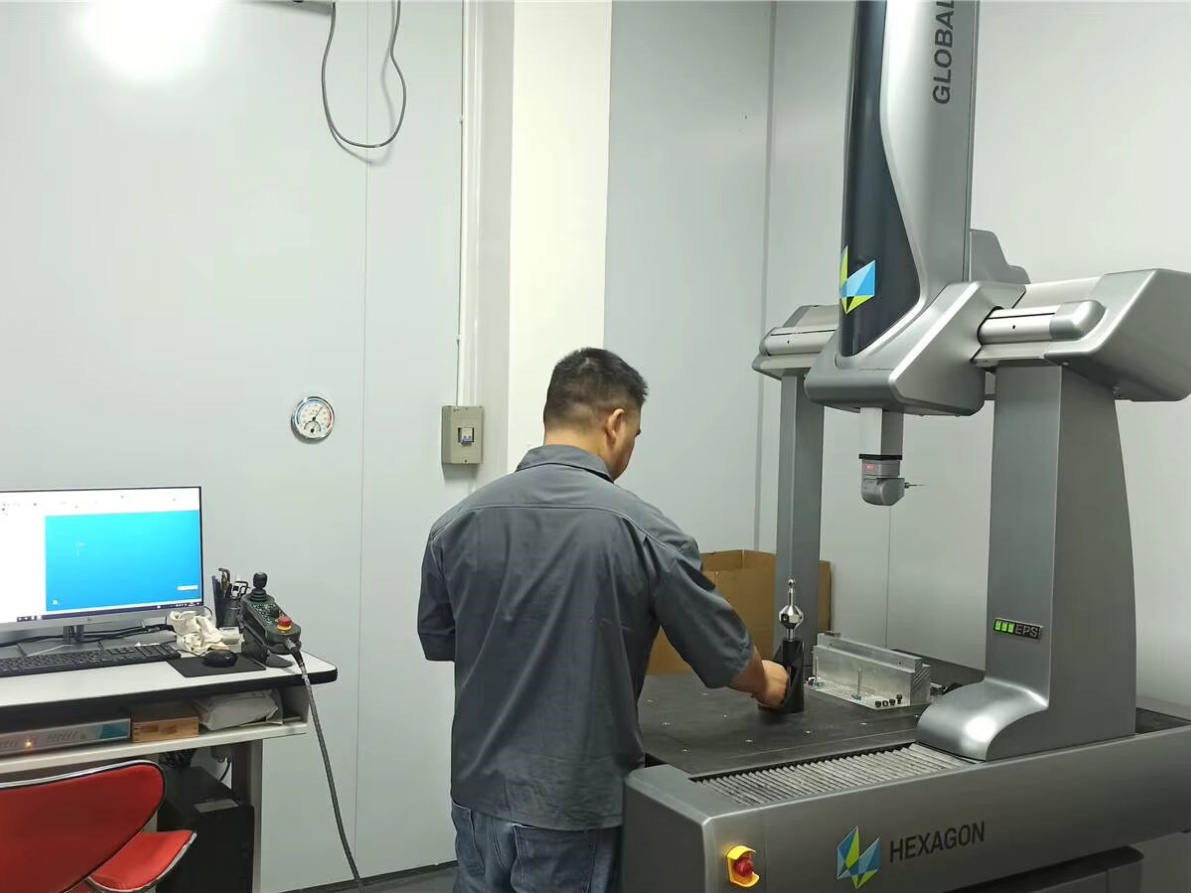
Step 1: Source T651 plate; confirm the MTR shows 250 °C / 3 h stress relief. Step 2: Mill from both faces in equal 0.5 mm passes to balance residual forces. Step 3: Drill and tap all holes before the final pocket cut so the pocket sees a fully relaxed body. Step 4: Finish the pocket at 0.1 mm depth of cut, low feed. Step 5: Rest the part 24 h, then CMM-verify every critical datum.
Process Route Reference: YPMFG process library, reviewed against published 6061 temper data. Client-specific data withheld per NDA.
Practical Questions Before You Finalize the Temper
Can I buy T6 and ask the shop to stress-relieve it in-house? No. T651 is a mill-certified condition with a documented soak cycle on the MTR. A post-purchase oven run is not the same control and will not appear on the material cert.
Does T651 change corrosion resistance or welding behavior? It does not. Both tempers share the same 6061 chemistry. The stress-relief cycle does not shift pitting resistance or weld-preheat requirements in any measurable way for structural or enclosure use.
How do I tell if my current T6 parts are already warping? It cannot be diagnosed from a single sample. Pull a 30-piece set, machine to final, rest 48 h, then measure drift on the critical dimension. If the spread exceeds your tolerance band, switch the spec to T651 and re-test the lot.
Choosing the Right Temper Without Guessing
The decision comes down to geometry, not habit. Thick, symmetric parts run fine in T6 and save the small material premium every order. Thin, asymmetric, or mixed-thickness parts deserve T651 from the start because rework and rejection costs exceed the temper delta on every failed cycle.
If you are sitting on a drawing and are not sure which temper will hold your tolerance after the final cut, send the file to YPMFG for an engineering review. You get a written recommendation with the specific risk factors listed for your part, no commitment attached. That one page of notes will save a rejected batch or an expensive re-cut cycle down the line.