English
 German
 Russian
 Japanese
 Korean
 Spanish
 French
 Italian
 Portuguese

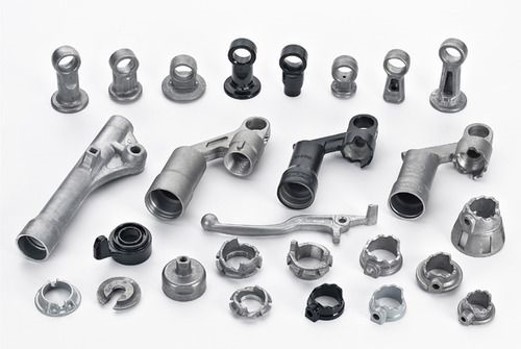
Metal casting can be quick and seemingly easy. You pour hot metal into a mould and once the metal is cooled and solidified you have the shape you require. On occasion the shape isn’t quite right – it can be lumpy or patchy, it may have craters or cracks. This can make processing or painting difficult or impossible so manufacturers would like to find out the cause of these imperfections.
Why Air Gets Trapped Inside Metal
It is quite common for die casting to contain small voids within the casting. When these are observed in a die casting the more common cause is the high pressure die casting process used to inject the molten metal into the die.
The holes are these pockets of trapped gas porosity. You may be able to see some of them from the outside, and others won’t be visible until the work is machined.
The venting of the mould should permit to escape air as it is poured. What the operatives should also control the air coming out and the flow rate of the injection and the flayness of the metal. Metal too quickly will also cause turbulence to increase the trapping of gases.
Causes of Shrinkage Defect in Casting
The metal cools during casting. It shrinks from liquid to solid. The change in volume can also produce voids in the casting due to natural causes.
The thickness area usually cools down slower than the thin area. When the decreasing area of the casting is under fed the improper amount of liquid metal, holes will be appeared in the casting.
This problem can be prevented if the designers had the correct thickness of wall and not very thick part. Furthermore, the wall of the thickness of the mould has to be considered as a constant thickness to produce a higher quality product.
Why Cast Parts Develop Rough Surfaces
What is the finish of a final casting is made to be used for? It may be rough, with damage and uneven sections. Out of the mould, the final casting may have rough surfaces.
This may present issues: as a result of mouldy surfaces, soiled, excessive or low humidity situations or filling circumstances. Restoring techniques should not use in the same manner as provides: refilling the molde!ϑs again and again will end up in chewing gum damage.
Moulds should be checked regularly andwashed down by workers. Fixing of fallen parts should be done immediately so that it does not extend to other areas. This rapid repair work process helps to extend the shelf life of the product and reduce its deterioration.
Unfilled Mold Filling Problems
The liquid metal did not completely fill all the areas of the mould. Some features of the end part may not have been cast completely and it may be missing corners and edges.
It also knows as mis-run. This results if the metal has cooled prior to the complete filling of the mould.
These look like cold shuts as this can happen where two metal lines meet but don’t properly attach. This can be just a visible line or it can compromise the part.
These issues can be corrected by varying filling speed, raising the temperature of the metal and the mould.
How Finishing Work Reveals Defects
Others can only be seen when you cut, drill or polish the casting.
After machined your metal, you might encounter the hidden holes inside. Likewise, the paint or coating might expose the uneven spot.
Refined surface finishing can improve the look but not all manufacturing issues are fixable. Tiny holes and pockmarks may need to be overlooked if large holes in the actual material or holes are to be rejected.
One of the benefits of evaluating castings before we move forward to further processing is there is no extra finishing costs.
Why Regular Check of Your Machine Settings is Necessary
Every casting machine requires the right pressure, temperature and cycle time. However, if the mould is in good condition and settings are not correct, it will also cause failure.
Operators need to keep a look on key parameters of production and you should have a record of the beginning of each run of production. If it is wandering, then you have to make an adjustment.
You’ll catch the small issues now instead of learning them after hundreds of faulty parts.
Check Parts Before Completing Assembly
The area damage along with the gaps and cracks can easily be identified using your vision. Should you have instruments to measure, then you are able to actually fix the size of the project after it is complete.
Further tests are also needed in parts to reveal errors not immediately visible. The inspections depend on the material and application.
It does not take long and it helps prevent your customers from purchasing parts that do not function. Better to have the issues when not preparing the parts.
Conclusion
Casting defects increase production costs and extend lead times. Air entrapments, sink lines, voids in the casting and unrefined surfaces are some of the common casting issues. However, when taking proper care of the mould, setting up the machinery and inspecting the casting, companies can avoid casting errors. Businesses can identify these issues early to avoid spending additional money on finishing or machining. Companies interested in their metal manufacturing processes should visit ypmfg.com for insight into casting challenges that will help manufacturing teams to cut waste, improve quality and keep customer timelines on schedule.