English
 German
 Russian
 Japanese
 Korean
 Spanish
 French
 Italian
 Portuguese

Today, there are many forms of construction that utilize metal building blocks. When you find the right combination of strength and flexibility, you can change how things are done.
There are many instances where people choose to work with steel or aluminum due to their durability. To produce quality work using sheet metal fabrication, you must select the appropriate base material.
Some of the most desirable base materials include those that are thin and flat. These materials will melt easily when heated to high temperatures; however, they will distort less than other base materials.
Due to the smooth melting characteristics of these base materials, you can easily create clean cut lines in a short period of time. Builders generally prefer that after these flat plates have been formed into shape, they remain stable.
Ideal Materials for Cutting
Many types of metal have a higher tolerance for high energy laser beam applications. Carbon steel is a good example because it rapidly absorbs the laser energy. Because of its fast absorption rate, carbon steel is able to be cut with extremely clean edges.
Aluminum and copper require extra care when using a laser cutter because of their high reflectivity. However, present day state-of-the-art laser cutters can adjust their cutting parameters to create excellent cuts on both of these materials.
Thickness plays a major role in how well a laser cutter performs, just like other factors associated with laser cutting. Thinner sheets of metal can be cut much quicker than thicker blocks of metal.
When using standard plate thicknesses, a laser cutter is able to make smooth transitions from cutting completely through the material. Overall, the cutting process appears to be very smooth.
Design Flexibility Benefits
The creative ways designers in our world today can use flat metal plates are limitless. A designer may decide to bend the plate to a sharp point, or possibly the designer will opt for a slight curve.
Today, most designers use Computer-Aided Design (CAD) software to create complex geometric designs. Once a CAD model has been generated, machines can follow that model.
Using CAD eliminates the need for expensive custom molds. It is also easy for engineers to make modifications to a product after production has begun. These modifications can usually be made at minimal cost.
If an engineer discovers a defect in a product, it can typically be fixed through a simple software update. This saves valuable time on factory floors.
Engineers can rapidly generate prototypes, and they can easily produce thousands of identical products.
Precision and High Accuracy
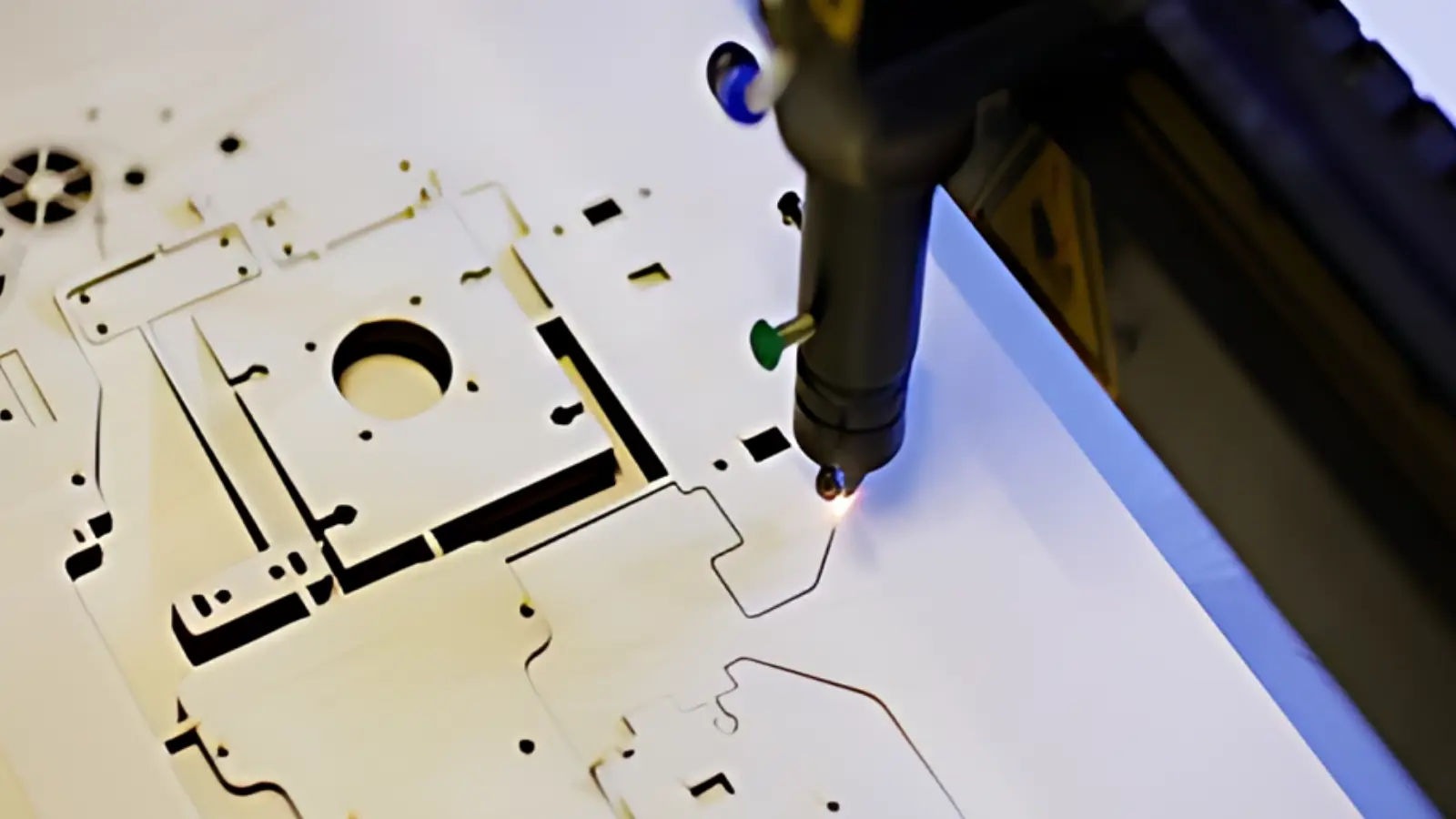
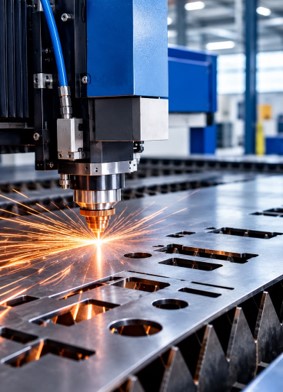
Advanced Laser Cutting has several other benefits as well. One of these is its capability to cleanly slice through metal with an intense beam of light.
Another benefit of Advanced Laser Cutting is that it can provide extremely precise cuts for every part made. Another benefit is that the diameter of the cutting beam remains relatively constant during the course of the cutting operation.
This means that the cut edges are smooth and have no burrs. There is no need to polish the parts after they have been cut.
Also, Advanced Laser Cutting is able to make extremely small holes and/or extremely intricate designs on the material being cut.
Additionally, the heat generated by the cutting process affects only a relatively small amount of material on either side of the cut. Therefore, the material being cut will remain flat.
Lastly, the detail created by Advanced Laser Cutting will maintain its precision and sharpness indefinitely.
Fabrication Considerations
Creating a product using metal requires careful planning from start to finish. In sheet metal fabrication, operators have to find the correct tool for the specific metal.
Certain types of metal may break if you attempt to bend them too much. As operators bend the metal, they need to ensure they follow the direction of the grain of the metal.
Failure to follow the grain could cause significant cracking in the metal. Prior to welding two pieces of metal together, operators need to remove all oil from the welding surface. Oil can quickly ruin a strong weld.
Operators must handle the material carefully so that once the finished product is complete, it will appear well-made. Wise decision-making can prevent operators from making expensive mistakes in the future.
Speed and Efficiency
The modern metal shop now produces at an accelerated pace compared to before. Laser cutting has now been introduced as standard operating procedure in many modern metal shops.
This introduction of laser cutting enables the metal shop to produce more parts per day. A single laser cutting machine can be substituted for multiple older types of machines that were used to cut metal.
When the parts are cut by the laser cutting machine, they are then sent to the next operation (bending) immediately. There is very little idle time between production runs.
When a new sheet of metal is needed, it can be loaded into the laser cutting machine in less than two minutes. Manufacturing plants are able to operate continuously for 24 hours per day without interruption.
By producing goods continuously, manufacturers will be able to provide their customers with less expensive products. Also, timely delivery of completed orders will provide satisfied customers.
Conclusion
The correct choice of metal permits a high degree of flexibility in customizing the exterior of your building. Flat plates offer the best surface for projecting beams of light onto.
Flat plates have excellent thermal properties and can produce intricate details. Each flat plate is produced to the specifications provided by the customer; therefore, they are ready for immediate installation.
By using custom-made flat plates, you can reduce both your production costs and the amount of time it takes to complete a project.
Your shop produces top quality products that are designed to last. Understanding how flat plates work is an important factor in producing superior products.
By combining high-quality raw materials with advanced manufacturing techniques, you should always expect to get outstanding results.