Japanese
 English
 German
 Russian
 Korean
 Spanish
 French
 Italian
 Portuguese

右 cnc machining parts manufacturer is not the one with the lowest hourly rate. It is the one whose tooling, material sourcing, and inspection workflow match your part’s tolerance band, production volume, and end-use environment. Before contacting any supplier, prepare your CAD files, material specifications, and estimated annual quantities. The manufacturer you select will directly shape your lead time, defect rate, and total cost of ownership.
Many buyers send one drawing and ask for the cheapest number. That approach often triggers material substitutions, missed tolerances, or costly rework down the line. The sections below walk through how to evaluate CNC加工部品メーカー so you can shortlist candidates faster and reduce procurement risk at every stage.
What to Verify Before You Send a Quote Request
Every shop will send a quote. Few will explain how they arrived at that number. Before you commit to a supplier, confirm the following in writing:
If a supplier cannot answer these questions in a written response, treat it as a data point, not a red flag. Some smaller shops simply have not documented their internal process. You can also request a sample part or a reference work order before releasing a full production PO. YPMFG supports buyers who need documented inspection reports and material traceability attached to every batch delivery.
Key Factors That Drive Quality and Cost
Three variables account for most of the cost spread between competing quotes: material grade,tolerance band, and batch volume. A 6061-T6 aluminum part held to ±0.001 in will cost substantially more than the same part specified at ±0.010 in. Tighter tolerances force slower cutting speeds and increase the chance of tool deflection, which in turn raises scrap rates.
Finishing adds another cost layer that many buyers underestimate. Anodizing, passivation, or thermal spray coating each carry different process times and inspection steps. If your part will sit in a corrosive or high-wear environment, skipping the right surface treatment saves money on the front end but shortens service life and drives up replacement cycles.
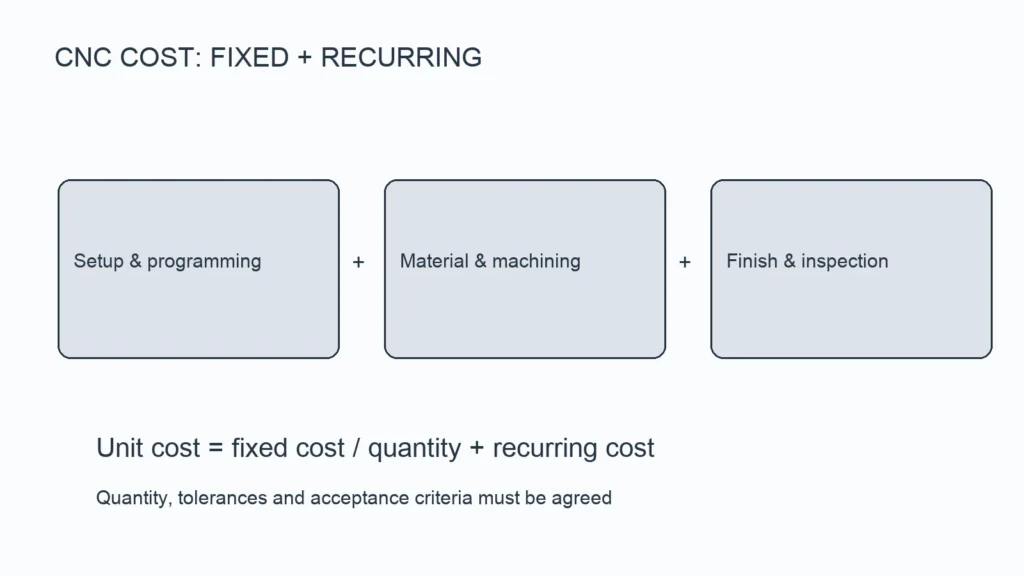
When you compare quotes, ask each manufacturer to break out material cost, CNC加工 hours, finishing, and inspection as separate line items. A single lump-sum number hides where the risk actually sits. Cost drivers vary more by application than by brand, so a structured line-item comparison is far more useful than glancing at a total price.
Common Mistakes Buyers Make at the Sourcing Stage
Skipping a manufacturability review is the most expensive mistake. A drawing that works on paper may require five separate setups on the floor, driving cost and lead time up sharply. A short engineering review before the PO is issued can flag features that need rework in the CAD stage.
Another frequent error is comparing quotes without confirming that each shop is quoting to the same revision of your drawing. A one-decimal tolerance change or a revised datum can shift the price by 20 percent or more. Always send the current revision and ask each supplier to confirm the revision number on their response.
Finally, buyers often overlook communication cadence. A manufacturer who responds in 48 hours with a clear question list is easier to work with than one who goes silent for two weeks. Set a response-time expectation early and treat unresponsiveness as a capability signal.

発注前にバイヤーがよく尋ねる質問
Do I need a 5-axis machine for my part?
Not always. If your part has complex undercuts or multiple angled features that cannot be completed on a 3-axis table, then yes. Otherwise, a well-executed 3-axis or Swiss-type CNC lathe setup may deliver the same result at lower cost. Confirm with your design engineer before requesting 5-axis capability.
How do I verify that the material is what I ordered?
Ask for a Mill Test Report or certificate of conformance per batch. For aerospace or medical work, some buyers request spectrometer analysis of each heat lot. The report should list heat number, chemical composition, and mechanical properties before the part leaves the shop.
What is a realistic lead time for a first-article sample?
Typically two to four weeks depending on part complexity, material availability, and current shop load. Rush timelines are possible but will increase cost. Set your milestone date with a buffer for at least one revision cycle to avoid downstream delays.
Should I use the same manufacturer for prototype and production runs?
In many cases, yes. The shop that machines your prototype already understands your drawing, fixturing, and quality expectations. Switching mid-project adds a learning curve and extra inspection overhead that rarely saves money.
How do I handle a dimensional dispute after delivery?
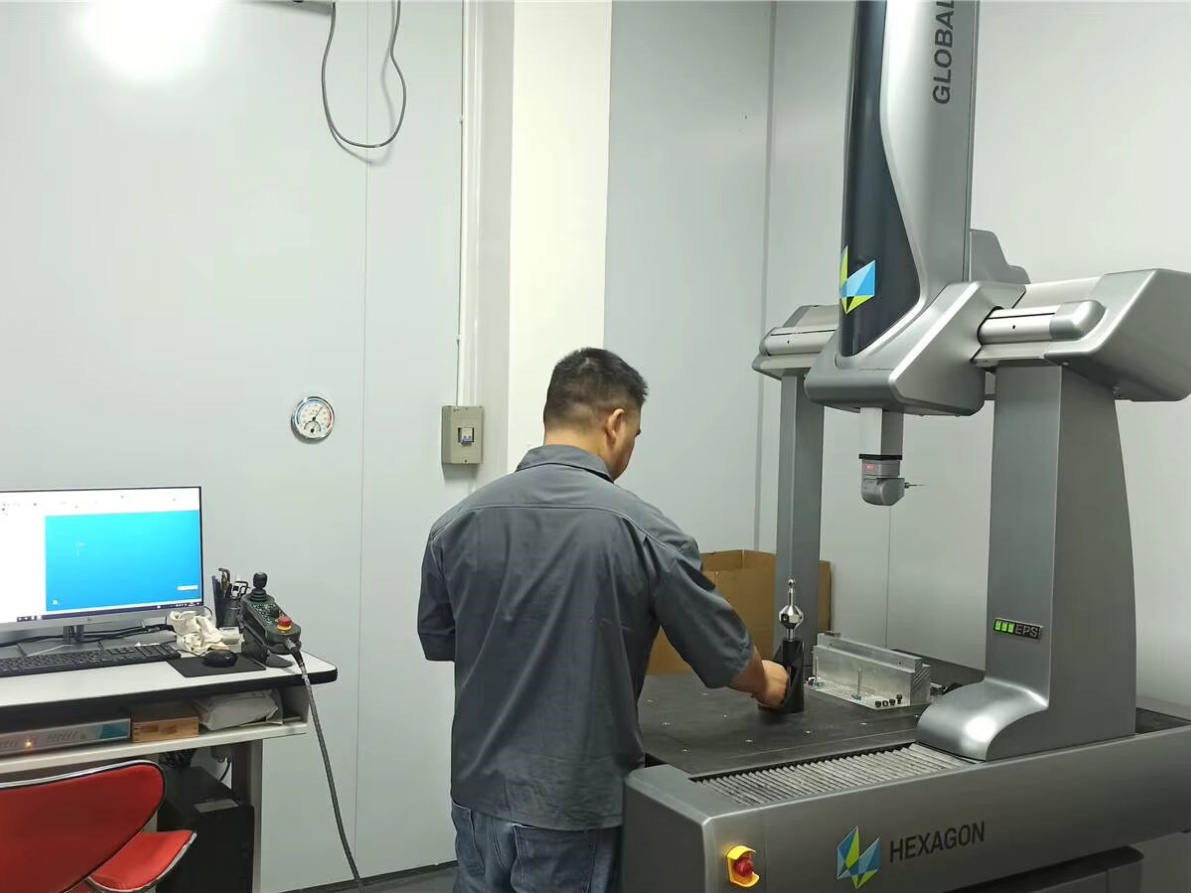
Agree on the inspection method and acceptance criteria before the PO is issued. Specify whether CMM data, go/no-go gauges, or micrometer readings will govern the call. Document the process in your quality agreement so both sides work from the same standard.
より賢明な調達判断を行う
The cheapest quote rarely survives contact with real-world tolerance stacks, material traceability requirements, or a mid-batch engineering revision. Choose the manufacturer whose process documentation, inspection depth, and communication cadence match your project’s criticality level.
Send your CAD files and specification sheet to YPMFG for an engineering review. The team will assess manufacturability, suggest material or tolerance adjustments where appropriate, and return a structured quote with lead-time options. That single step usually saves more time and money than comparing five lump-sum numbers from the start.