Japanese
 English
 German
 Russian
 Korean
 Spanish
 French
 Italian
 Portuguese

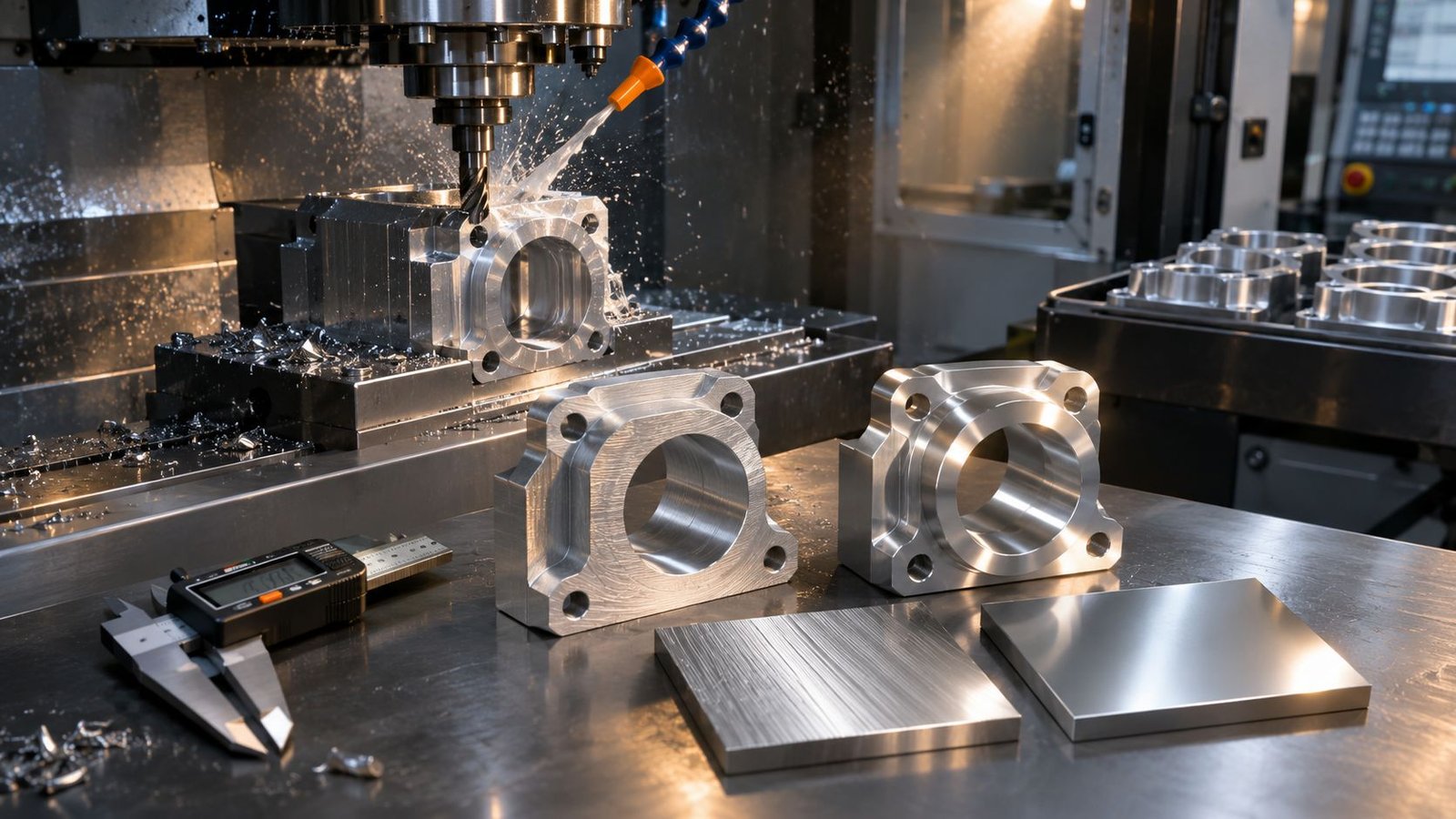
Stainless steel CNC machined parts hold ±0.01 mm tolerance when grade, finish, and passivation are specified before the first cut. The choice between 304 and 316L drives corrosion performance more than any machining parameter.
Ordering ステンレス鋼CNC部品 sounds simple until a batch warps or fails a salt-spray test at week six. The gap between a spec that says “stainless” and one that says “316L, Ra 1.6, passivated per ASTM A380” is where rework and cost overruns live. YPMFG works with buyers who need those details locked before the first cut.
主なポイント
- Grade selection: 304 covers general corrosion; 316L handles chloride-rich and food-contact environments.
- Tolerance reality: ±0.01 mm is achievable on 5-axis setups but adds to per-unit machining cost.
- Finish specification: Passivation per ASTM A380 is the minimum for corrosion-critical parts.
What Grade of Stainless Steel Fits Your Application?
The grade decides whether your part survives its environment. 304 resists mild corrosion; 316L adds molybdenum for chloride and marine exposure. Most buyers default to 304 because it costs less, then discover a rework cycle at the corrosion-test stage.
For food-contact, pharmaceutical, or coastal hardware, 316L is the standard. The lower carbon in the L-grade reduces sensitization risk during welding, which matters if your part has weld joints. For general industrial fixtures, 304 is sufficient and cuts material cost noticeably.
How Machinability Differs Between Grades
Stainless steel CNC machining of 316L produces a gummy chip that wraps around the tool. Feed rates that work on 304 often need a 10 to 15 percent reduction on 316L to prevent built-up edge. If your drawing calls for both grades in one assembly, confirm mated-part clearance before releasing the job.
Physical limit: No stainless grade is immune to crevice corrosion in stagnant, chlorinated water. Design drainage or add a coating if the part will sit in standing brine.

How Do Tolerance and Surface Finish Affect CNC Cost?
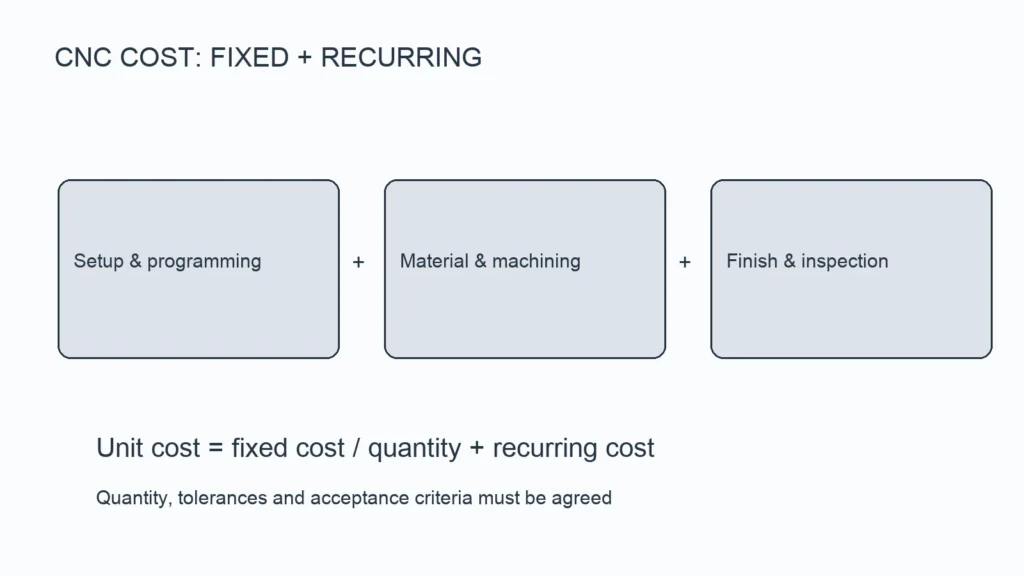
Tight tolerance and fine finish add hours to the program. A part held to ±0.1 mm on 3-axis may take 2 hours; the same part at ±0.01 mm on 5-axis can take 4 to 6 hours with slower feeds and in-process probing.
When your drawing calls for Ra 0.8 or tighter on a 316L face, ask the shop to confirm they run a fine-flute end mill with a reduced chip load. Skipping that step produces a surface that looks acceptable under raking light but fails under magnification.
Where Do Buyers Go Wrong on Stainless Steel Specs?
Most specification failures trace back to one word: “stainless.” A buyer sends a DXF with material noted as “316” instead of “316L.” The shop machines 316, welds, and the part fails a sensitization test. The L-grade distinction is the carbon content below 0.03 percent that keeps chromium carbide from forming at heat-affected zones.
A second common error: specifying a finish but not the standard. “Matte” means nothing to a machinist. State Ra or Rz, and reference the ISO 2768-2 tolerancing class. A third error is omitting passivation. CNC machined stainless parts ship with a raw oxide layer; without passivation per ASTM A380,the part is vulnerable to rust within weeks of shipping.
YPMFG runs a pre-production review where an engineer checks your drawing against these three gaps. You can send your specifications to YPMFG for a 24-hour review before releasing a PO.
Limit to acknowledge: 304 and 316 are not magnetic-free in every condition. Cold-working can introduce ferromagnetic phases. If your application is MRI-compatible, specify that explicitly.
How Stainless Steel CNC加工 Handles a Typical Pump Housing
Pump housings in 316L combine threaded ports, a sealed cavity, and a Ra 0.4 valve seat. The route below covers a single-cavity housing from bar stock to passivated part.
- Blank preparation: Saw 316L bar to length, verify mill test report for Ni ≥ 2 % and C ≤ 0.03 %.
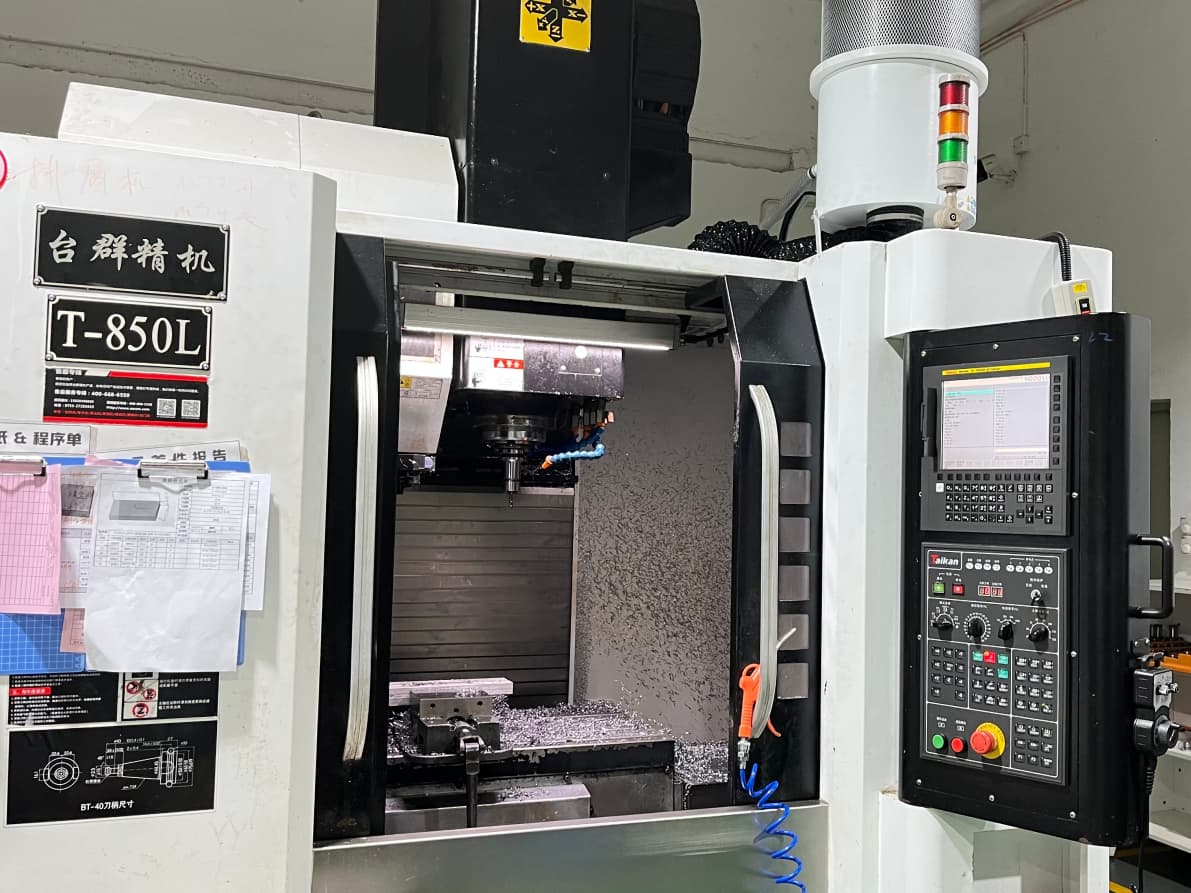
- Rough mill: 3-axis, 10 mm end mill, 0.2 mm/rev, leave 1 mm stock on functional faces.
- Finish mill and bore: 5-axis for internal cavity; 3 mm fine-flute, 0.08 mm/rev, target Ra 0.4 on the seat.
- Thread and tap: NPT or BSP per drawing; verify with a thread plug gauge.
- Passivate: Nitric acid per ASTM A380, 30 min, rinse, dry. Attach passivation cert to the batch.
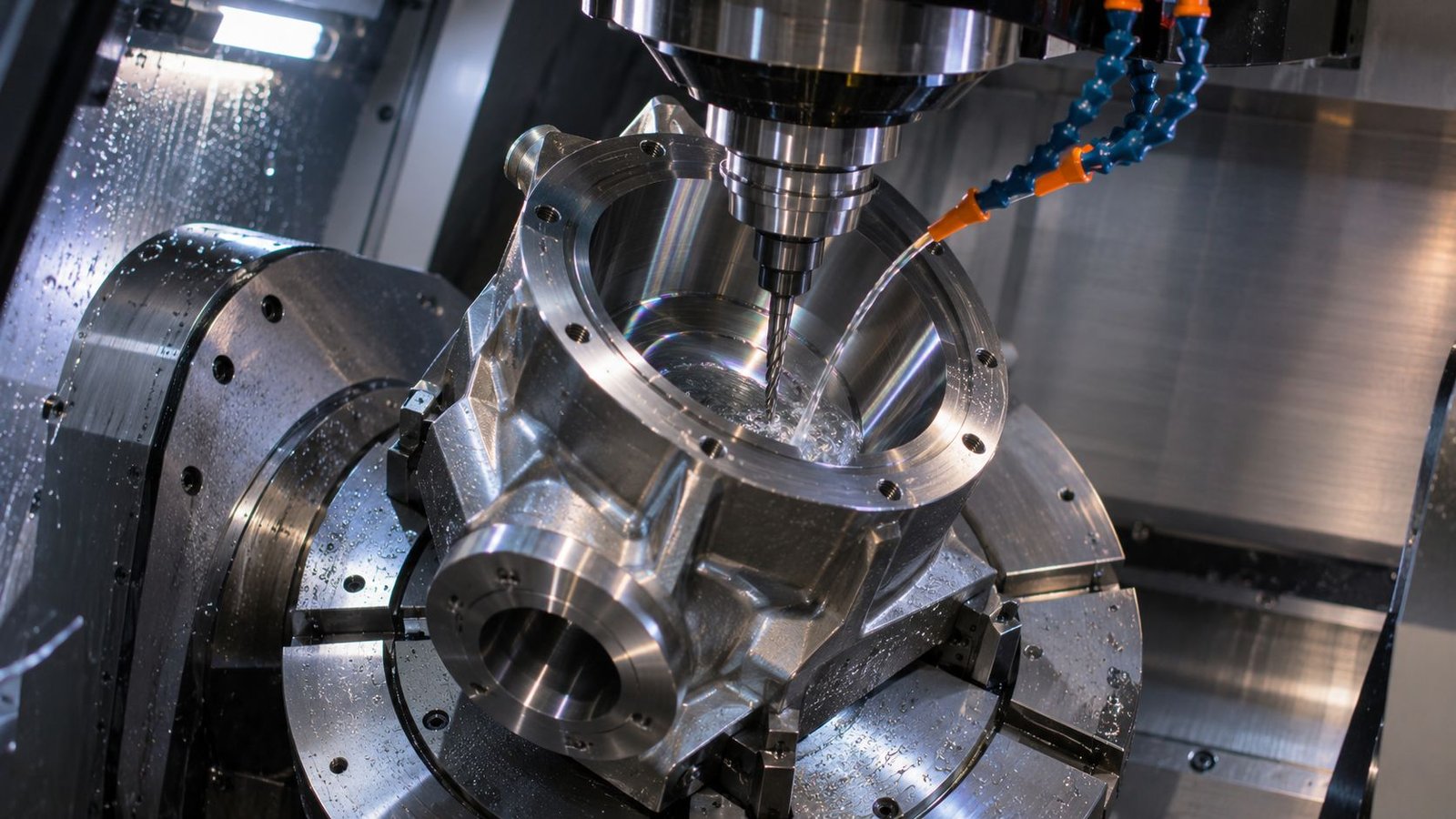
At each step, the in-process probe checks critical bores before the part leaves the machine. If a bore drifts past ±0.01 mm, the part is flagged, not scrapped. The operator adjusts tool offset and re-runs the finishing pass.
プロセスの参照情報:YPMFGプロセスライブラリ。公開されているツールデータと照合して確認済み。NDAに基づき、顧客固有のデータは非公開としています。
Practical Questions Before Ordering Stainless Steel CNC Parts
Is 304 or 316L the default? No. The default should be your corrosion exposure. If the part never touches chloride, 304 is fine. If it does, 316L. There is no single safe grade.
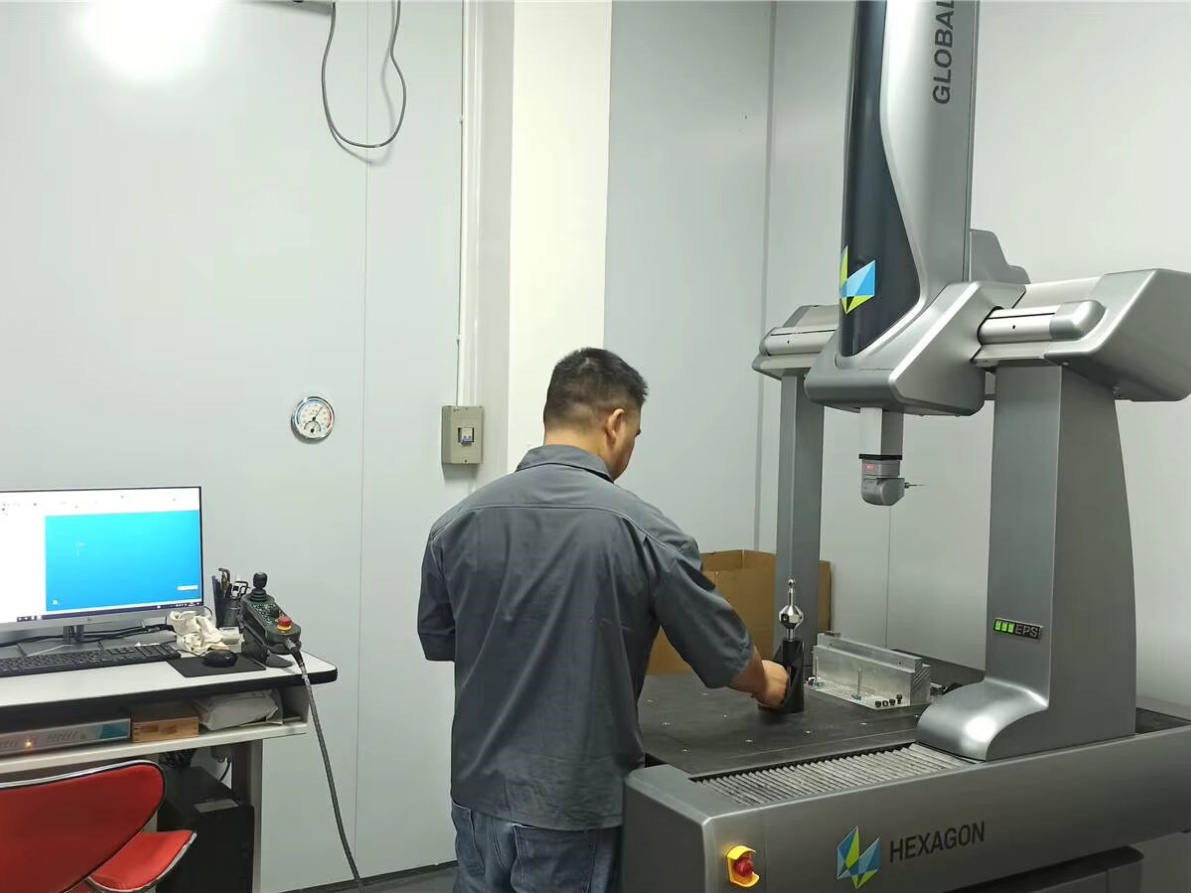
Can a 3-axis machine hit ±0.01 mm? It cannot reliably. Setup error and thermal drift make that tolerance risky below 50 mm part length on 3-axis. Specify 5-axis or a CMM-verified process for tight features.
Do I need passivation if the part will be painted? Typically yes, on machined faces that will not be fully covered. Passivation is a 30-minute chemical step that adds minimal cost but protects the oxide layer under the paint film.
How do I verify the material is actually 316L? Request the mill test report with heat number, and confirm Ni and C values match the grade. A PMI gun test on the finished part is a second check, not a substitute.
Making a Better Long-Term Decision on Stainless Steel Parts
The least expensive stainless CNC part is the one that does not need a second order. Choosing the right grade, specifying passivation, and confirming tolerance class before release avoids the rework cycle that doubles landed cost. If your application sits in a chloride environment or food-contact setting, the 316L premium over 304 is the cheapest insurance you will buy.
YPMFG can help you compare grades, confirm a process route, and flag spec gaps before you commit to a PO. Send your drawings or BOM for a 24-hour engineering review, and you will receive a written note on material, tolerance feasibility, and finish standard before any machining begins.