 Korean
  English
  German
  Russian
  Japanese
  Spanish
  French
  Italian
  Portuguese
 간단한 답변:
CNC bending services use computer-controlled press brakes to form sheet metal at repeatable angles and radii. The central question for most buyers is whether the shop can hold dimensional tolerance across a full production run without rework. Key variables include material grade, bend radius, tooling configuration, and bends per part. Misjudging any of these at the quoting stage often leads to scrap, extended lead times, or failed fit-up. The sections below outline the specific parameters you should confirm before committing to a supplier.
If you are sourcing formed metal components for a product line, a one-off fixture, or a repair part, the gap between a reliable bend and a rejected lot usually comes down to a handful of specifications that are easy to overlook. YPMFG supports buyers who need CNC bending services integrated into a broader machining and parts program.
What to Cover in This Article
What CNC bending actually involves
Five specs to verify before ordering
Material and tooling considerations
Tolerance and finish expectations
Questions to ask your supplier

What CNC Bending Services Actually Cover
CNC bending is a sheet-metal forming process. A press brake with a numerically controlled axis drives the punch and die to create a controlled angle. The controller manages bend position, stroke depth, and back-gauge location for every part.
The process handles straight bends, air bends, and coining operations. Multi-bend parts require sequential setups on the same brake or coordinated tooling. Complex geometries such as hemming, flanging, or progressive angles may need secondary operations.
Understanding which operation your part requires shapes the quote and the tooling investment. A single-angle bracket is fundamentally different from a four-bend enclosure in terms of setup time and quality-control checkpoints.
## Five Specifications to Verify Before Placing an Order
Before releasing a PO, confirm these parameters with your bending service provider:
YPMFG reviews all five parameters during the engineering assessment before quoting. Sending your technical drawings and material specification early helps surface tooling conflicts before they become costly changes.
Material and Tooling Considerations
Material selection drives the entire bending equation. Aluminum alloys, mild steel, stainless, and copper each have distinct minimum bend radii and springback behavior. A 16-gauge 304 stainless sheet will not bend the same as 16-gauge mild steel at the same tooling setup.
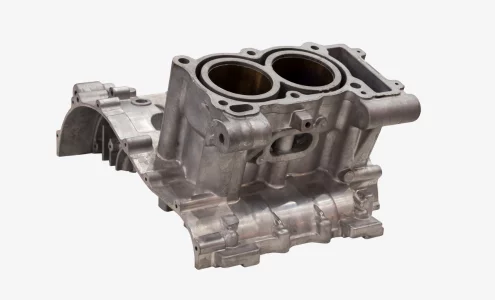
Tooling (punch and die) must match the material thickness and desired inside radius. Most shops maintain standard tooling sets, but unusual thicknesses or tight radii may require custom tools. Confirm whether tooling cost is included in the quote or billed separately.
Springback is the single most common source of angle error. The shop should state whether they compensate for it using an offset table or a test-bend verification step. Ask for their standard springback compensation method for your specific material and thickness.
공차 및 표면 마감 기준
Angle tolerance is the headline spec, but positional tolerance between multiple bends is equally critical. A part with four bends at 90° each accumulates error at every corner. Specify positional tolerance between bend lines, not just angle.
Surface finish depends on the tooling condition and material grade. Stainless parts may show visible tool marks unless a finish class is called out. For parts that go directly into an assembly without painting, confirm acceptable surface standard with your quality inspection team.
Documenting these expectations on the drawing or PO avoids the most common dispute: the shop delivers within angle spec, but the part still fails the assembly fit check.
Questions Buyers Often Ask Before Committing
What lead time should I expect for a first-article bend?
Typical first-article turnaround ranges from three to ten business days depending on tooling availability and material stock. Multi-bend parts with custom tooling add five to ten days. Confirm whether the lead time includes inspection and approval.
Can you bend mixed materials in one order?
Yes, but each material and thickness combination usually requires a separate setup. Confirm the per-setup minimum charge and whether mixed lots affect batch-size pricing.
What documentation should I provide with the drawing?
Send the 3D model, a stamped 2D drawing with bend lines, material specification, and any applicable 표면 마감 or coating requirements. Including a datum scheme for the bend lines reduces back-and-forth.
Do you offer test bends before full production?
Most shops will run a trial piece or two at no extra charge for first-article runs. Request a 모의고사 with the same material lot that will be used in production, and inspect before releasing the balance.
부품에 딱 맞는 제품 찾기
Choosing a CNC bending services partner comes down to matching their tooling range, material expertise, and QC process to your part geometry and production volume. A shop that handles high-mix,low-volume work well may not be the right fit for a 5,000-piece production run, and vice versa.
YPMFG can review your part geometry, material specification, and target tolerance, then recommend the appropriate tooling and bend strategy. You can send your specifications and CNC 가공 부품 drawings for an engineering evaluation, a cost estimate, or a first-article test plan—whichever stage of the project you are at. The goal is to lock the bending parameters before the first tool touches the sheet, so the production run lands within spec the first time.