Korean
 English
 German
 Russian
 Japanese
 Spanish
 French
 Italian
 Portuguese

Aluminum sheet metal fabrication typically combines cutting, bending, and welding on 6061 or 5052 plate. The critical variable is not the machine type but the fit-up tolerance between bent flanges, which directly affects weld quality and final part flatness.
You are comparing fabrication shops and the quotes look identical, but the process details behind them are not. One shop may cut with waterjet and bend with a press brake; another may laser-cut and TIG-weld the same bracket. The difference shows up in edge quality, bend consistency, and whether your assembly tolerances actually close. YPMFG reviews these variables before quoting so the aluminum sheet metal fabrication method matches the part function, not just the material spec.
- 합금 선정: 5052 resists marine corrosion better; 6061 suits parts needing post-machining. Confirm your design load before choosing.
- Bend consistency: Press-brake bends hold tighter angular repeatability than hand-bent joints. Specify bend radius and minimum flange length on your drawing.
- Weld fit-up: TIG welds on sheet metal require a gap of 0.5 mm or less. Ask your shop to measure fit-up before welding, not after.
5052 vs. 6061: Where the Decision Actually Lands
The Three Variables That Matter
The alloy choice drives corrosion performance, machinability, and weld behavior. Most buyers pick by default and pay for rework later. The table below maps the variables that matter.
If your part sits outdoors or near salt water, 5052 is the safer default. If it gets machined afterward, 6061 gives cleaner tool engagement. The threshold is the application environment, not the price per kilogram.
What Controls Quality: Cut, Bend, and Weld
Quality in 판금 가공 is not about the machine list. It is about how the shop controls three failure points: cut-edge quality, bend consistency, and weld fit-up. Get one of these wrong and the part fails in assembly even if every dimension is in spec.
Cut-Edge and Bend Consistency
Laser cutting leaves a clean edge on aluminum up to about 6 mm. Beyond that thickness, waterjet or plasma produces a rougher surface that may require grinding before welding. A press-brake bend on 3 mm 6061 holds angular repeatability within a few degrees across a run, but the bend radius must be at least 4 times the sheet thickness to avoid cracking.
Weld Fit-Up
TIG welding on sheet metal requires the joint gap to be 0.5 mm or less. If two flanges do not meet cleanly, the weld pool sinks and the part loses stiffness. Ask whether the shop clamps and measures fit-up before striking an arc. A shop that welds first and grinds later will show porosity and warpage. The physical limit here: you cannot weld two surfaces that are not already in contact. The geometry has to close on the fixture.
공차 and Batch Economics
Most sheet metal work falls under ISO 2768-Cl for general tolerances unless the drawing specifies otherwise. A typical press-brake bend holds the included angle within a few degrees, and total length on a 400 mm bracket stays within a few millimeters. If your assembly needs tighter control, call out specific features to ASME Y14.5 GD&T, not just a general class.
Weld Distortion Is Not a Bug
Heat input distorts the panel. A skilled fader may hold flatness within a few millimeters over a 500 mm span, but the number shifts with thickness, joint type, and cooling rate. You cannot eliminate weld distortion entirely; you can only budget for it in your assembly design. Plan a machined or reamed interface where the tolerance is critical.
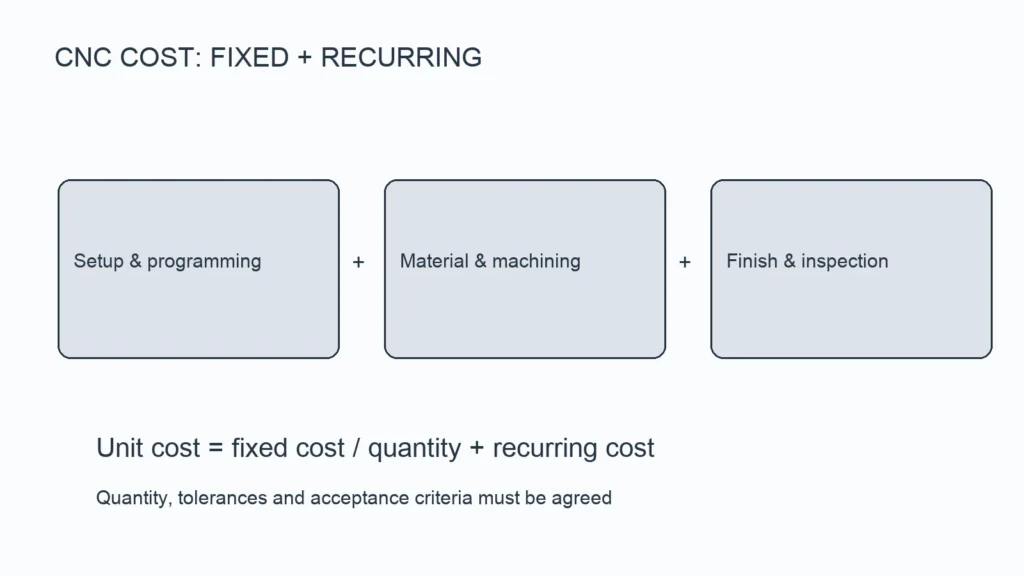
Setup cost dominates the unit price below a certain run length. A one-off bracket needs a custom welding fixture, cutting program, and first-article inspection. At 50 pieces the fixture cost is absorbed; at 500 pieces the per-unit price drops significantly. The break-even point depends on part complexity, not just quantity. Three levers shift the curve: CNC 절단 method, bend station time, and weld station count. What batch size cannot change: the minimum bend radius and the material grade. Those are physics.
Rule of thumb: below 20 units,fixture cost exceeds material cost. Above 200 units, per-unit fabrication cost is typically under half the one-off price.
From Drawing to Shipment: A Process Walkthrough
전형적인 aluminum sheet metal fabrication route for a welded bracket follows five stages.
- DFM 검토: YPMFG checks bend radius, minimum flange, weld access, and material thickness against the drawing. Flags go back to the buyer before cutting begins.
- Cutting: Laser or waterjet. Edge quality is verified on the first panel. No secondary grinding unless the spec calls for it.
- 굽힘: Press brake with a tooling set matched to the bend radius. Angular check after every bend line on the first piece.
- 용접: TIG or MIG. Fit-up measured before the arc. Post-weld inspection for porosity and distortion.
- 마무리: Deburr, anodize or powder-coat if specified, final dimension check.
Typical DFM review checkpoints for a welded 6061 aluminum bracket: bend radius, minimum flange length, weld access, and material thickness callout.
Process route reference: YPMFG fabrication library, reviewed against published tooling data. Client-specific parameters withheld per NDA.
Common Questions Before You Commit
Can 5052 and 6061 be welded together? No. Mixing alloys in one weld joint is not standard practice. The differing melt points and galvanic behavior create a weak, unpredictable zone. Pick one alloy for the entire assembly.
What is the thinnest sheet a press brake can bend reliably? Below about 0.5 mm, springback becomes a significant fraction of the bend angle. Most shops will still bend 0.8 mm, but you lose precise angular control. If your design needs a tight bend on thin gauge, plan for a tighter tolerance or a different forming method.
Does surface finish change the fabrication cost? It adds a step, not a structural change. Mill-finish 6061 is the default. Anodizing or powder-coating adds a coating cycle. The fabrication cost itself is driven by cut, bend, and weld operations, not by surface treatment.
How fast can a small batch turn around? For a simple laser-cut and bent part with no welding, 3 to 5 working days is typical from confirmed drawing to shipment. Add TIG welding and the timeline extends by a few days. Confirm your shop’s current queue before quoting a deadline.
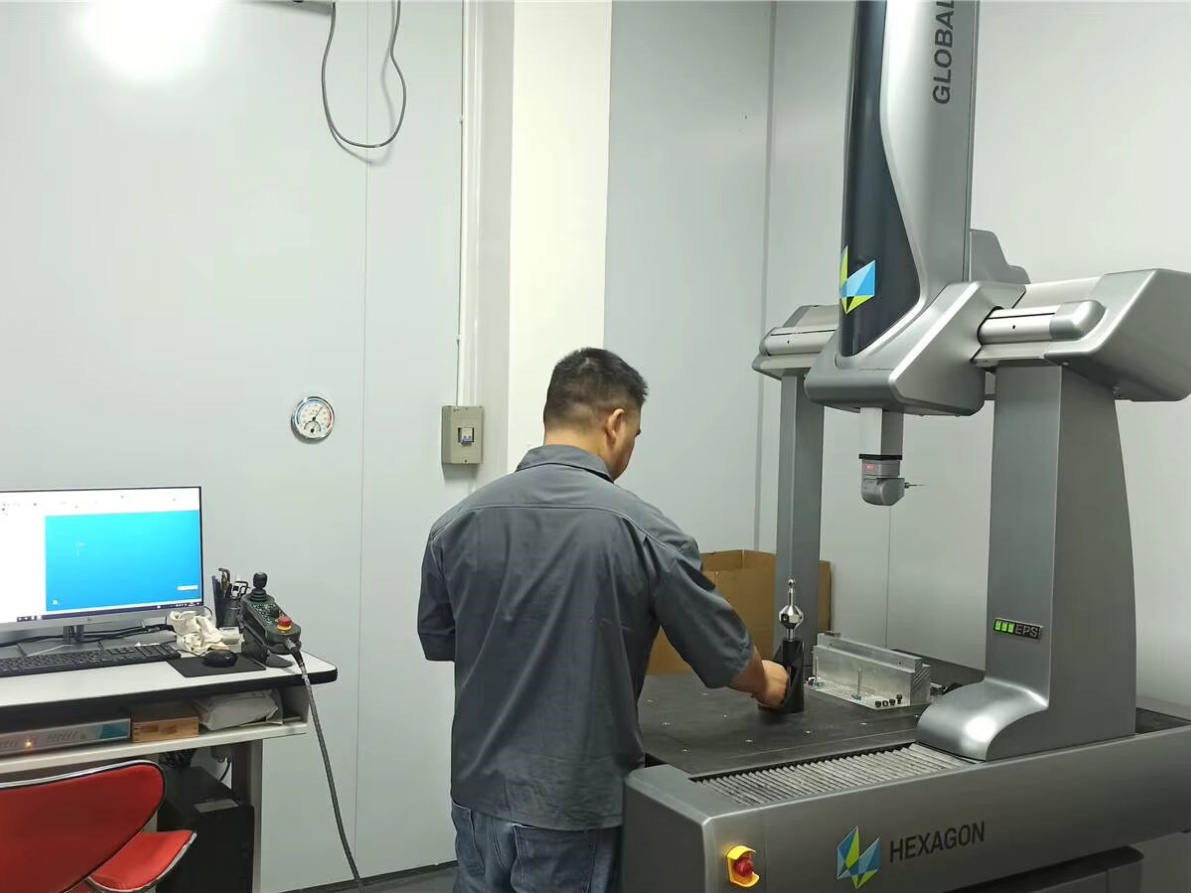
How do I verify a shop’s capability before sending drawings? Ask for a sample first-article report showing dimensional results on a part of similar complexity. Check that the report references the specific CNC 가공 공차 class and weld procedure. A shop that cannot produce a sample report has not built a quality system worth trusting.
Choosing the Right Fabrication Partner for Your Part
적절한 것을 선택하기 aluminum sheet metal fabrication partner comes down to three questions: does the alloy match the environment, do the tolerances close in assembly, and can the shop hold batch consistency without rework. Send your drawings or specifications to YPMFG for an engineering review. The team will flag DFM issues, confirm material and process fit, and return a fabrication plan with a documented tolerance budget before any metal is cut. That review takes a few days and costs nothing, but it removes the two most expensive surprises: a part that does not assemble and a batch that fails its own quality gate.