French
 English
 German
 Russian
 Japanese
 Korean
 Spanish
 Italian
 Portuguese

Aluminium 6061 runs 60 percent lighter than 1018 steel and machines at roughly 2x the feed rate. Acier delivers 3 to 4x the tensile strength. If your part carries static load above a few hundred pounds, steel wins. If it is a lightweight housing or bracket, aluminum typically cuts tooling time and cost by a visible margin.
Most CNC quotes list material as a line item, but the real question underneath is structural. A buyer swapping 6061 for 1018 steel gains rigidity but pays in weight, cycle time, and tool wear. The reverse trade-off applies when you drop to aluminum. YPMFG engineers see this decision stall projects more than any other specification choice. Getting it right up front avoids re-cutting, re-plating, or re-designing a fixture that only fits one material thickness.
Key Takeaways
- Tensile strength ratio: 1018 steel hits about 65 ksi versus 45 ksi for 6061, a 44 percent gap that matters for bolted joints under vibration.
- Specific weight: Aluminum at 2.7 g/cm3 is 70 percent lighter than steel at 7.85, directly cutting shipping and payload costs on assemblies.
- Relative machining speed: 6061 tolerates feed rates near 2x what 1018 steel can take before tool life drops below spec.
Aluminum vs Steel at a Glance
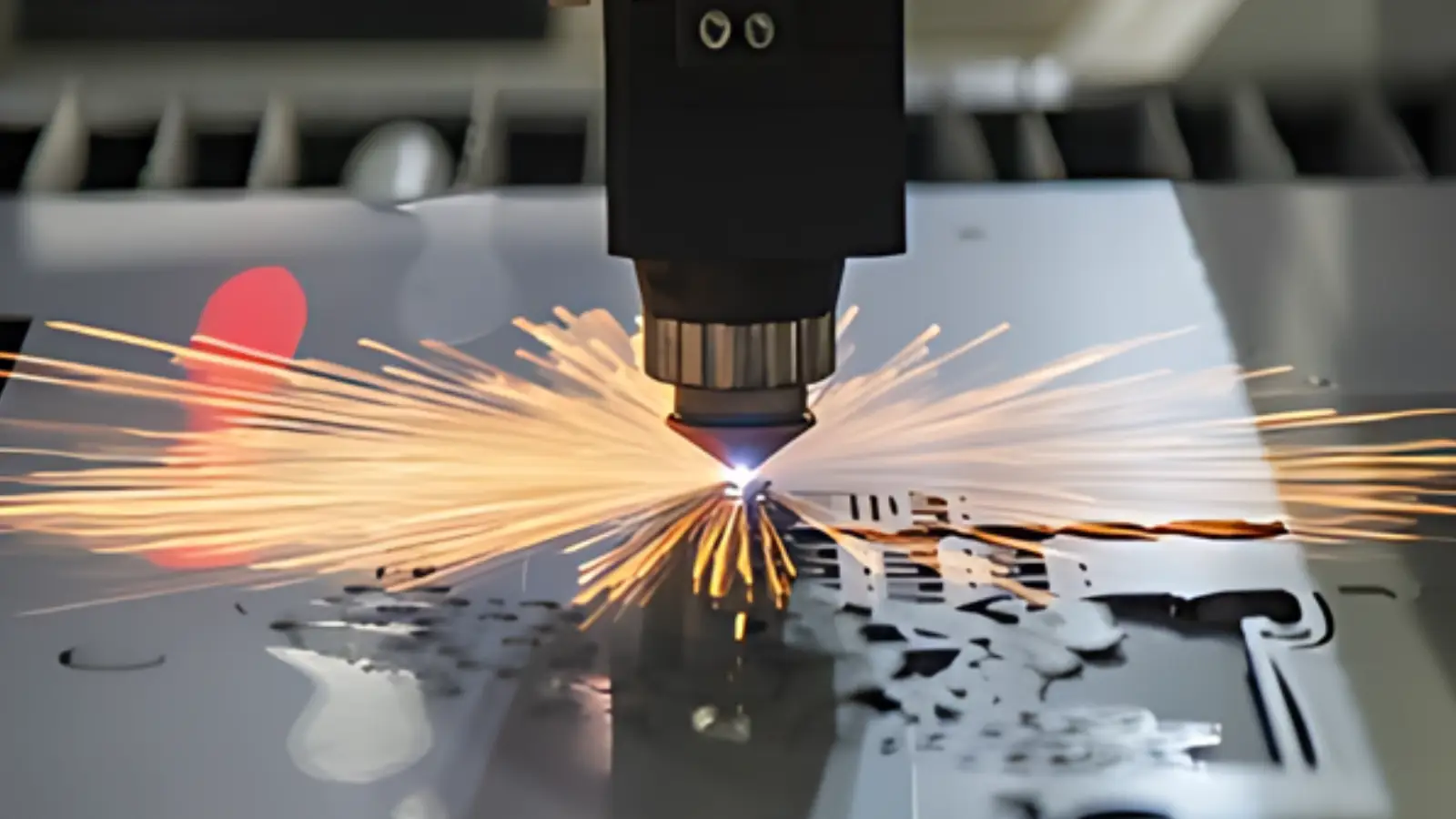
The table says it plainly: pick the material by the binding constraint. If load or fatigue governs, steel. If weight or cycle time governs, aluminum. When both are tight, check whether a hybrid (aluminum face, steel insert) closes the gap.
Which Material Carries Load Without Exceeding Deflection Limits?
Steel wins on raw stiffness. The Young’s modulus for 1018 is roughly 205 GPa; 6061 sits near 69 GPa. That 3-to-1 gap means an aluminum bracket of equal span deflects three times as much under the same point load. For a sensor mount or a load-bearing arm, that deflection can push you past the Tolérance d'usinage CNC your downstream assembly demands.
Where aluminum still works is in short, thick sections. A 15 mm plate of 6061 will not flex noticeably under 50 kg, because deflection scales with the cube of span. The trade-off is thickness: to match steel’s stiffness you add material, which adds weight and machining time. The honest limit here is that no aluminum alloy in a standard CNC shop will beat 4340 steel in a fatigue-critical, high-stress joint. For those, steel is non-negotiable.
How Does Material Choice Change Cycle Time and Tool Life?
Cutting 6061 lets the spindle hold higher surface feet per minute. A carbide end mill that lasts through 40 passes in 1018 steel often survives 80 or more passes in 6061 before the edge wear limit is hit. That directly reduces tooling cost per part and total machine hours.
Steel also raises the coolant requirement. Without adequate flood, the built-up edge on the cutter accelerates. Aluminum chips evacuate more easily, but they can pack into the flute and dull the edge if chip breaking is poor. The practical rule: if your part is under 3 kg and non-load-bearing, aluminum cuts cycle time enough that the material cost delta rarely shows up in the final quote. The physical limit: once you need a surface harden to 50 HRC or beyond, aluminum simply cannot be heat-treated to that level.

When Does Aluminum End Up Cheaper Even If Steel Costs Less Per Pound?
Per-kilogram, 1018 steel is cheaper than 6061 aluminum. But the total part cost includes material, machining hours, tooling, and finishing. Because aluminum machines faster, the 10 to 15 percent material premium is often offset by 30 percent fewer spindle hours. Add in the fact that aluminum rarely needs a secondary coating for corrosion resistance,and the total cost advantage shifts back toward aluminum for thin-walled or complex-geometry parts.
The catch: if your part needs a heat-treated steel insert for a threaded boss or bearing seat, you are running two materials and two fixtures. At that point, compare the fully loaded cost of a steel housing with machined threads against an aluminum housing plus a pressed-in steel insert. The insert route saves material but adds an assembly step and a torque-spec check. YPMFG can model both routes against your BOM and flag which one stays in tolerance after 10,000 cycles.
Rule of thumb from the shop floor: if the part is a structural frame member, go steel. If it is a housing, cover, or lightweight bracket, go aluminum and verify the deflection math before releasing the drawing.
How a Typical Housing Part Moves Through the Process
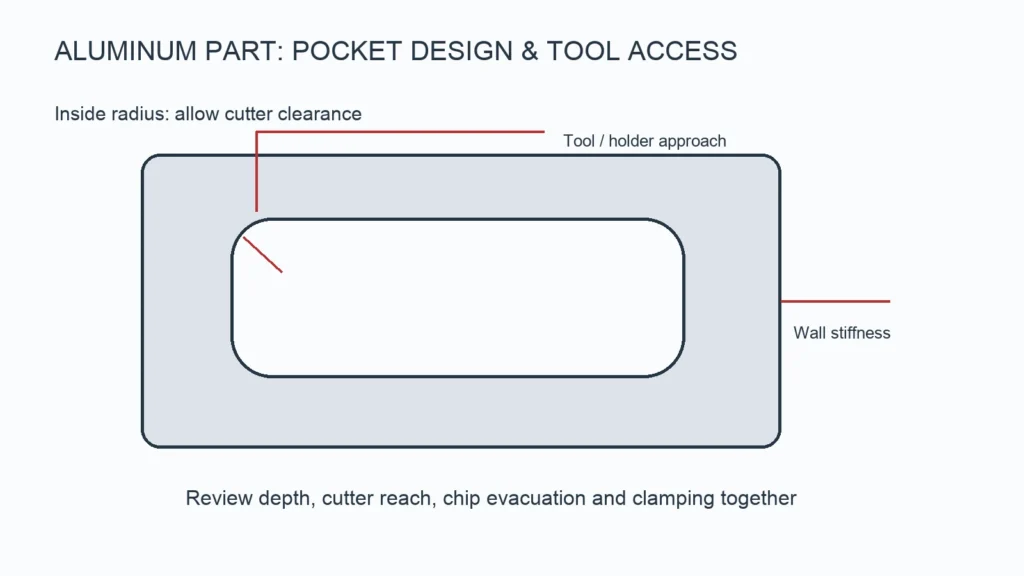
A 6061 aluminum electronics housing under 12 cm in span is a textbook fast-turn part. The route: rough mill the pocket on a 3-axis machine at a high feed, finish the cavity with a 10 mm ball nose at reduced depth-of-cut, then flip for the back-face features. Steel changes only two things. Feed drops by roughly half, and the operator switches to a tougher carbide grade with a thicker coating. Fixture design stays the same; the clamping force goes up so the part does not walk under higher cutting resistance.
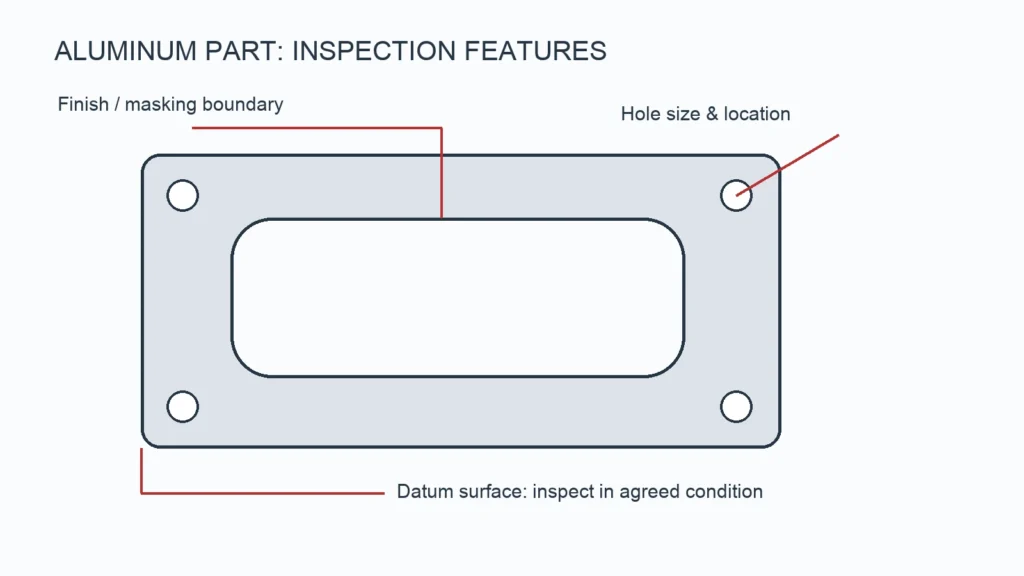
Key control points: verify material heat-treatment condition on the mill cert before first article. A T6 billet and a T4 billet behave differently in the chip, and the cycle time shifts. Confirm the datum scheme matches the FPC so the positional tolerance holds on both sides. The failure mode to watch: on steel, if you hold feed too high the first pass, the chip thickens, the edge chews, and the surface finish degrades into visible tool marks that no polish will hide.
Process reference: YPMFG process library, cross-checked against published carbide tooling data sheets. Client-specific cycle records withheld per NDA.
Practical Questions Before You Lock the Material
Can I just swap 1018 for 6061 and keep the same drawing? No. The wall thickness that works in steel will deflect in aluminum. You must re-check the section modulus against your max load before releasing the part number.
Does anodizing change the functional tolerance of an aluminum part? A standard Type II anodize adds 10 to 25 microns per surface. If your Tolérance d'usinage CNC is within that band, call it out on the drawing so the machine operator programs the offset.
Is stainless 316 ever the right pick over 1018? It is, when the environment is corrosive or the part touches fluid. Machinability drops sharply, though. Expect longer cycles and more expensive tooling versus plain carbon steel.
How do I tell if my supplier is actually using the material I specified? Request the mill certification and a material lot trace on the FAI report. If the heat number does not match the cert, stop the line before batch production.
Making the Call That Saves Money at Year Two
The material you pick on day one sets your tooling, your fixture, your finish, and your rework budget for the life of the part. Aluminum is the lighter, faster, corrosion-resilient route for housings, brackets, and low-load assemblies. Steel is the non-negotiable choice for frames, high-torque joints, and anything the fatigue curve will punish. The cost difference is real but smaller than most buyers assume once machining hours are in the equation.
If you are still weighing two options, send your drawing, your load case, and your target annual volume to YPMFG. The engineering review will flag where deflection or thermal expansion will bite, model the two material routes against your BOM, and return a side-by-side cost and cycle comparison within a few working days. No commitment, just the numbers to let you choose with confidence rather than guesswork.