Italian
 English
 German
 Russian
 Japanese
 Korean
 Spanish
 French
 Portuguese

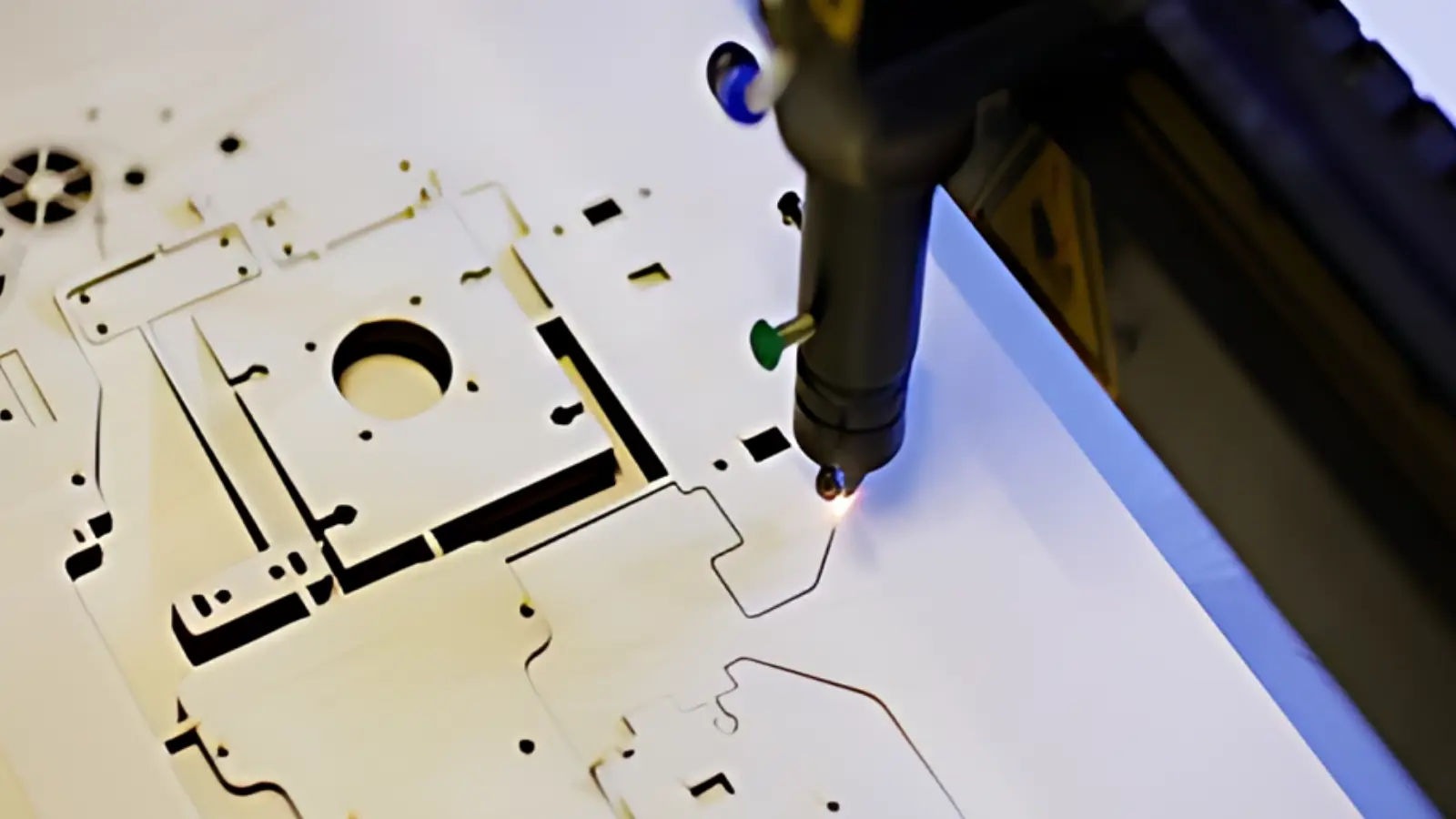
CNC routing cuts sheets and panels with large, rigid tools in a single vacuum-table setup. CNC milling uses small, high-RPM tooling for tighter Tolleranza di lavorazione CNC on solid blocks. For panel work under 60 mm, routing wins on cost. For sub-0.5 mm features, milling is the only path.
Most buyers hit this fork when a drawing calls for thin walls, deep pockets, or multi-face registration. Picking the wrong machine surfaces at inspection: rework, rejected lots, or a schedule slip that cascades into assembly. YPMFG engineers map every feature to a machine before a quote ships, so a process mismatch does not cost you a batch.
Key Takeaways
- Velocità del mandrino: Routing spindles top out near 24,000 RPM; milling spindles exceed 30,000 RPM. That gap sets the floor on minimum feature width.
- Spessore del materiale: Routers clear panels to 100 mm in one pass. Mills stay efficient below 50 mm, where tool overhang and chatter risk drop.
- Tolleranza band: Milling holds ISO 2768-m or tighter on critical faces. Routing typically lands at 2768-c for general geometry.
Head-to-Head: Routing vs Milling at a Glance
If the part is a flat panel under 60 mm with no sub-0.5 mm features, routing saves fixture time and tool cost. Everything else points toward a 5 axis CNC milling cell.
What Physically Separates a Router From a Mill?
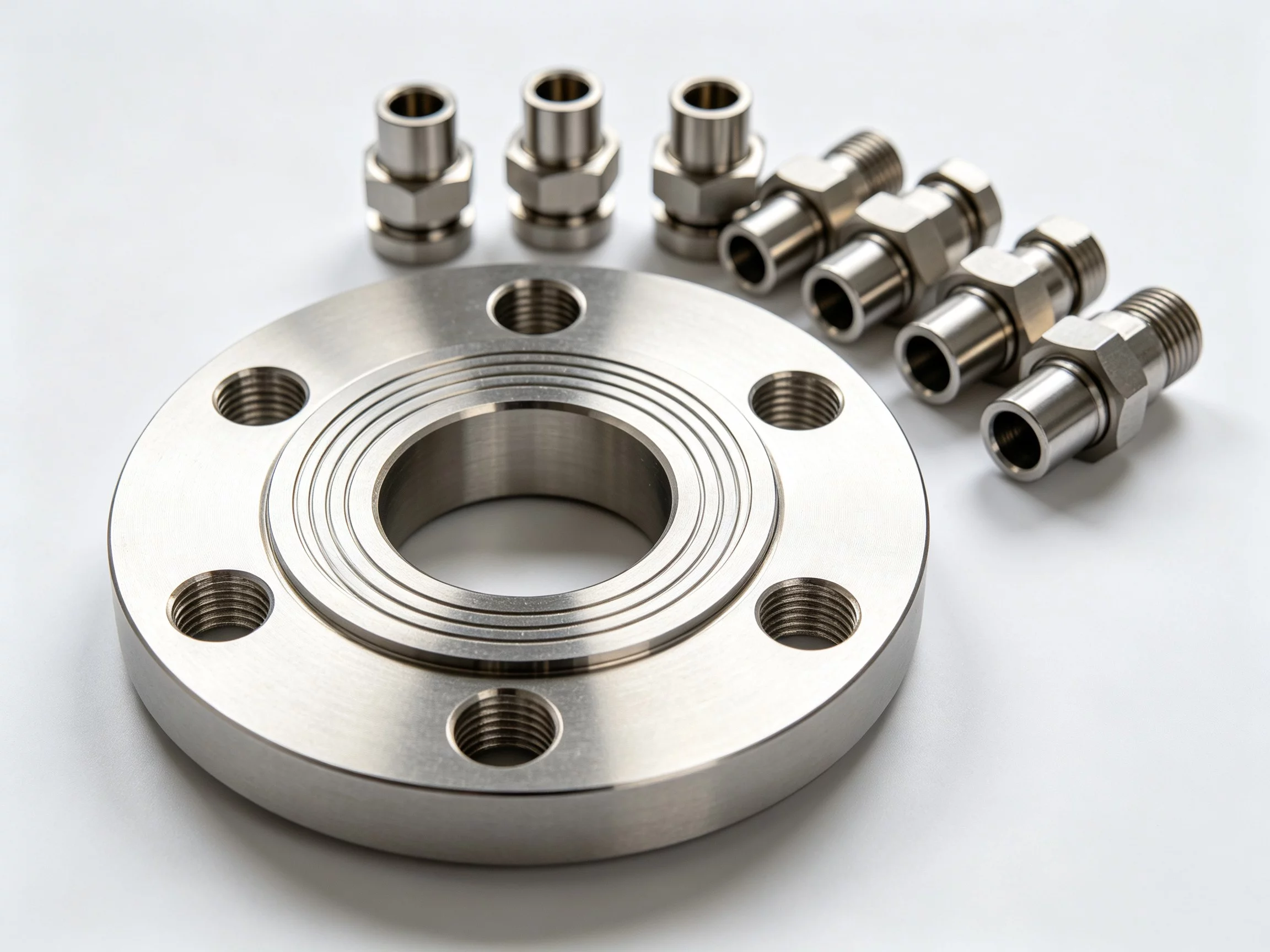
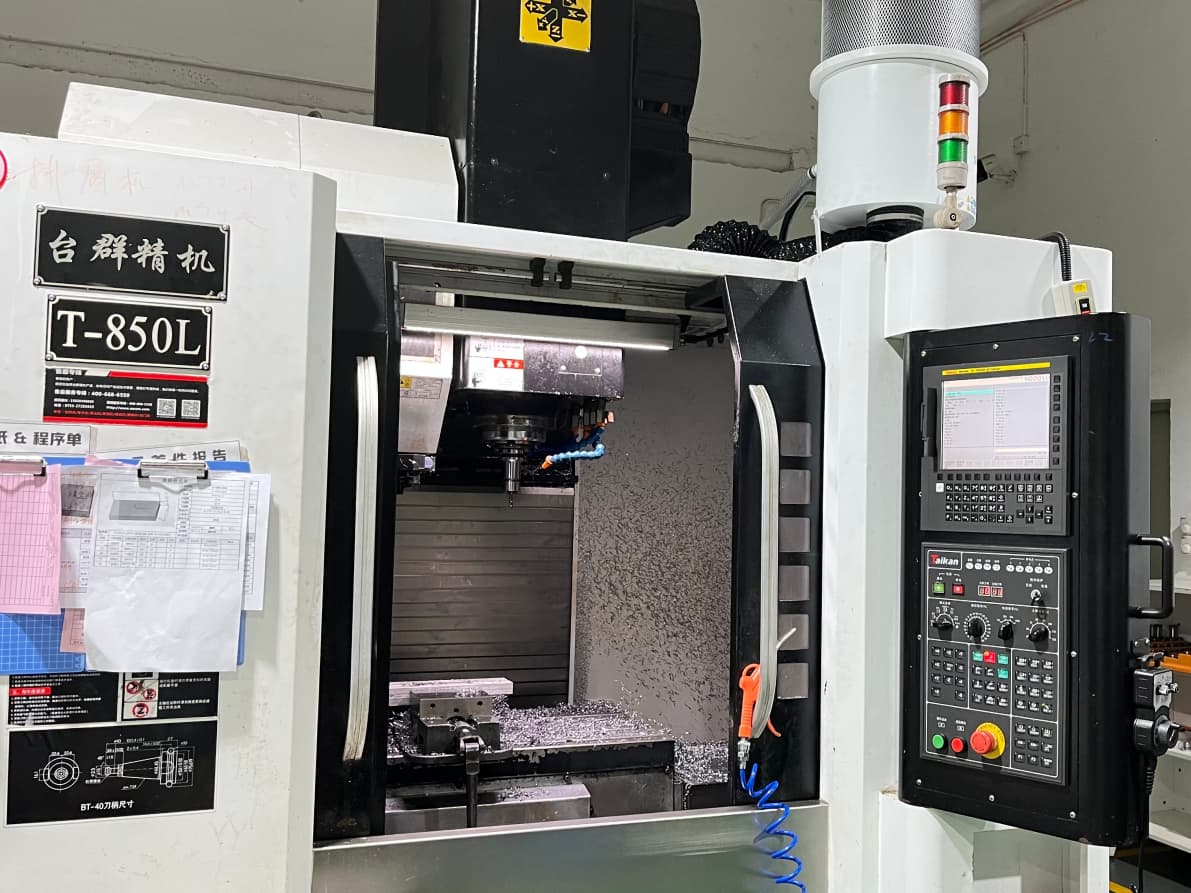
The core gap is tool diameter and frame rigidity. A router accepts 10-25 mm end mills and plunges the bit into the workpiece. A mill runs 0.2-10 mm tools at higher RPM, relying on horizontal engagement to suppress chatter.
Two hard limits follow. A router cannot hold a 0.5 mm tool in a 40 mm pocket without deflection. A mill cannot rough out 80 mm of 6061 aluminum in a reasonable cycle because spindle torque drops as tool radius grows.
Before specifying either machine, confirm your drawing’s minimum wall thickness and maximum pocket depth. If the wall is under 1 mm or the pocket exceeds 50 mm, the choice is not open. No feed-rate adjustment closes that gap on the wrong machine.
How Do Material Choices Narrow Your Options?
Not every stock form suits both machines. Routing favors dimensional-stable sheet: 304 stainless, ABS,PC, and plywood. Milling favors machinable bar: H13 tool steel, 316L, e 5052 aluminum.
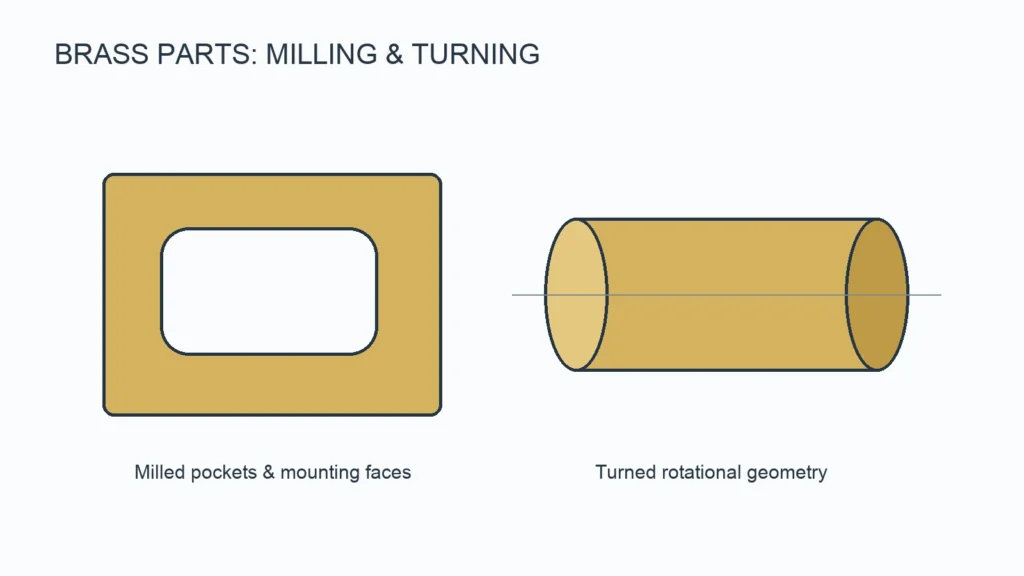
Soft stocks like Nylon oppure Ottone chip on either machine, but evacuation differs. A router’s open table lets chips fall away. A mill must use air blast or flood coolant to clear the pocket, or the tool burns on recut material.
- Sheet plus 2.5-D profile: route it.
- Bar or plate with through-machining on multiple faces: mill it.
- Material ships as a 12 mm plate but needs 4-sided finish: mill, because no router table registers four faces.
Send your material spec to YPMFG and an engineer will confirm tooling availability and chip strategy before the quote is cut.
Where Does Tolerance Actually Diverge?

Routing holds Tolleranza di lavorazione CNC in the ISO 2768-c band. Milling, with rigid tooling and short overhang, reaches 2768-m and, on dedicated 5 axis CNC cells, tighter still.
The number that matters most is flatness. A 500 mm routed panel can drift by several tenths across its span because the vacuum table flexes under cutting force. A milled block on a cast-iron table stays within a fraction of a millimeter over the same distance.
If your assembly mates on two or more faces and the drawing calls for ASME Y14.5 positional datums, milling is the only reliable path. For structural panels where ±0.15 mm suffices, routing keeps unit cost down. The physical limit: no router table guarantees sub-0.05 mm flatness on a one-meter panel.
What Actually Drives Unit Cost and Lead Time?
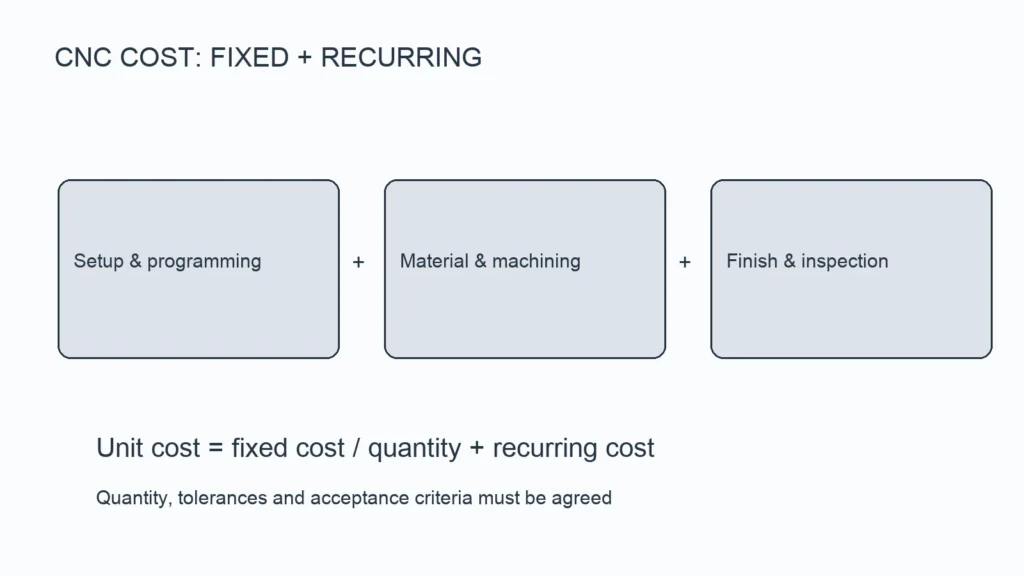
Three cost drivers dominate: tooling variety, fixture time, and material removal rate. A panel with 40 through-holes routes in one pass with a single 6 mm bit. The same panel milled needs 40 plunge-and-peck cycles with tool changes, multiplying setup.
Conversely, a 3-D bracket with draft angles and internal ribs cannot be routed at all. It needs a 3- or 5-axis mill with tool-change automation. Lead time follows the same split: routing batches run back-to-back; milling batches require re-clamping and tool-path re-verification per setup.
In steady production, a Revisione DFM maps each feature to the fastest process before you commit to volume. That one step catches the fixture risk that quietly adds two days to every batch.
How a Routing-Plus-Milling Hybrid Handles a Mixed-Geometry Bracket
Take a 12 mm 316 stainless plate. The flat base carries 60 through-holes and two chamfered edges. A 25 mm raised lip holds two tapped holes and a 3 mm radius fillet on its inner face.
- Route the 60 holes and chamfer the outer edges on a vacuum-table router. One setup, no clamps.
- Flip the blank, clamp in soft jaws on a 3-axis mill. Drill and tap the two holes at 12,000 RPM.
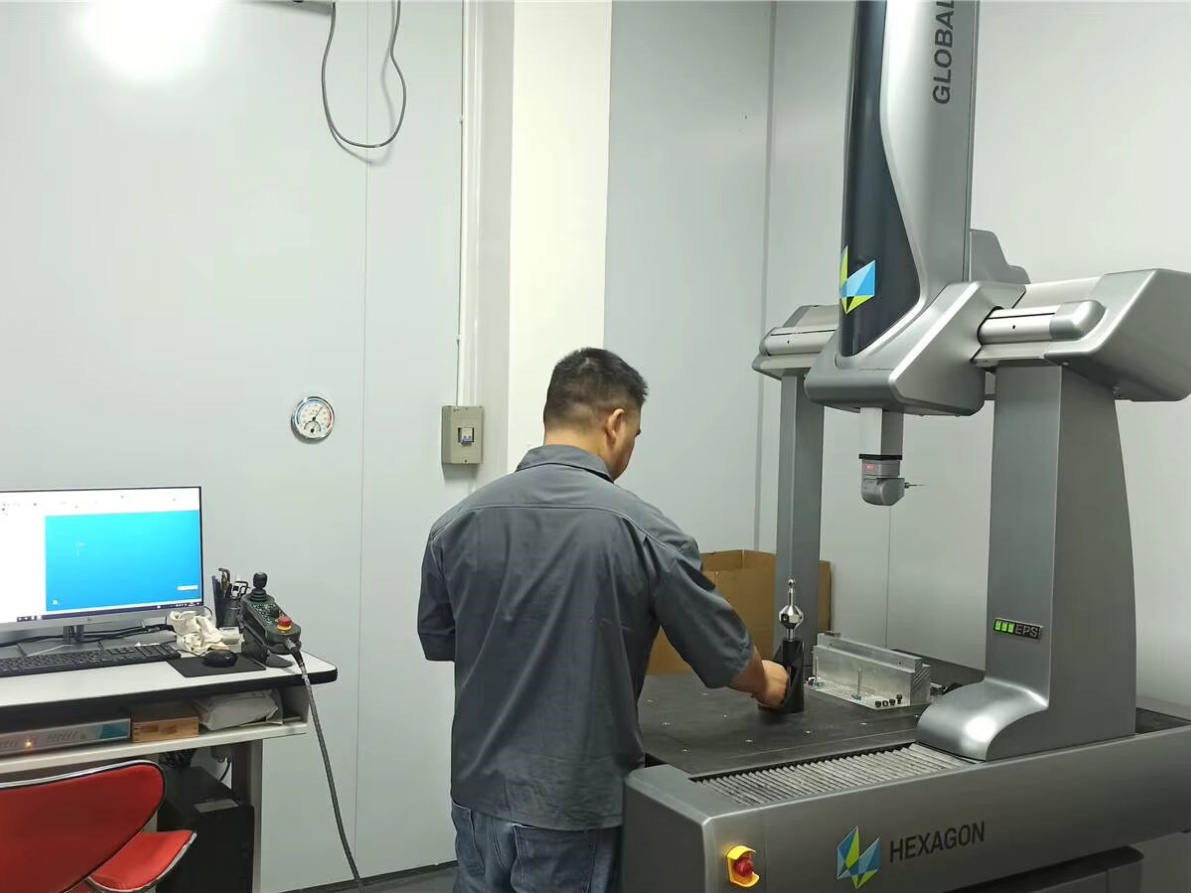
- Finish the fillet with a 4 mm ball end mill. Verify lip-to-base squareness on a CMM.
Two failure modes to watch: chatter on the 25 mm lip when tool overhang exceeds three times its diameter (fix: stiffer support, not slower feed), and work hardening on the 316 at the tap step (fix: sharp helix angle and cutting fluid).
Process Route Reference: YPMFG process library, reviewed against published tooling data. Client-specific data withheld per NDA.
Practical Questions Before You Specify the Machine
Can a router hold the same tolerance as a mill? No. Vacuum-table rigidity and larger tool deflection cap routing at ISO 2768-c. Anything tighter requires a mill.
What is the largest panel a router accepts? Common industrial tables run to 3 m × 4 m. Beyond that you split and weld, adding a separate tolerance stack that a single-mill setup avoids.
Is five-axis routing a real category? It cannot be called routing in the traditional sense. Five-axis simultaneous contouring with a small ball-end mill is milling. The label in a brochure does not change the physics.
How do I quickly tell which machine my drawing needs? Check two numbers: minimum feature size and maximum wall thickness. Under 0.5 mm or above 60 mm, the answer is mill. Between those bounds, either works and unit cost decides.
Choosing the Right Machine for Your Next Batch
The routing-versus-milling call rests on three facts on your drawing: minimum feature, maximum thickness, and tolerance band. Get those three right and the process choice is mechanical. Get them wrong and you pay in scrap, rework, and schedule pressure no machine upgrade undoes.
YPMFG reviews incoming drawings against machine capability, tooling libraries, and material behavior before any quote ships. You receive a process recommendation, a DFM note on each critical feature, and a realistic lead-time range tied to the specific machine and tool set. Send your specifications or a PDF drawing to the YPMFG engineering team and request an assessment. The review flags every feature that forces a mill, every open area a router clears faster, and the fixture strategy that keeps setup under control for your batch size.