Italian
 English
 German
 Russian
 Japanese
 Korean
 Spanish
 French
 Portuguese

CNC routing and CNC milling differ in spindle torque, tool size, and material-removal capacity. A router runs 5–15 HP spindles at 10,000–24,000 RPM with 1/8- to 3/8-inch collets. A mill handles 10–50 HP with 1-inch arbor tools and 12-to-30-inch Z travel. The right machine depends on your part depth, material, and tolerance spec.
If you are sourcing machined alluminio oppure acciaio components, the machine behind the part changes your cycle time, achievable tolerance, and per-unit cost. Buyers often treat routing and milling as interchangeable because both cut with rotating tools. YPMFG runs both machine classes in-house, so this breakdown helps you specify the correct process on your next RFQ without a capability back-and-forth.
Punti chiave
- Spindle class: Router 5–15 HP at 24,000 RPM; mill 10–50 HP at 12,000–20,000 RPM with 1-inch tools.
- Z depth: Routers cap at 2–4 inches; mills reach 12–30 inches for deep cavities.
- Asportazione di materiale: A mill removes roughly 3–5× the volume per pass on the same 6061 workpiece.
- Tolleranza minima: Both hold ±0.005 inch on flat 2D features; 3D finish follows tool diameter and stepover, not machine label.
Router vs Mill at a Glance
The rule is straightforward: heavy roughing, deep Z, or large envelopes go to a mill. Light 2D cutting on thin stock belongs on a router.
What Actually Sets a Router Apart From a Mill?
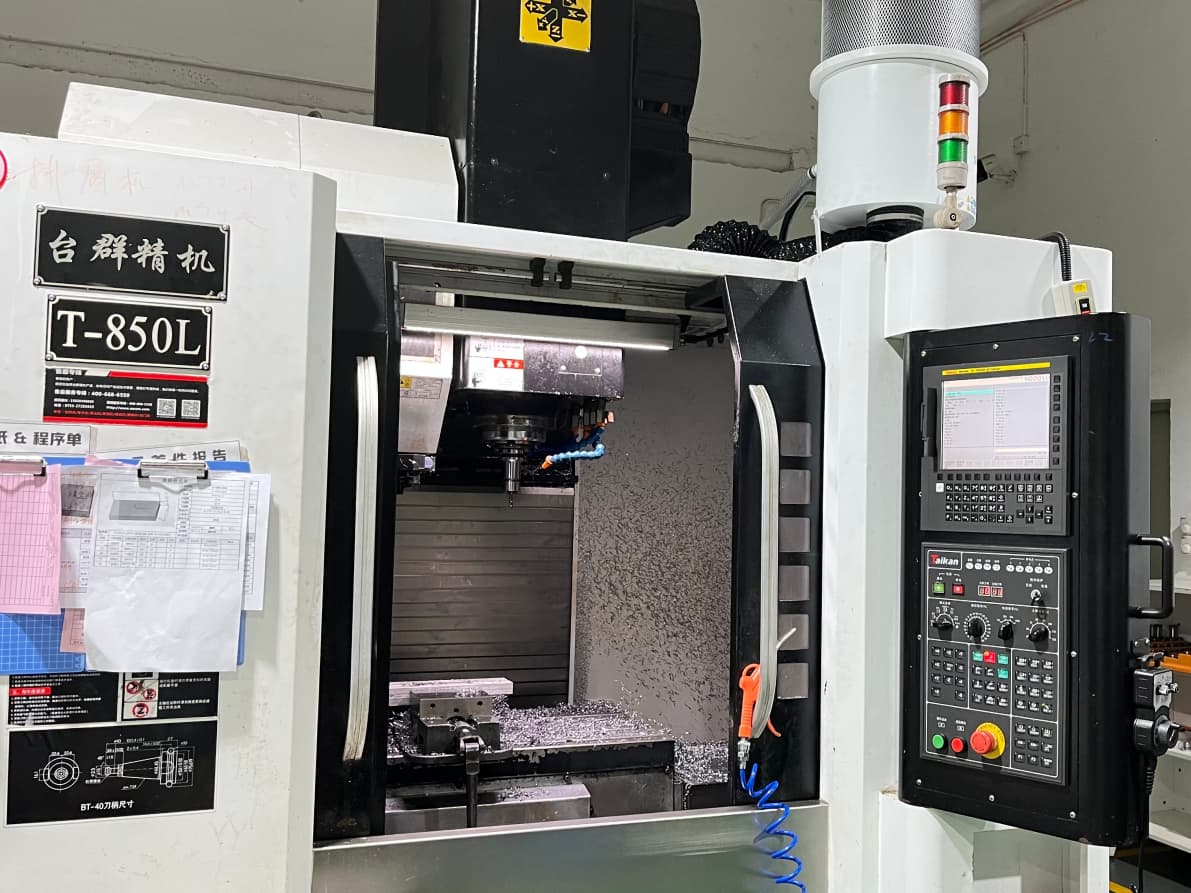
The machine label is a packaging term. Underneath, the split is spindle torque, tool shank size, and frame rigidity. A router is essentially a mill with a high-RPM, low-torque spindle and smaller collets.
Routers evolved from the wood and sign industry. High RPM compensates for small tool diameter to keep cutting speed adequate. Mills evolved from metal shops. Torque at moderate RPM drives a 1-inch end mill through 4140 steel or titanium without stalling.
- Tooling: router accepts 1/8 to 3/8 in collets; mill accepts 1/2 to 1 in arbors.
- Spindle speed: router runs 10,000 to 24,000 RPM; mill runs 5,000 to 20,000 RPM.
- Frame: router is lighter with less thermal damping; mill sits on a cast-iron bed with more mass.
A router will not hold ±0.002 inch on a 4-inch-deep pocket. The frame flexes under sustained cutting load. You need a mill with a rigid bed and preloaded spindles for that depth.
Which Machine Fits Your Part Geometry and Material?
Geometry and material thickness drive the decision more than any marketing label. The part tells you the machine; the machine does not redesign the part for you.
Aluminum sheet under 0.5 inch with 2D contours and light chamfers runs cleanly on a router at 24,000 RPM with a 1/8-inch carbide end mill. A 6-inch-deep acciaio inossidabile 316L block with 5-axis undercuts needs a 5-axis mill and a 1-inch tool. No collet holds that diameter.
- 2D aluminum under 1/4 in: router at 24k RPM with 1/8 in tool.
- 2.5D pockets to 2 in: router or mill depending on material hardness.
- 3D contouring in steel: 3-axis or 5-axis mill with 1 in tool.
- Large sheet over 48×36 in: mill with gantry travel or dedicated sheet center.
No production router will cut 1-inch solid steel through in a single pass. You need mill torque,and through-holes may require broaching as a secondary operation at added cost.
Where the Cost Curve Diverges
Per-part cost tracks machine time and tooling. A router cycles faster on thin parts; a mill wins on heavy roughing. The crossover depends on the depth-to-diameter ratio of the cavity.
For a 48×36 aluminum panel with 0.25-inch pockets, a router at 24,000 RPM finishes in a fraction of the wall-clock time of a 3-axis mill running 10,000 RPM with the same tool. For a 6-inch-deep steel block, the mill removes 3 to 5× the volume per pass and cuts total cycle time dramatically.
- Costo degli stampi: Router collet tooling costs less; 1-inch carbide mill tooling runs 3 to 4× the price.
- Setup: Router quick-change collets save minutes; mill arbor clamping adds handle time.
- Fine: Both reach 32 microinch Ra on aluminum with correct stepover and feed.
Match the machine to the geometry. A 5-axis mill on a flat 2D part wastes capability and adds cost with no measurable quality gain.
How a Shop Routes a Typical Aluminum Bracket
A flat 6061-T6 bracket, 0.5-inch thick, 2D contours, light chamfers. This is the standard process route for that class of part.
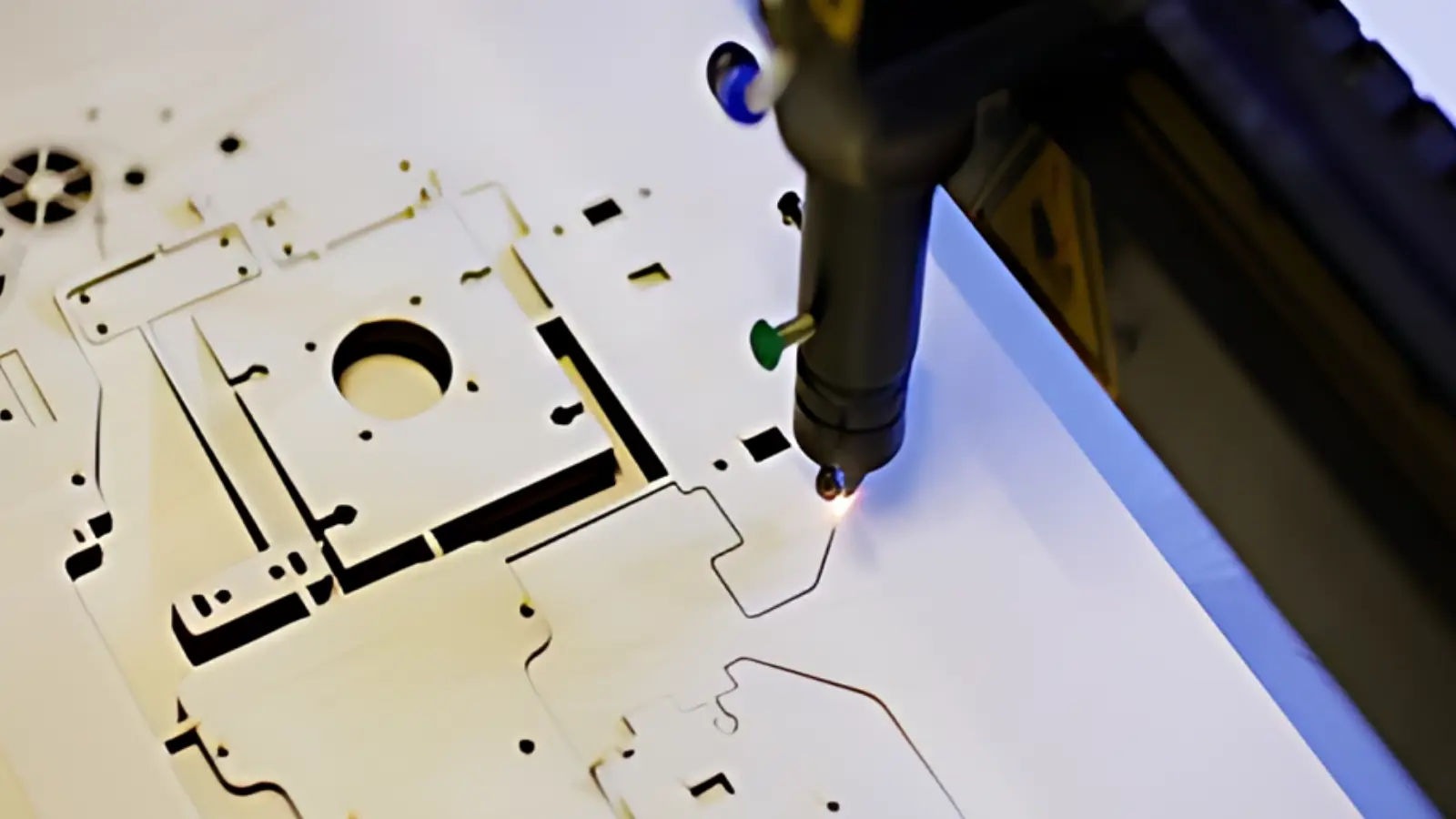
- Blank 0.625-in 6061-T6 by laser or saw. Verify flatness within 0.003 in on a granite plate.
- Roughing pass: 1/8-in carbide end mill, 24,000 RPM, 24 in/min feed, 0.5-in depth of cut.
- Finishing pass: 1/16-in ball-nose, 28,000 RPM, 0.02-in stepover for a clean 2D surface.
- Deburr and chamfer 0.03×45°. Caliper check on all critical dimensions.
- First Article Inspection. Dimensional report ships with the batch.
Riferimento al percorso di processo: libreria dei processi YPMFG, verificata sulla base dei dati relativi agli strumenti pubblicati. I dati specifici del cliente non vengono divulgati in ottemperanza all’accordo di riservatezza (NDA).
Practical Questions Before Specifying
Can a router hold a 1-inch tool? No. Collets top out at 3/8 inch. Anything requiring a 1-inch end mill or arbor must run on a mill, period.
What RPM for aluminum on a 1/8-inch tool? 20,000 to 24,000 RPM keeps surface speed in the published range for 6061. Check your tool vendor’s chipload chart for the exact feed per revolution.
Can I get ±0.001 inch on a router? On flat 2D features, yes, if the frame is thermally stable. On deep pockets or 3D surfaces, frame flex makes that unrealistic. A mill with preloaded spindles is the safe path.
How do I flag this on an RFQ? State the machine class, material grade, thickness, and pocket depth. YPMFG engineering confirms feasibility within 24 hours of receiving your drawing.
Choosing the Right Machine Class for Your Next Batch
Your tolerance, material, and geometry decide the machine, not the vendor’s brochure. If you are unsure whether a router or mill suits your part, send your drawing and spec to YPMFG. The engineering team reviews geometry, material, and tooling, then recommends the process route with an itemized quote. One drawing gets you a feasibility answer and a cost range within three business days. No minimum order commitment is required for that first review.