Japanese
 English
 German
 Russian
 Korean
 Spanish
 French
 Italian
 Portuguese

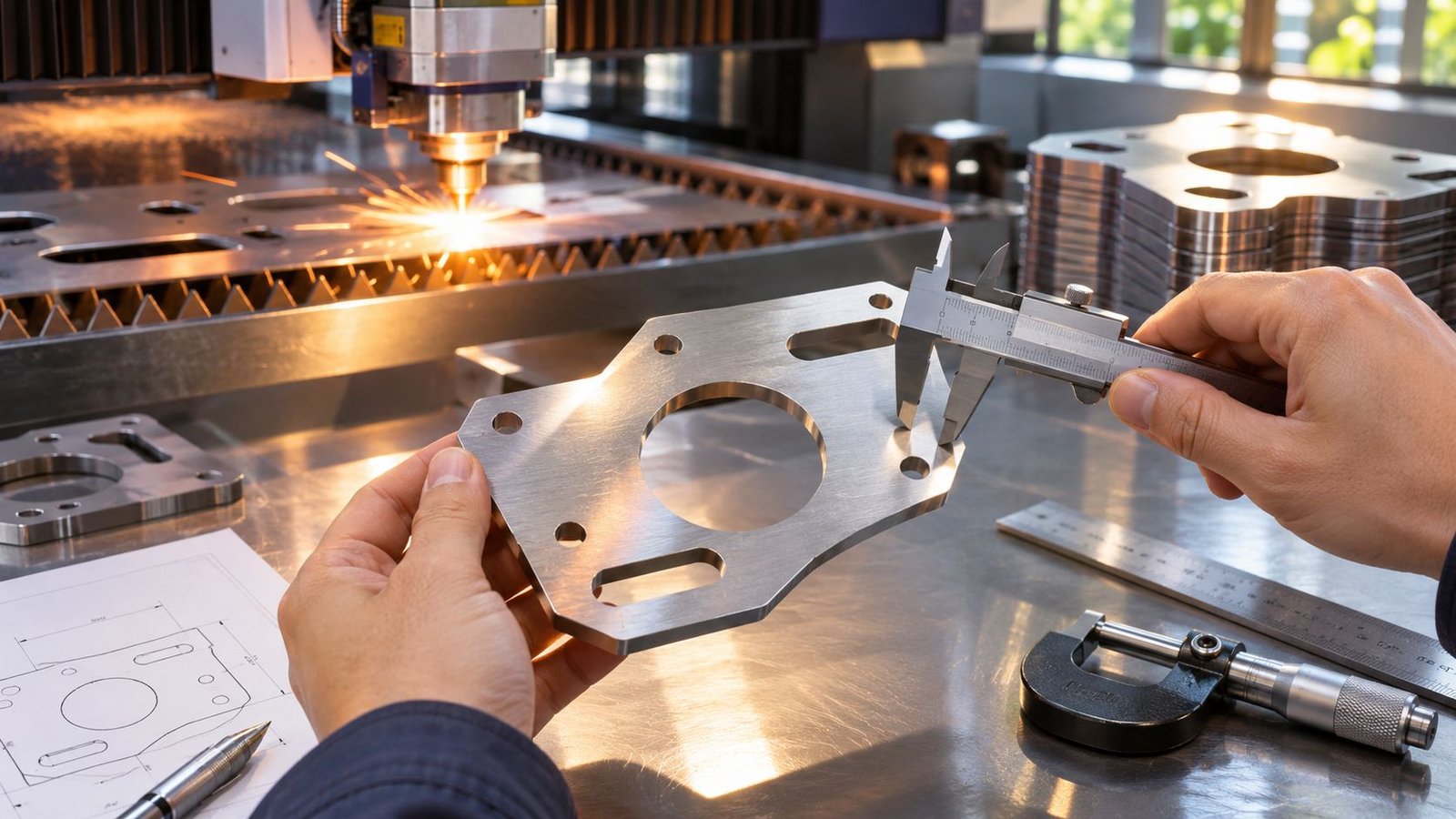
For 304 and 316L stainless sheets, a 3 kW fiber laser handles up to 12 mm with clean edges. The two numbers that protect your part are kerf width and heat-affected-zone depth. Confirm both before releasing production.
Most buyers specify a material grade and a dimension, then discover in assembly that the edge is rough, the HAZ has warped the part, or the vendor cut 304 when the drawing called for 316L. YPMFG has seen this gap between a clean CAD file and a part that does not fit. The fix is not a better machine. It is matching material spec, kerf allowance, and post-cut tolerance to the actual assembly load.
Key Takeaways Before You Place an Order
- 材料のグレード: 316L requires a slower traverse speed than 304 at the same thickness, shifting kerf width by a measurable 0.03 mm.
- Kerf compensation: A 0.2 mm kerf on a 50 mm feature changes fit-up by 0.4 mm if the CAD is not adjusted.
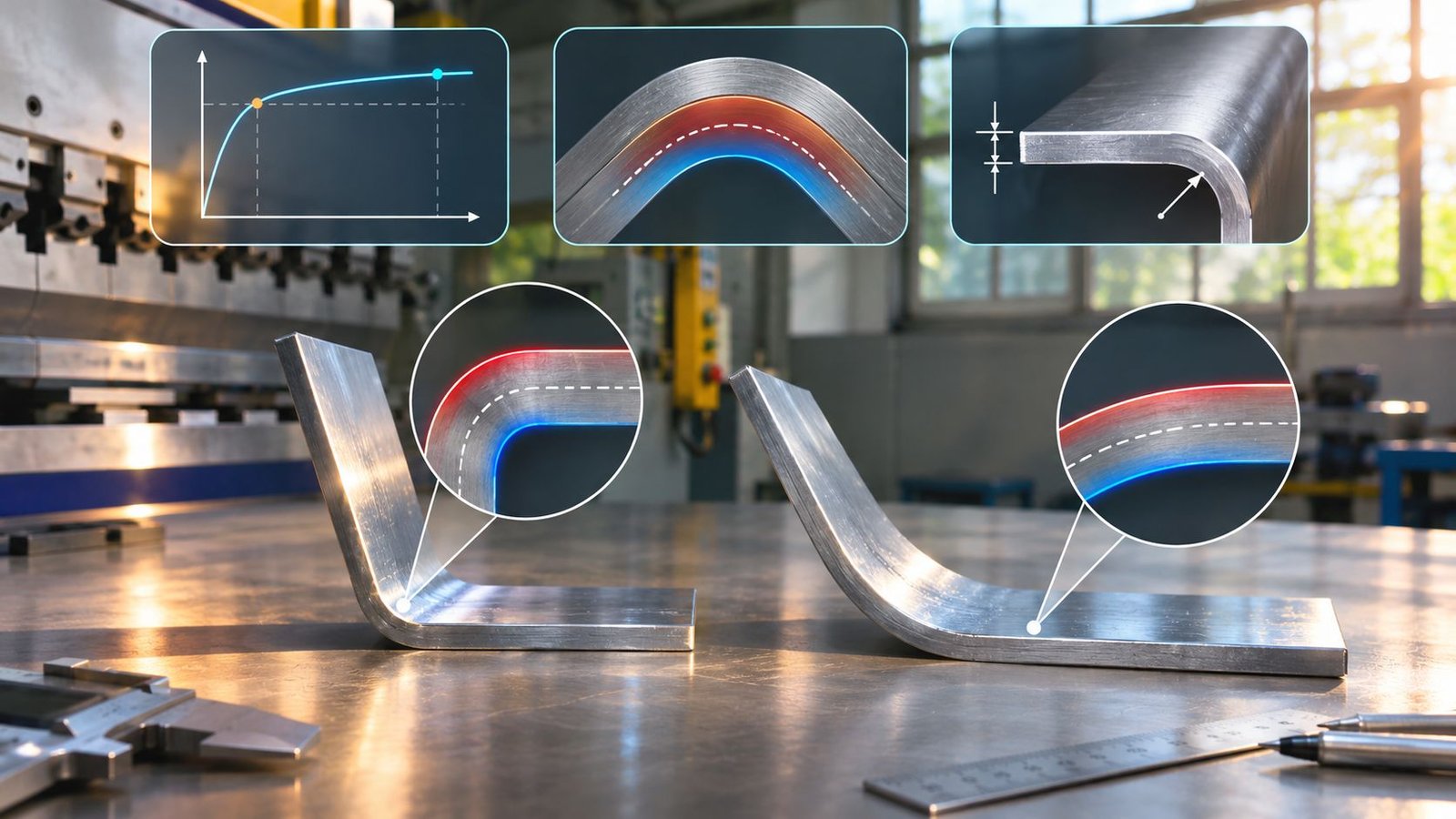
- HAZ thickness: Above 6 mm sheet, the heat-affected zone can warp thin features and may require stress-relief annealing.
- Certification: Request a per-lot mill test certificate; without it, material traceability stops at the vendor warehouse.
304 Versus 316L: What Changes at the Cutting Table
Below 6 mm, either grade is a routine cut and the difference in kerf is absorbable in most fixtures. Above 6 mm, the HAZ widens and dross becomes a real cleanup step,so the vendor you choose must demonstrate dross control on your specific thickness before you commit volume.
Which Stainless Grade Changes Your Cutting Parameters?
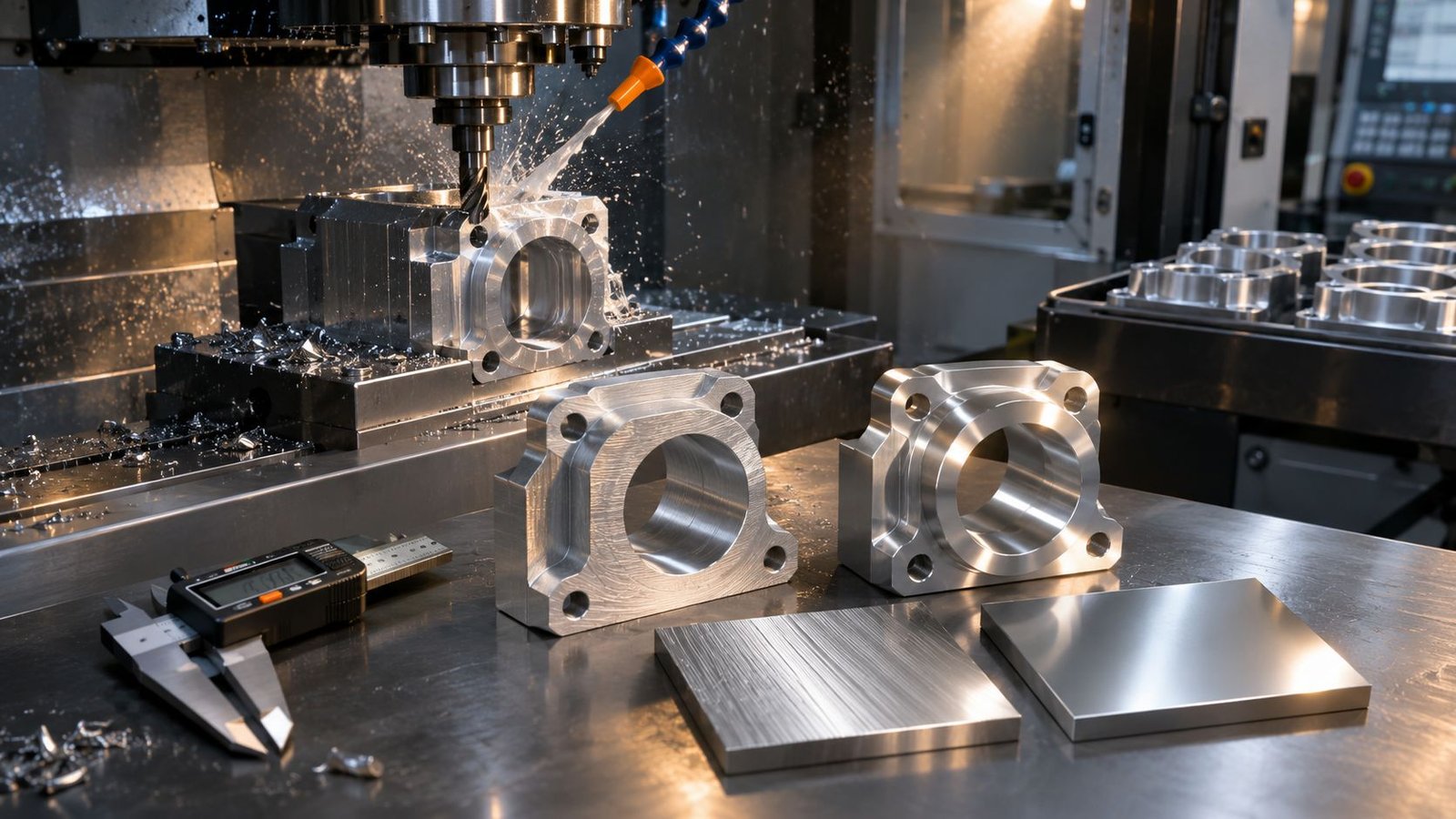
304 and 316L are not interchangeable at the laser. The molybdenum in 316L raises thermal mass slightly, so the beam must dwell longer to penetrate. For sheet under 4 mm the difference is negligible. Above 4 mm the kerf gap grows and your fixture design must absorb the extra material removal. Stainless steel laser cutting parameters are not generic; they shift with alloy content.
YPMFG reviews the material spec against your drawing before quoting. If the BOM says 316L but the plate in the warehouse is 304, the cut will look correct but the corrosion performance in your end application will not match. That mismatch is the most common cost driver buyers miss until a part fails in the field.
No parameter set fully eliminates the heat-affected zone on 316L above 8 mm. The zone still forms and must be managed through design geometry or post-cut stress relief.

What Tolerance Should You Actually Specify on a Laser-Cut Part?
Laser cutting is a blanking process, not a dimensional one. The machine repeats its kerf to within ±0.1 mm run-to-run. Your part-to-part dimensional tolerance is governed by the fixture and the CAD offset, not by the laser head. Specifying tighter than ±0.2 mm on a laser cutting tolerance for a 100 mm feature means you are fighting the physics of the process.
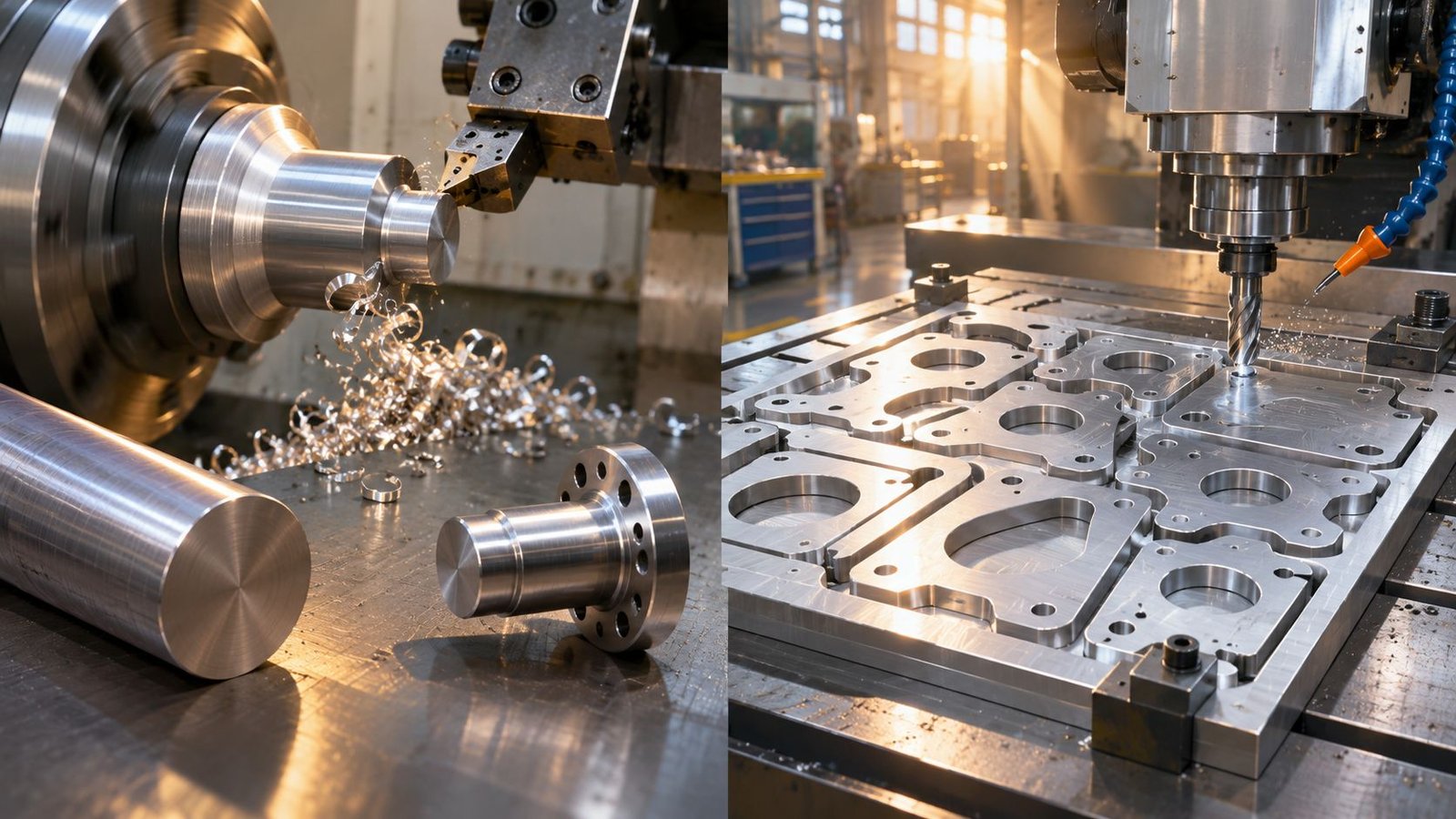
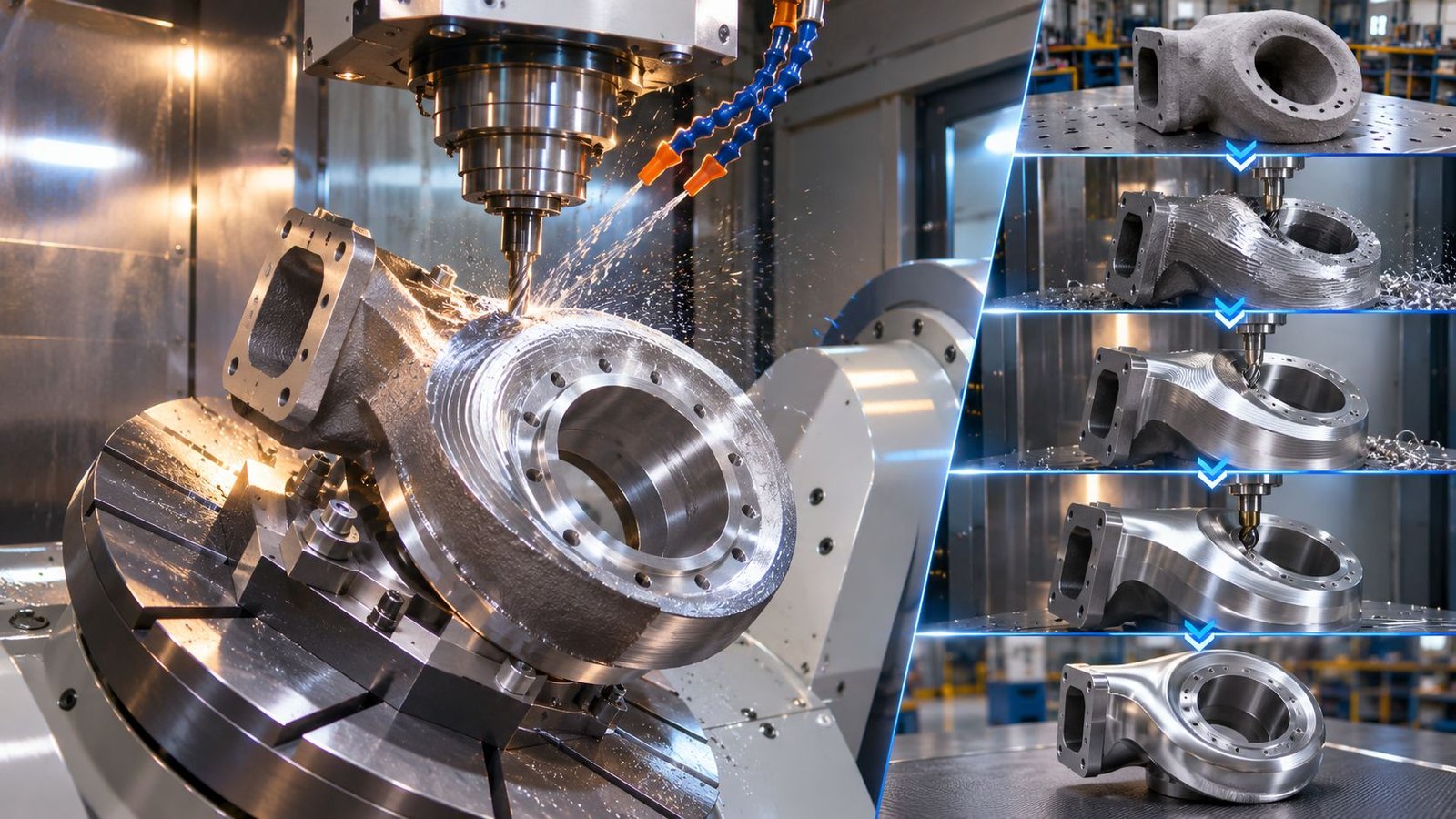
The practical rule: define the kerf compensation value in the CAD at the design stage, then hold the cut to the machine repeatability. If a feature must land at ±0.05 mm, that feature belongs on a CNCフライス加工 or waterjet operation downstream of the laser blank.
A fiber laser cannot hold ±0.02 mm on a 200 mm straight edge. That tolerance requires a secondary machining step, and your cost model should reflect it.
Where Do Laser-Cut Stainless Parts Fail in Assembly?
Most assembly failures trace to two things: un-compensated kerf and un-relieved HAZ stress. If the CAD was modeled to nominal and the laser adds 0.2 mm of kerf, two mating faces will not mate without rework. HAZ residual stress in features thinner than 3 mm can cause slow bowing after the part cools, especially in free-hanging tabs.
- Kerf gap: Mating faces sized to nominal without kerf offset will be 0.2 to 0.4 mm loose after cutting.
- HAZ bowing: Free features under 3 mm can deflect within 48 hours as stress redistributes.
- Dross re-weld: Unremoved oxide dross on 316L creates a local corrosion initiation site in marine or food-service environments.
Kerf compensation is a design-time decision. Once the plate is cut, the material is gone and the dimension is fixed. YPMFG flags thin free features and high-fit-critical edges in the DFM review before the cutting program is released.
How a Flat-Plate 316L Part Moves Through the Cutting Route
- Material receipt: Verify the mill test certificate confirms 316L grade and nominal thickness. Reject the lot if the heat number does not match the CoA.
- CAD review: Apply per-grade kerf compensation. Flag any feature under 3 mm for HAZ risk. Confirm fixture repeatability spec.
- レーザー切断: 3 kW fiber, traverse set per thickness. Check lower edge for dross under magnification.
- Deburr and scale removal: Light pickling cycle for 316L, rinse, dry. Inspect for pitting on the cut face.
- First-article inspection: Measure 5 critical dimensions, photograph the HAZ edge, attach the report to the shipment.
Process route reference: YPMFG process library, reviewed against published tooling data. Client-specific data withheld per NDA.
Common Questions Before Choosing a Stainless Steel Laser Service
Can a laser cut 316L to the same tolerance as 304?
No. The kerf is wider on 316L because the beam dwells longer. An un-compensated part will be out by the kerf difference, typically 0.03 mm per edge. Always adjust the CAD offset per grade before releasing the file.
What is the thickest stainless a fiber laser cuts cleanly?
It depends on laser power and gas assist. A 3 kW unit handles up to 12 mm with acceptable edge quality. Thicker stock shifts to plasma or oxy-fuel cutting, and the HAZ grows significantly above 10 mm.
Do I need to anneal the part after laser cutting?
Not for most structural or enclosure applications. Stress-relief annealing is only needed when the part will see cyclic loading or when the HAZ depth exceeds the spec your application demands.
How do I confirm the vendor actually used 316L?
It cannot be confirmed by sight or a surface test at the receiving dock. Request a per-lot mill test certificate showing chemical composition and heat number. YPMFG ships the MTC with every stainless lot so traceability is not a gap.
Getting a Laser-Cut Stainless Part That Assembles First Try
The gap between a clean CAD file and a part that fits on the first try is almost always a material-spec, kerf, or HAZ mismatch caught too late in the process. You do not need a better laser. You need the right grade confirmed, the compensation applied at design time, and a vendor who checks the MTC before the beam fires. YPMFG reviews your drawing, material call, and fixture requirements in an engineering review before quoting. Send your specifications and the relevant tolerance callouts, and the team will flag any feature that the laser cannot hold at your target tolerance and recommend the downstream operation that can. That one review step is the difference between a part that assembles and a part that goes back to the shop.