 Russian
  English
  German
  Japanese
  Korean
  Spanish
  French
  Italian
  Portuguese
 Краткий ответ: A custom CNC machined shift knob is a precision-interfacing component that must match your existing shifter assembly in thread size, height, weight distribution, and surface grip. For most industrial or vehicle applications, aluminum or stainless steel knobs produced on a 5-axis CNC lathe deliver the best balance of dimensional accuracy, surface finish, and long-term durability.
Many engineers and procurement teams treat a shift knob as a low-cost accessory, yet it is the primary manual interface between an operator and a transmission system. A poorly specified knob creates issues with alignment, vibration fatigue, thread loosening, and finish degradation that are expensive to resolve after production starts. This guide walks you through the technical requirements, material choices, and sourcing decisions that matter for industrial, automotive, and OEM applications.
What Defines a Quality Shift Knob for Industrial Use
A functional shift knob is defined by three structural parameters: thread compatibility, center-of-gravity placement, and surface friction characteristics. These determine whether the component will stay seated under load, feel consistent during repeated shifts, and survive the operating environment.
Thread compatibility covers pitch, diameter, and engagement length. A mismatch here causes cross-threading, stripped inserts, or excessive backlash. CNC machined shift knobs should be specified with the exact thread callout from the mating lever or column drawing.
Center-of-gravity placement affects shift effort and operator fatigue. Heavier knobs increase rotational inertia and can make quick shifts more tiring. Lighter knobs may feel snappy but can reduce tactile feedback. The optimal weight depends on the application frequency and operator posture.
Surface friction is controlled by material selection and post-machining treatment. Knobs that are too smooth create slippage during sweaty or gloved operations. Knobs that are too aggressive can cause discomfort during sustained use.
Material Selection for Different Operating Environments
Material choice drives cost, weight, corrosion resistance, and machinability. The most common options for custom shift knobs fall into four categories.
Aluminum 6061-T6 remains the default choice for most commercial and automotive projects. It machines cleanly, accepts anodizing well, and offers a favorable strength-to-weight ratio. YPMFG frequently produces this alloy for clients who need a balance between cost efficiency and performance.
Aluminum 7075-T6 is selected when higher yield strength is required. It is commonly used in motorsport shift assemblies where lateral loads during aggressive shifting exceed the capacity of standard alloys.
Stainless steel options are necessary for environments with exposure to chemicals, salt, or repeated washdown cycles. The added weight is the trade-off, and you should confirm that the shifter column can handle the increased rotational mass.
Tolerance and Surface Finish Requirements
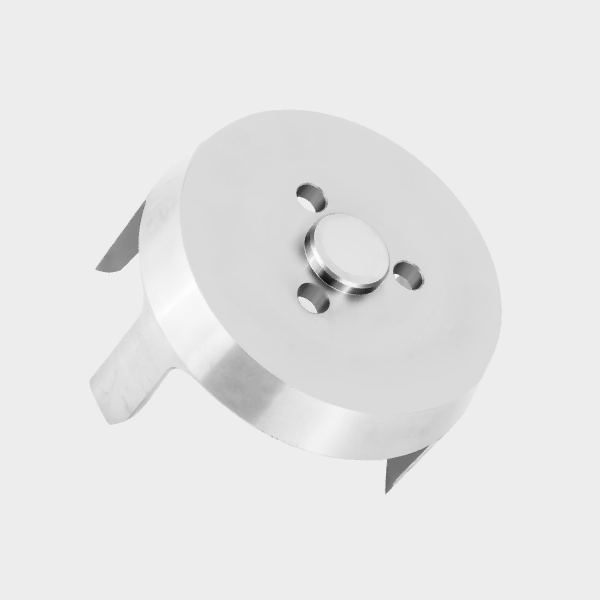
Dimensional accuracy is more critical for shift knobs than for most decorative components. The thread interface, grip diameter, and any internal keyway or set-screw feature must hold tight tolerances to prevent play and ensure consistent feel.
Thread tolerances should follow the relevant standard for the application. ISO metric threads typically require a 6g external thread class for general use. For high-vibration environments, a tighter 5g class reduces the risk of thread loosening over time.
Shift knob surface finish requirements vary by application. A Ra value between 1.6 and 3.2 micrometers is standard for grip surfaces. Smoother finishes are suitable for aesthetic display pieces but perform poorly in active use. Rougher finishes improve grip but increase wear on gloves and skin.
Internal features such as set-screw holes and keyways should be positioned within ±0.05 mm of the drawn centerline. Misalignment in these features causes uneven clamping force and can introduce wobble during operation.
Mounting and Interface Considerations
The connection between the shift knob and the shifter lever is the most failure-prone area in the assembly. Improper interface design leads to stripping, loosening, and premature wear.
Thread engagement length is a primary factor. Minimum engagement should be 1.5 times the nominal thread diameter for aluminum-to-aluminum connections and 1.0 times the diameter for steel-to-steel connections. Insufficient engagement is a common specification error that causes field failures.
Set-screw or grub-screw features are widely used to secure the knob after threading. These should be sized appropriately and positioned to clamp against a flat surface, not a rounded one. Many design errors occur when the set-screw contacts the threaded insert instead of a machined flat seat.
Anti-vibration compounds such as thread-locking adhesive should be specified for high-vibration applications. This is especially important for heavy equipment, off-road vehicles, and racing builds where mechanical Loctite retention alone is insufficient.
Manufacturing Process and Lead Time
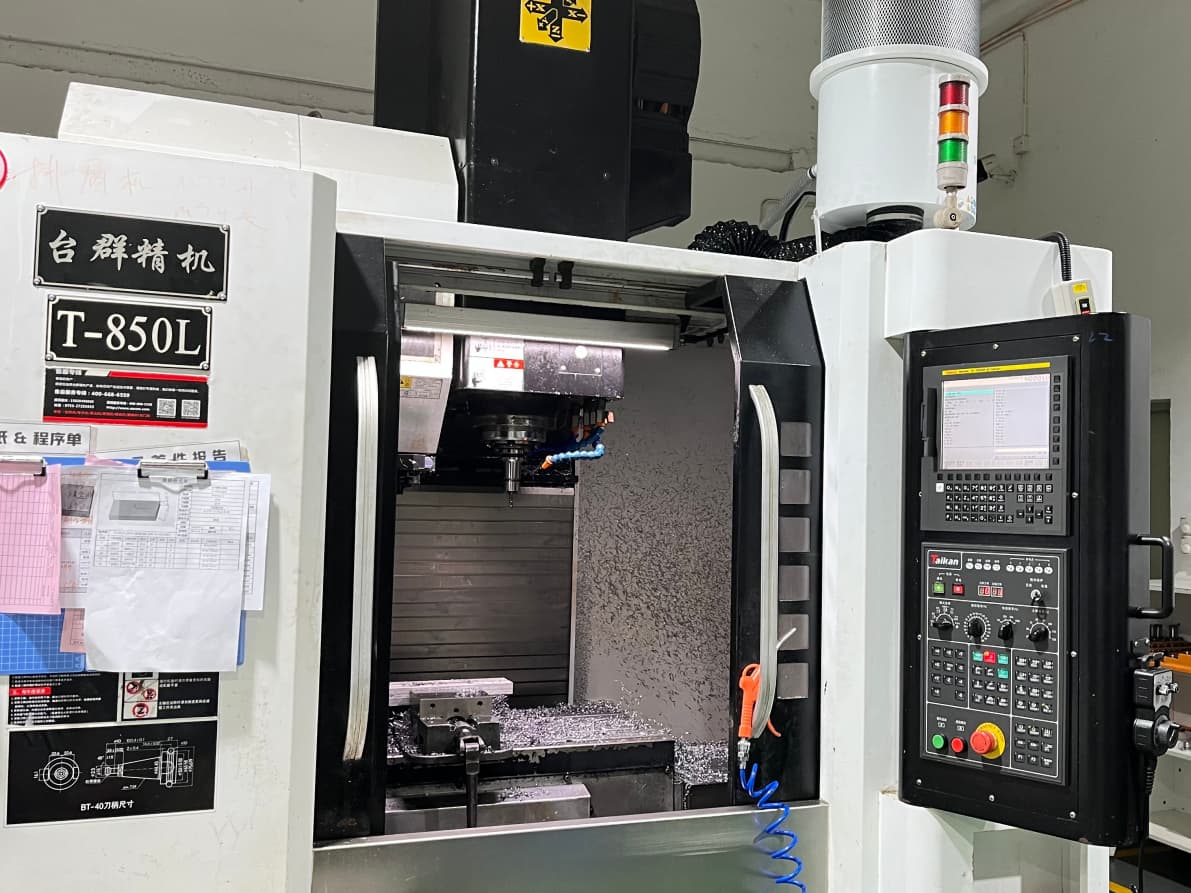
Shift knobs are primarily produced on CNC lathes, with secondary milling operations for flats, keyways, and decoration. 5-axis turning centers allow complex geometric profiles to be completed in a single setup, which improves concentricity and reduces cycle time.
The typical production flow includes rough turning, finish turning, threading, secondary milling, deburring, surface treatment, and inspection. Batch size significantly affects per-unit cost, and small runs benefit from fixed-tool setups rather than custom fixture development.
CNC parts manufacturing lead times for standard shift knob designs range from 5 to 15 business days depending on material availability and surface treatment requirements. Rush programs are often available for prototyping or urgent replacement needs.
Quality control should include thread go/no-go gauge verification, dimensional inspection of critical diameters, and visual finish review. Material certifications should be requested when the component operates in regulated or safety-critical environments.

Cost Factors and Procurement Planning
Several variables influence the final cost of a custom shift knob beyond material selection alone.
One of the most common cost mistakes is over-specifying surface finish or material grade without justification from the application requirements. A clear specification document reduces ambiguity and prevents suppliers from pricing in unnecessary contingencies.
When comparing quotes, request a detailed breakdown that separates material cost, machining time, surface treatment, and inspection. This transparency makes it easier to identify where costs can be optimized without compromising performance.
Common Mistakes to Avoid During Specification
Most shift knob failures trace back to one of three specification errors: incorrect thread definition, inadequate grip texture, or missing anti-loosening measures.
Thread mis-specification is the leading cause of assembly rework. Buyers often reference a generic thread size without confirming pitch, class, and engagement length. Always provide the complete thread callout from the mating component drawing.
Insufficient grip texture causes operator slippage, particularly in oily or wet conditions. Specify both the material and the surface treatment together, and include a target coefficient of friction if your application demands precise hand feel.
Omitting thread-locking requirements leads to knobs that loosen during normal operation. High-vibration applications require explicit mention of anti-vibration treatment in the purchase specification.
Practical Questions Before Choosing a Supplier
Shift knob procurement involves decisions that go beyond unit price. The right manufacturing partner understands torque requirements, material compatibility, and the trade-offs between different surface treatments.
YPMFG supports clients through engineering evaluation, material recommendation, and sample testing before full production begins. You can send your specifications or existing drawings to YPMFG for a technical review that identifies potential specification gaps and suggests optimizations.
When evaluating a supplier, ask about their experience with your specific material, their ability to provide third-party material certifications, their quality inspection procedures, and their lead time reliability for repeat orders.
Questions buyers often ask about custom shift knobs
What thread size should I use for my shifter assembly?
Use the exact thread specification from your shifter lever or column drawing. If no drawing exists, measure the mating part with a thread gauge and confirm pitch,diameter, and engagement length before ordering.
Can I get a shift knob in stainless steel for a marine application?
Yes. Stainless steel 304 or 416 shift knobs are commonly produced for marine and washdown environments. Expect a weight increase of approximately 30 percent compared to aluminum and a corresponding adjustment to your shifter column load rating.
How do I specify the grip texture for a shift knob?
Request a surface finish drawing callout or provide a reference sample. For industrial use, bead blasting followed by anodizing is a reliable standard. For high-grip applications, specify knurling or a textured coating as a secondary operation.
Is anodizing required for aluminum shift knobs?
Anodizing is recommended for all aluminum knobs exposed to normal use. It provides corrosion protection, improves surface hardness, and allows color coding for different transmission positions. Clear anodizing preserves the natural aluminum appearance while black or blue anodizing adds visual distinction.
How much does a custom CNC shift knob typically cost?
Unit cost depends on material, thread complexity, surface treatment, and order quantity. Small batches often start at a higher per-unit price due to setup time. Larger production runs benefit from fixed tooling amortization and faster cycle times. Request a formal quote with your specifications for an accurate price.
Need Help Selecting the Right Shift Knob for Your Application
A well-engineered shift knob improves operator control, reduces fatigue, and prevents costly field failures caused by thread loosening or surface wear. The specifications that matter most are thread compatibility, material suitability, surface finish, and anti-vibration treatment.
YPMFG provides custom CNC solutions for shift knob manufacturing, including engineering assessment, material selection support, and prototype sampling. Send your specifications or current part drawing to YPMFG for a technical review and competitive quotation tailored to your project requirements.