Italian
 English
 German
 Russian
 Japanese
 Korean
 Spanish
 French
 Portuguese

a 5 assi Lavorazione CNC holds ±0.01 mm on most aluminum housing features in a single setup, eliminating the secondary re-fixturing error that 3-axis routing adds on multi-sided parts.
Aluminum housing buyers face a recurring problem: multi-sided parts machined on 3-axis machines accumulate fixturing error with every re-clamp. Thermal drift, surface-finish variation, and mismatched datums follow. YPMFG works with housing buyers to route 5-axis jobs where the geometry actually demands it, rather than defaulting to 5-axis for every part.
Key Takeaways
- Single-setup advantage: One 5-axis operation covers up to 4 faces with 0.01 mm reference integrity, cutting total cycle time versus three re-clamps.
- Alloy selection drives finish: 6061-T6 holds tight tolerances on thin walls; 5052 suits large flat panels where springback is the risk.
- Tolerance ceiling: ISO 2768-mf is the practical floor; below 0.005 mm you enter grinding or lapping territory.
- DFM review saves cost: Sending a CAD model before quoting avoids rework on undercuts and trapped tool corners.
How Does 5-Axis Machining Change Aluminum Housing Design?
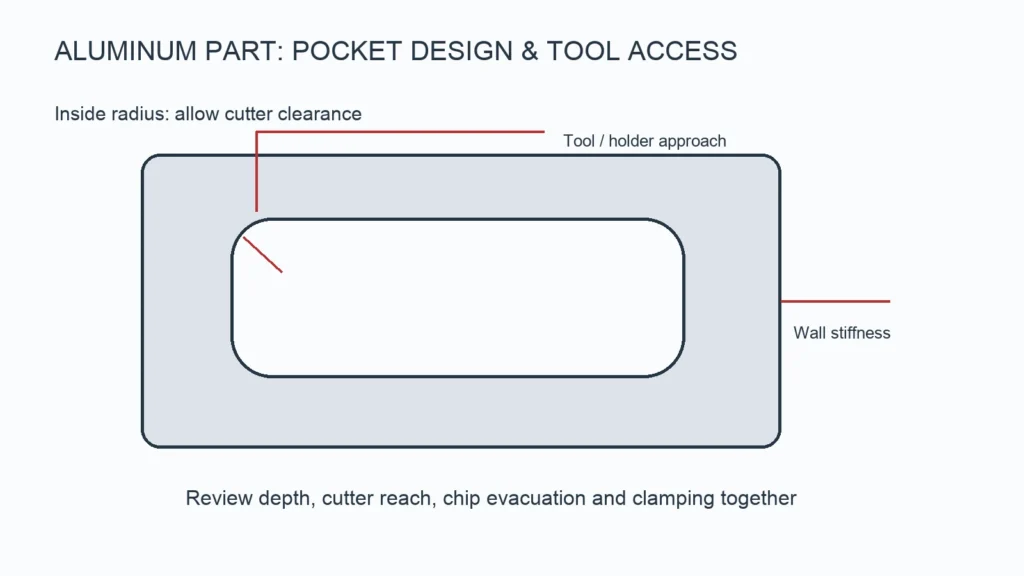
5-axis simultaneous motion lets the tool approach an interior pocket from an angle a 3-axis setup cannot reach. For housings with deep cavities, angled mounting bosses, or compound-curve surfaces, that means one setup instead of three.
The constraint is tool length. A long-end mill approaching a deep cavity from a 40-degree tilt has less rigidity than the same tool on a vertical axis. Chatter marks appear once overhang exceeds roughly 5 times the tool diameter. Keep wall thickness above 2 mm and avoid access angles beyond 60 degrees from the machined face.

What 5-axis cannot do: reach a fully enclosed cavity with zero access from above. A pocket with a 90-degree internal corner still needs EDM or a second setup, regardless of axis count.
Which Aluminum Alloys Fit 5-Axis Housing Work?
6061-T6 is the default for structural housings. It machines clean at high feeds, holds fine threads, and tolerates walls under 2.5 mm without chatter. 5052-H32 suits large flat panels and enclosure lids where formability matters more than peak strength.
- 6061: yield 276 MPa; ideal for housings with embedded fasteners or heat-dissipating fins.
- 5052: lower yield, better drape on large flats; preferred when the housing bends slightly during assembly.
- 7075: highest strength but machines harder; reserve for aerospace-grade housings.
Send the CAD file and intended service load; an engineering review confirms the right grade before you lock a drawing.
What Tolerances Can 5-Axis CNC Hold on Aluminum?
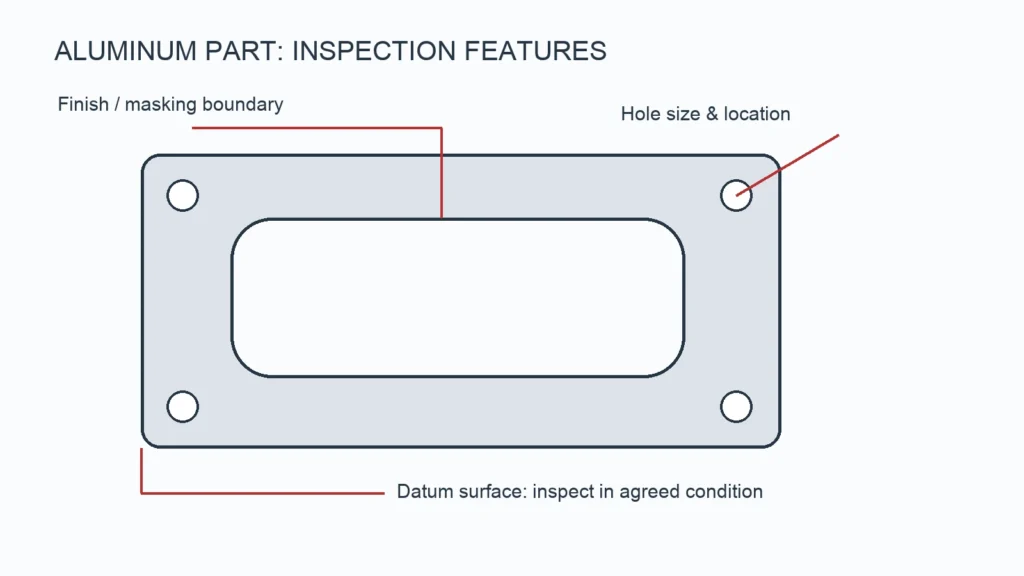
For most housing features—bores, flat mounting surfaces, threaded holes—5-axis on 6061 holds ISO 2768-m (±0.10 to ±0.30 mm by dimension range) comfortably. Critical interfaces such as O-ring grooves can be held to ±0.02 mm with a verified process.

When a drawing calls for ±0.005 mm on a bore, the honest answer is that you need a grinding or honing operation after CNC. The 5-axis machine will not get you there by itself.
Where Do Buyers Go Wrong When Ordering 5-Axis Housings?
The most common mistake is specifying 5-axis because a competitor’s quote used it, without checking whether the geometry demands it. A simple rectangular housing with four flat faces machines faster and cheaper on a 3-axis gantry.
Second mistake: skipping the DFM review. An engineer looking at your model flags trapped-tool corners, walls thinner than the tool radius, and features that force a secondary process. Catching those before quoting avoids a 2-to-4 week rework cycle. YPMFG reviews every housing submission against a 12-point DFM checklist and returns written notes with suggested changes.
Third: not stating surface finish. “Machined finish” is not a specification. Call out Ra values per face. 6061 on 5-axis typically lands at Ra 1.6 on flats and Ra 3.2 on curved walls without extra finishing.
How a Typical 5-Axis Aluminum Housing Runs on the Floor
A standard 400 mm x 300 mm x 80 mm 6061 housing with internal cavities, external fins, and a compound-curve back face follows this route:
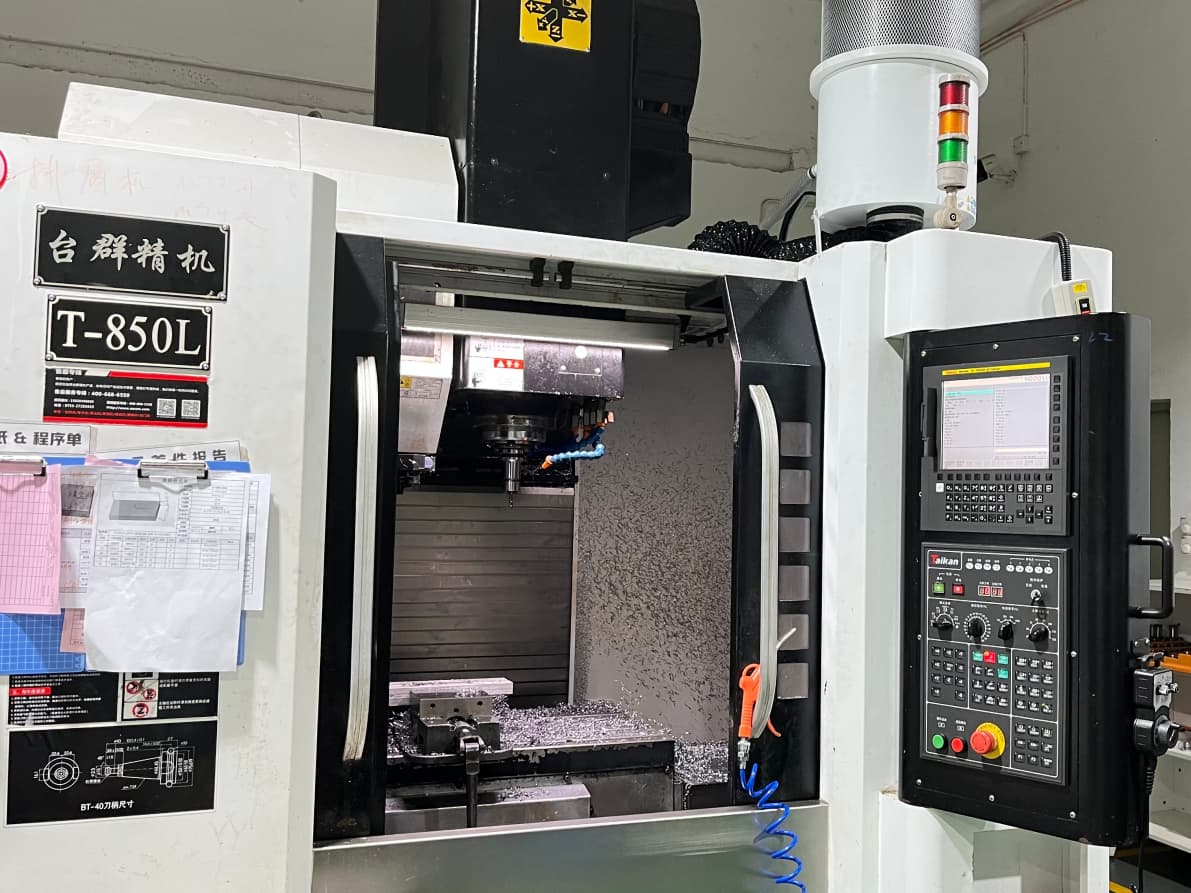
- Setup and probing: Part on a 4th-axis rotary with 5th-axis trunnion. Work-offset probed at 6 points. Cycle: 10 minutes.
- Roughing: 12 mm solid-carbide end mill, 5-axis simultaneous at 40,000 rpm. Leaves 0.4 mm stock on all faces.
- Semifinish: 8 mm ball-end mill for compound-curve areas; 3-axis finish on flat zones. Ra target 1.6.
- Finish and threads: 4 mm flat-end mill for final pass; M6 and M8 taps in a dedicated cycle.
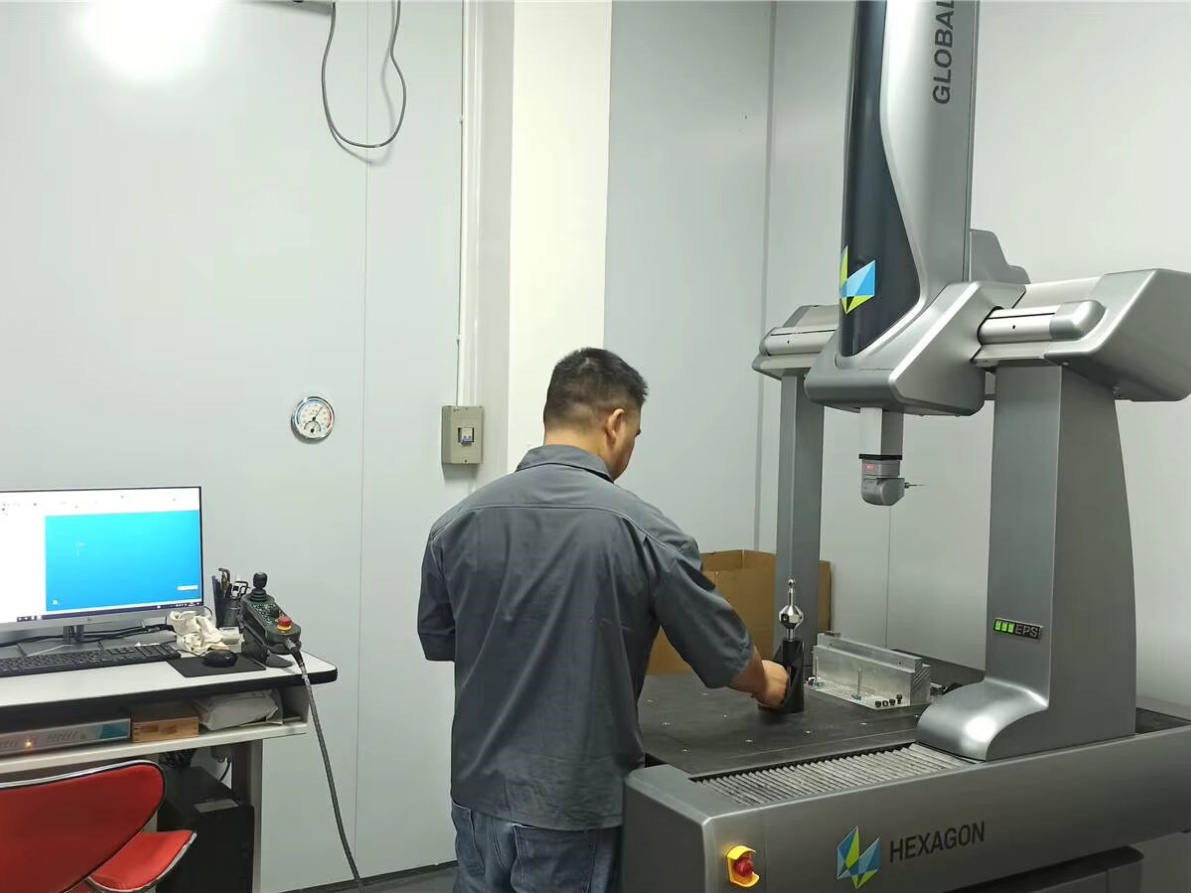
- Deburr and wash: Vibratory deburr, solvent wash, UV inspection on critical faces.
Process Route Reference: YPMFG process library, reviewed against published tooling data. Client-specific data withheld per NDA.
Practical Questions Before Choosing a 5-Axis Housing Supplier
Can a 3-axis machine cut the same housing? Yes, for flat-sided parts. No, for compound-curve faces or interior pockets angled beyond 15 degrees from vertical. Check the drawing for any feature that requires the tool to tilt on two axes at once.
How thin can walls go before springback matters? Below 1.5 mm in 6061, residual stress releases and the part warps 0.1 to 0.2 mm over a 100 mm span. Add a stress-relief anneal at 170 degrees C for walls under 2 mm.
What is the maximum part size on a typical 5-axis cell? It depends on the machine envelope. A 1200 mm x 800 mm trunnion setup handles most industrial housings. No, it cannot machine a 2-meter radiator panel in one piece; that requires a linear-axis machine or welded sub-frames.
How do I know if my design needs 5-axis or 3-axis? Count the faces the tool must reach without rotating the part. Four or fewer planar faces: 3-axis works. Any feature on a 5th face or a compound surface: 5-axis saves a setup and the associated datum error.
Getting a 5-Axis Aluminum Housing Quoted
The fastest path to a firm number is sending a STEP or IGES file with a short note on quantity, service load, and any coating or finish requirements. YPMFG engineering reviews the model against the DFM checklist, flags tool-access issues, and returns a quoted lead time with process notes within two business days. You also receive the tolerance table and surface-finish callouts so there is no ambiguity at PO stage. For buyers under NDA, all review documents and tool-path files stay within your data envelope; handling is confirmed in writing before the first cut.